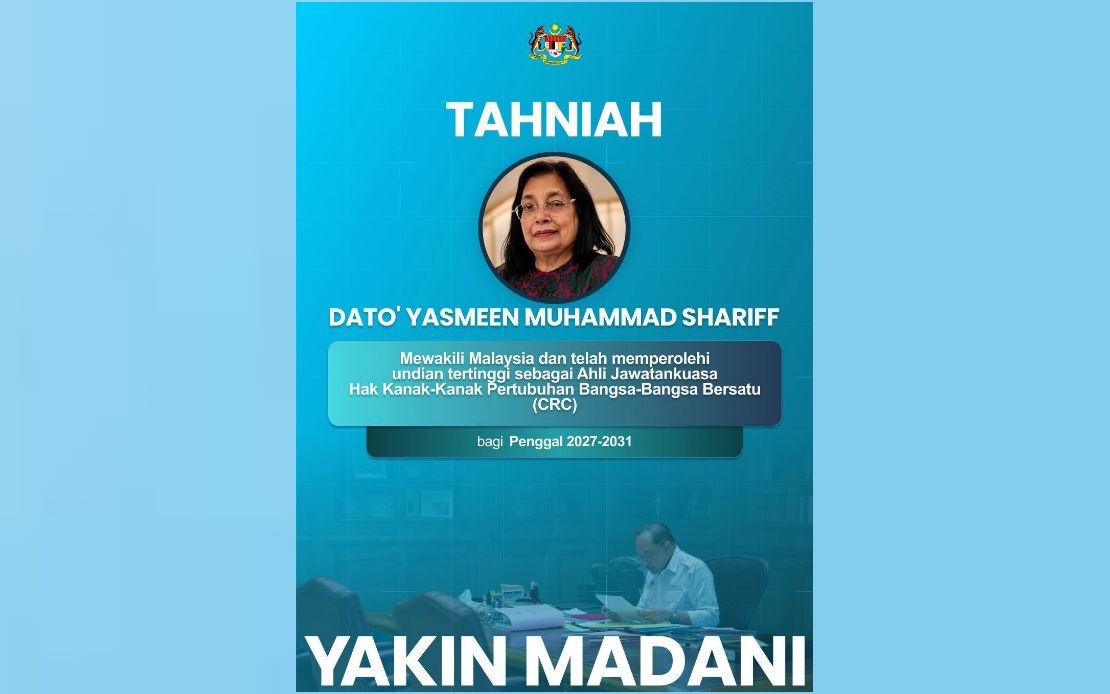
Prime Minister Datuk Seri Anwar Ibrahim has offered his congratulations to Datuk Yasmeen Muhamad Shariff following her successful election as a member of the United Nations Committee on the Rights of the Child, with her term commencing in 2027 and concluding in 2031. The premier's recognition underscores the significance of the appointment both domestically and in international diplomatic circles, signalling Malaysia's continued engagement with global mechanisms for child protection and advocacy.
Anwar characterised the election outcome as a manifestation of the international community's endorsement of Malaysia's dedication to advancing children's rights on the world stage. In his message shared via social media, the Prime Minister extended his felicitations not only to Yasmeen but also to the Ministry of Women, Family and Community Development, recognising the collective effort that contributed to securing this prestigious position.
Yasmeen's appointment was secured through voting at the 21st Meeting of States Parties to the Convention on the Rights of the Child, held at the UN headquarters in New York on Tuesday. She garnered 136 votes from the 189 States Parties participating in the electoral process, demonstrating substantial backing from the global community. This decisive mandate reflects widespread confidence in her expertise and Malaysia's credibility as a proponent of children's welfare policies.
The achievement carries particular significance as this marks Yasmeen's second term on the influential committee. She previously served as a member during the 2013-2017 period, having built a track record of engagement with international child protection frameworks. Her reelection suggests that her previous contributions were well-regarded and that the international community sees value in her continued participation in monitoring and advancing the implementation of the Convention on the Rights of the Child across member states.
As a committee member, Yasmeen will discharge her responsibilities in her individual capacity as an independent expert rather than as an official representative of the Malaysian government. This distinction is important within UN institutional architecture, as it ensures that committee decisions and recommendations are based on professional expertise and adherence to international standards rather than narrow national interests. This independence enhances the credibility of the committee's work in evaluating how countries implement their obligations under the child rights convention.
The Ministry of Women, Family and Community Development played a central role in presenting Yasmeen's candidacy to the international community. The ministry's announcement of her successful election emphasised the accomplishment as a testament to Malaysia's standing in global human rights discourse and its commitment to championing the protection and development of children. This institutional backing reflects the priority assigned to child welfare within Malaysia's development agenda.
Yasmeen's election assumes heightened importance given the evolving landscape of child protection challenges globally. The UN Committee on the Rights of the Child operates at the forefront of monitoring compliance with international standards on matters ranging from education and health to protection from exploitation and abuse. Her presence on the committee provides an opportunity for Malaysian perspectives on child welfare, shaped by the nation's multicultural context and developmental experience, to inform international policy discussions.
The reappointment demonstrates Malaysia's capacity to maintain relevance and influence within UN mechanisms despite intense competition among countries seeking positions on prestigious international bodies. Securing such positions requires sustained diplomatic engagement, demonstrated expertise, and credible commitment to the underlying mandate. For Malaysia, maintaining representation on specialised committees strengthens its voice in international forums and enhances the nation's reputation as a responsible member of the global community.
Anwar's characterisation of the achievement as a catalyst for further elevating Malaysia's international standing reflects the government's strategic interest in expanding the nation's soft power and diplomatic influence. Appointments to UN committees can serve as platforms for advancing national interests in international negotiations, particularly on issues aligned with a country's development priorities. For Malaysia, involvement in child-focused international bodies aligns with broader aspirations to be recognised as a progressive nation committed to inclusive development.
The appointment also carries implications for Malaysia's domestic child protection agenda. Having representatives on international monitoring bodies creates accountability mechanisms that can incentivise stronger implementation of child welfare policies domestically. It also provides opportunities for accessing best practices and international expertise that can inform the refinement of local programmes and legislative frameworks governing children's rights and protection.
Yasmeen's profile as an independent expert with prior experience on the committee positions her to make meaningful contributions during her second term. The complexities of child protection have intensified globally, with emerging challenges including digital exploitation, mental health concerns, and displacement due to conflict and climate change. Her experience navigating these issues and understanding Malaysia's approach to such matters could enrich the committee's deliberations and recommendations to member states.

