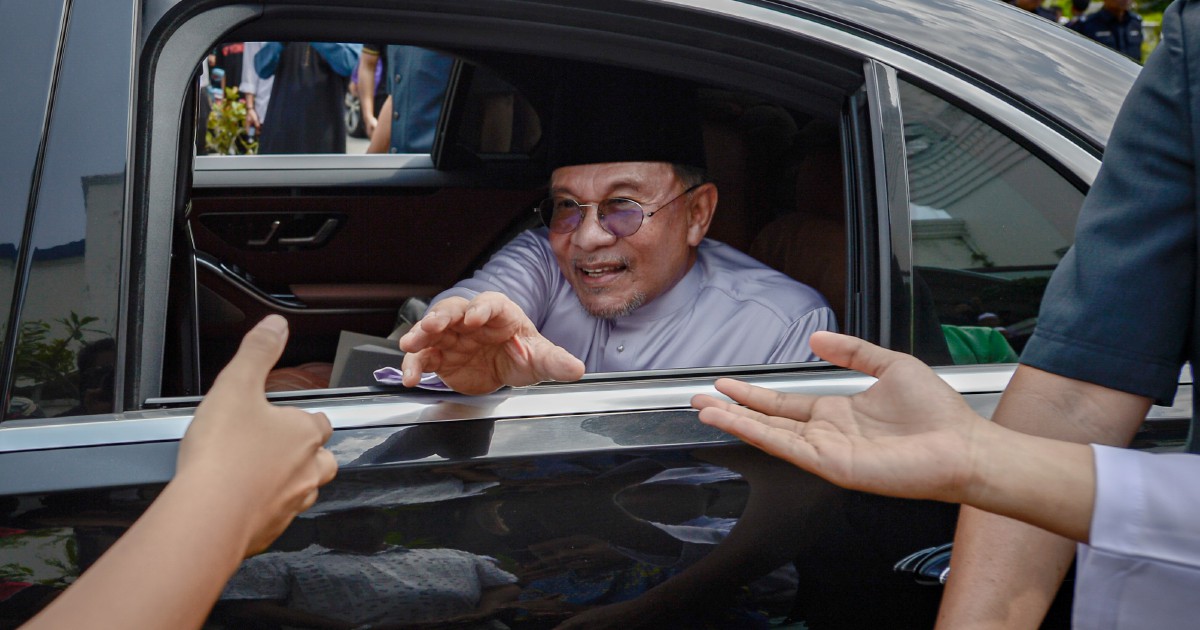
Prime Minister Datuk Seri Anwar Ibrahim brought his political campaign to Negri Sembilan, positioning himself at the forefront of Pakatan Harapan's push to consolidate electoral support in the state polls. The move reflects the coalition's strategy to leverage the popularity and stature of the national leadership to influence voter sentiment at the state level, a common tactic when incumbents seek to capitalize on their central government authority.
Neteri Sembilan has emerged as a crucial battleground in Malaysia's electoral landscape, given its pivotal location and the competitive nature of state politics in the region. The state's diverse population—spanning urban, semi-urban, and rural constituencies—presents both opportunities and challenges for political coalitions seeking to build broad-based support. By dispatching the Prime Minister himself to campaign, Pakatan Harapan signals that the state election is not peripheral to its national agenda but integral to maintaining political momentum heading into potential future contests.
Anwar's presence on the campaign trail serves multiple strategic objectives. First, it allows the coalition to frame the election within the context of national development initiatives and federal policy directions, areas where the government can point to concrete achievements or planned investments. Second, it provides a platform to address grassroots concerns directly from the highest office, lending administrative weight to campaign messaging. Third, it energizes the coalition's machinery by demonstrating institutional commitment to electoral victory at the state level.
The timing of Anwar's campaign swing reflects broader political calculations within Pakatan Harapan regarding momentum and morale. State elections in Malaysia often serve as barometers of public sentiment toward the national government, with losses potentially eroding confidence in the coalition's governance and electoral prospects. Conversely, victories reinforce claims of sustained popular backing, enhance the ruling coalition's legitimacy, and provide financial and organizational benefits through control of state resources and patronage networks.
For Malaysian voters in Negri Sembilan and observers across Southeast Asia, such high-profile campaign appearances raise important questions about the interplay between national and state politics. The deployment of prime ministerial capital suggests that Pakatan Harapan views the contest as sufficiently competitive or uncertain to warrant personal intervention at the apex of government. It also underscores how Malaysian electoral politics remain vertically integrated, with national party leaders directly engaged in localized contests rather than delegating entirely to state-level functionaries.
The campaign trail itself serves as a communication channel between the government and constituents. Through rallies, town halls, and public events, voters gain direct exposure to political messaging while media coverage amplifies the narrative beyond those physically present. For the Prime Minister, such engagements provide opportunities to address specific local grievances—infrastructure concerns, economic opportunities, service delivery gaps—while framing these within the coalition's broader governance vision.
Pakatan Harapan's electoral fortunes in Negri Sembilan carry implications beyond the state itself. The coalition's control of multiple state governments provides a foundation for political influence and resource distribution. Furthermore, state assembly members represent crucial numerical assets in parliamentary politics, as demonstrated historically when state legislators have influenced national coalition mathematics and governmental stability.
Anwar's campaign push occurs within a broader regional context of electoral competition in Malaysia. The state election represents one of several contests shaping the political landscape, with parties across the spectrum competing for electoral advantage. Opposition parties, equally mindful of the stakes, mount their own campaigns, creating a dynamic and contested electoral environment.
From an analytical perspective, the Prime Minister's engagement reflects confidence in Pakatan Harapan's position while also acknowledging competitive pressures. The coalition cannot take electoral outcomes for granted in any constituency, regardless of historical voting patterns or perceived advantages. This reality drives leadership involvement and demonstrates the resource commitment necessary to maintain political control in Malaysia's multi-layered electoral system.
For Southeast Asian observers, Malaysian state elections illustrate how democratic contests operate across federal and provincial levels simultaneously. Unlike some regional neighbors with more centralized political systems, Malaysia's federal structure creates distinct electoral arenas with their own dynamics, party configurations, and voter considerations. Anwar's campaign illustrates how political elites navigate these complex arrangements, balancing national governance with localized electoral ambitions.
The campaign effort also reflects institutional adaptation within Pakatan Harapan. Coalition members, despite occasional disagreements on policy and power-sharing, unite around electoral objectives. This coordination, visible in synchronized campaign efforts and unified messaging, demonstrates organizational discipline necessary for electoral success in competitive environments.
As the Negri Sembilan campaign unfolds, political analysts watch for indicators of voter sentiment regarding Pakatan Harapan's governance, economic management, and policy direction. The election results will likely influence calculations regarding future electoral contests and broader political strategies. For ordinary Malaysians in the state, the campaign presents opportunities to engage with government and oppose candidates directly, exercising democratic prerogatives that characterize Malaysia's political system despite its challenges and complexities.

