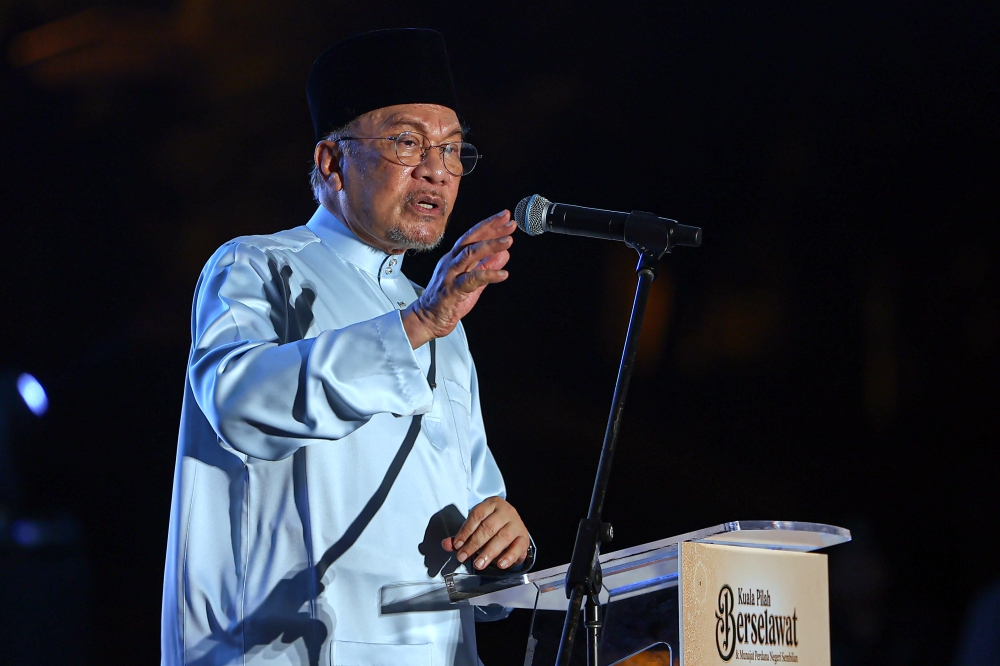
Anwar Ibrahim has urged Parti Keadilan Rakyat to sustain its foundational identity as a mass-based political movement grounded in substantive values, warning against the drift toward treating party machinery purely as a mechanism for securing electoral victories. The PKR president made these remarks in Kuala Lumpur on August 15, articulating a vision that extends beyond the conventional role of political parties as mere contestants in electoral contests.
The emphasis reflects broader tensions within Malaysian political parties, where the pressure to compete and win at the ballot box frequently overshadows the deeper organisational and ideological work that sustains democratic participation. Anwar's intervention suggests he recognises that without deliberate commitment to movement-building activities—community organising, grassroots education, and institutional accountability—political parties risk becoming hollow structures dependent entirely on personality cults or tactical alliances.
For PKR specifically, this message carries particular weight given the coalition's complex positioning within the current Malaysian political landscape. The party emerged historically from labour and social movements, and this heritage remains a source of legitimacy, especially among younger voters and urban constituencies that value substantive policy engagement over transactional politics. Allowing that foundation to atrophy could undermine the party's distinctiveness within Pakatan Harapan.
Integrity and ethical governance have long formed the rhetorical cornerstone of PKR's identity. By invoking these principles explicitly, Anwar appears to be recalibrating internal expectations and external messaging during a period when political alignments across Malaysia have become increasingly fluid. The maintenance of clear values becomes a stabilising force when coalition configurations and electoral strategies shift.
The distinction Anwar draws—between a mass movement and an election-winning vehicle—maps onto longstanding debates within comparative political studies. Mass movements typically prioritise member participation, internal democracy, and agenda-setting through grassroots deliberation. Election-focused machines, by contrast, concentrate power among leadership cadres and optimise for tactical effectiveness. These orientations often conflict, requiring parties to make genuine trade-offs rather than claim both simultaneously.
This challenge proves especially acute in Malaysian politics, where rapid electoral cycles, coalition volatility, and resource constraints frequently force parties to deprioritise organisational deepening in favour of immediate campaign readiness. Smaller parties within coalitions particularly feel this pressure, as they compete for relevance and ministerial portfolios against larger partners while managing membership expectations.
For Malaysian readers, Anwar's statement also signals something about PKR's internal state. A party leadership comfortable enough to remind members of ideological foundations typically does so because that foundation has become porous or contested. The message serves simultaneously as inspiration and course correction—uplifting the party's purpose while implicitly acknowledging recent drift.
The timing matters too. Malaysian politics has entered a more fragmented phase since the 2022 general election, with multiple coalitions and informal arrangements competing for parliamentary influence. In such environments, parties that maintain strong grassroots mobilisation capacity and clear public identities tend to navigate transitions more successfully than those that have become dependent on elite networks alone.
Sustaining a mass-movement orientation requires specific investments: training of party officials, platforms for member input on policy positions, community service programmes, and transparent internal governance structures. These activities consume resources and time that might otherwise fund electoral campaigning. Anwar's exhortation thus represents a choice about how PKR allocates its finite organisational capacity—a choice with real consequences for party development and electoral positioning.
The broader Southeast Asian context reinforces this point. Political parties across the region have experienced declining membership and weakening grassroots connections as clientelism and elite-dominated coalitions fragment traditional party systems. Parties that deliberately rebuild member engagement—through education programmes, participatory mechanisms, and transparent leadership selection—have proven more resilient and electorally competitive than those that neglect such work.
For the coalition government to remain stable and responsive to voter expectations, its constituent parties require internal vitality beyond electoral cycles. PKR's role within Pakatan Harapan depends partly on demonstrating that it can deliver both organisational discipline and democratic legitimacy. Anwar's insistence on maintaining a mass-movement character thus serves coalition interests alongside PKR's own institutional health.
Moving forward, how seriously PKR's mid-tier leadership and membership embrace this direction will determine whether the rhetoric translates into substantive change. The next test will come through observable investments in member education, participatory processes, and ground-level organising capacity—measures harder to perform than public statements but essential to fulfilling Anwar's vision.

