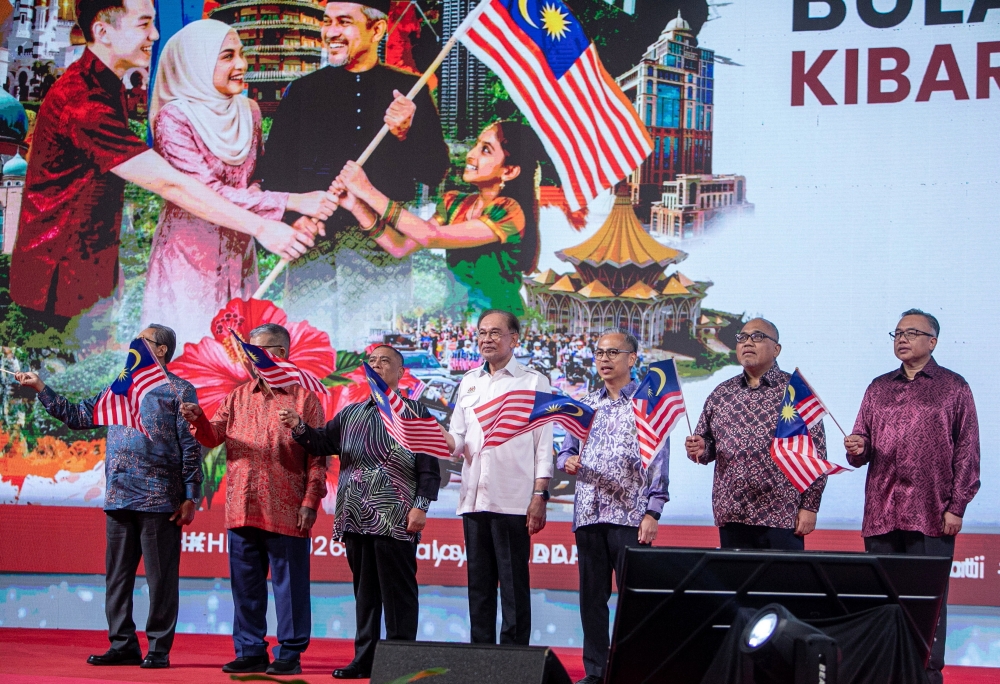
Prime Minister Datuk Seri Anwar Ibrahim has called upon Malaysia's younger generation to recognise and value the historical significance of the independence struggle that shaped the nation, delivering his message during an event in Ipoh on July 19. The appeal reflects a broader concern among Malaysia's leadership about ensuring that subsequent generations maintain connection to the foundational narratives that define the country's identity and governance.
Anwar's remarks underscore a persistent challenge facing many post-colonial nations: the risk that historical memory becomes diluted as societies modernise and younger cohorts grow distant from the experiences of their forebears. In Malaysia's case, this concern takes on particular resonance given the complex political landscape and the diversity of perspectives on how national history should be understood and taught. The Prime Minister's intervention signals an effort to reinforce official historical narratives during a period when alternative interpretations and grassroots discussions about Malaysia's past have gained traction, particularly through digital platforms frequented by younger citizens.
The timing of such statements is rarely coincidental in Malaysian politics. Annual commemorations and public holidays associated with independence provide platforms for political leaders to reconnect constituents with founding principles and to frame contemporary governance within historical continuity. By addressing youth specifically, Anwar appears to be targeting a demographic that research suggests engages less consistently with traditional media and historical education, preferring digital sources that may offer fragmentary or divergent accounts of national history.
For Malaysian youth navigating economic uncertainties, rising costs of living, and questions about their future prospects, the relevance of independence narratives may seem abstract. However, leaders across the political spectrum have long argued that understanding the sacrifices and compromises inherent in Malaysia's path to independence provides important context for contemporary challenges. The independence struggle itself was multifaceted, involving negotiations between colonial administrators, Malay royalty, communal leaders, and political activists—a complexity sometimes overshadowed in simplified public narratives.
The Prime Minister's appeal also carries implications for how Malaysia positions itself regionally. Within Southeast Asia, where several nations share colonial legacies and navigate similar questions about national identity and historical consciousness, Malaysia's approach to youth engagement with independence narratives offers a comparative case study. Countries like Indonesia, Thailand, and Vietnam have pursued different strategies for ensuring historical memory remains relevant to younger populations, with varying degrees of success and legitimacy among their youth.
Education policy intersects closely with these concerns. Malaysia's school curriculum has long emphasised independence narratives, though critics argue that such teaching often presents sanitised versions of history that underplay internal conflicts, communist insurgency, and the pragmatic negotiations that characterised the transition to self-governance. As social media enables greater historical scrutiny and alternative interpretations, maintaining consensus around official narratives has become increasingly difficult. Anwar's public reminders serve to reinforce state-sanctioned historical memory in competition with other available versions.
The concept of appreciating the independence struggle also carries political utility. By invoking shared sacrifice and common foundational experiences, political leaders create frameworks for unity transcending contemporary divisions. For Anwar, whose administration navigates coalition politics and competing demands from different constituencies, appeals to historical solidarity offer symbolic common ground. This rhetorical strategy has proven effective across Malaysian administrations regardless of party composition.
Youth disengagement from historical narratives reflects broader patterns observable across developed and developing democracies. Younger citizens often prioritise immediate concerns—employment, housing, education access—over abstract historical reflection. Yet leaders contend that understanding how previous generations built institutions, resolved conflicts, and established governance principles provides essential perspective for addressing current challenges. This intergenerational knowledge transfer becomes particularly important in contexts where institutional continuity and respect for established frameworks constitute critical sources of political legitimacy.
The Prime Minister's intervention also addresses anxieties within Malaysia's political establishment about social cohesion. The independence struggle, despite its complexities, represents one of the few historical narratives that commands broad acceptance across Malaysia's diverse communities. By encouraging youth to engage with this history, leaders hope to foster appreciation for the delicate constitutional arrangements, federal structures, and power-sharing mechanisms that emerged from independence negotiations. These frameworks remain fundamental to Malaysia's political system, even as they face pressure from contemporary demands for reform and greater representation.
Moving forward, the challenge for Malaysia's leadership involves making historical narratives meaningful to youth without appearing didactic or dismissive of contemporary concerns. Young Malaysians are increasingly sophisticated consumers of information with access to diverse historical interpretations. Effective engagement requires not merely exhorting remembrance, but demonstrating how historical understanding informs solutions to present challenges. This might involve connecting independence struggles—characterised by negotiation, compromise, and coalition-building—to contemporary governance challenges requiring similar skills and flexibility.
The broader context of Anwar's remarks reveals ongoing tension between preserving historical memory and enabling critical examination of that history. Malaysian education and public discourse must accommodate both reverence for independence achievements and honest discussion of the struggle's contested elements. For youth particularly, this balanced approach offers greater legitimacy than simple exhortation to remember. Whether Malaysia's political leadership can facilitate this more nuanced engagement with its foundational history while maintaining social cohesion remains an ongoing question.

