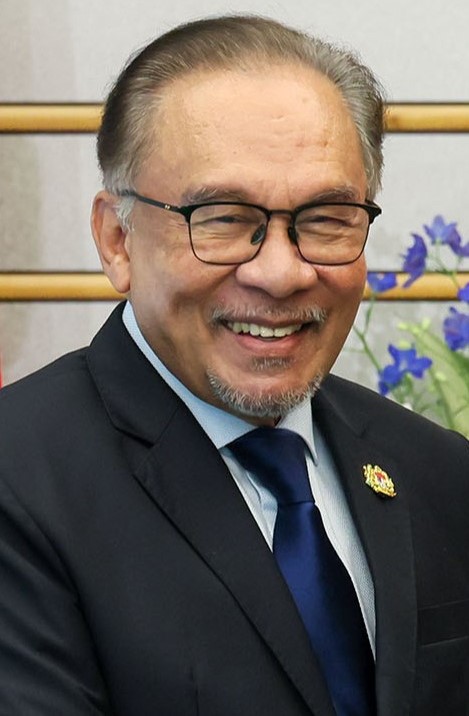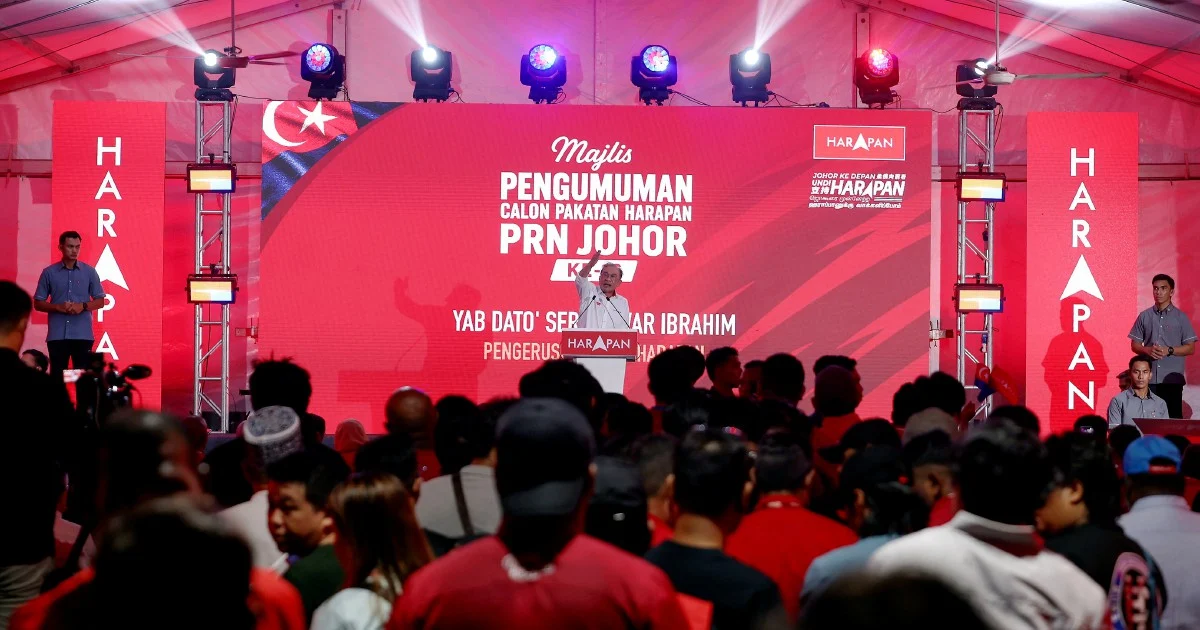
Prime Minister and Pakatan Harapan chairman Datuk Seri Anwar Ibrahim has drawn a clear line regarding the boundaries of the forthcoming Johor state election, insisting the contest should remain fundamentally a political affair determined by electoral competition rather than institutional interference from royal institutions. Speaking in Tangkak, Anwar emphasised the importance of preserving the separation between the electoral process and the constitutional roles occupied by Malay Rulers, signalling PH's commitment to maintaining democratic norms in the state poll.
Anwar's statement addresses emerging concerns about how state elections in Malaysia could become entangled with palace dynamics, particularly in Johor where the Rulers command significant historical and constitutional influence. The distinction he drew reflects a broader understanding within the federal government that while Malay Rulers occupy important ceremonial and constitutional positions, their institutions should not become actors in competitive electoral politics. By framing the issue explicitly, Anwar sought to establish ground rules for how the election should be conducted across all contesting parties and stakeholders.
The timing of Anwar's remarks carries weight given Malaysia's recent political volatility and the complex relationship between monarchical institutions and electoral outcomes. Johor, as Malaysia's southernmost state and a significant economic hub adjacent to Singapore, holds strategic importance for national politics. The state has traditionally been a stronghold for the ruling coalition, making any shifts in its political complexion closely watched by analysts and rival parties seeking to gauge shifting voter sentiment across the nation.
The Prime Minister's intervention suggests apprehension that the campaign environment could be shaped by external pressures or narratives involving palace institutions, which would undermine the fundamental democratic principle that elections should be decided by voters exercising their franchise on policy and party performance grounds. Such interference, whether real or perceived, could delegitimise the eventual outcome and create constitutional complications for whoever forms government in the state.
This position aligns with Malaysia's constitutional framework, which designates Rulers as constitutional monarchs rather than active political agents. While Rulers maintain important roles in appointing state executives and offering consent to legislation, their formal involvement in electoral campaigns or endorsements would blur the line between their ceremonial functions and partisan politics. Anwar's statement reinforces these constitutional boundaries at a time when maintaining public confidence in electoral integrity remains essential for democratic stability.
For PH specifically, the message carries particular significance. The coalition has staked much of its political credibility on championing institutional reform and democratic renewal since returning to federal office. Anwar's call for keeping royal institutions separate from electoral competition reflects this broader commitment to protecting institutional independence and preventing the politicisation of constitutionally important bodies. This positioning also potentially disadvantages any opposing coalition that might seek palace backing or attempt to leverage royal prestige during campaigning.
The statement implicitly recognises that some parties or actors might be tempted to invoke royal support or institutional positions to gain electoral advantage in Johor. By publicly articulating that such moves would be inappropriate, Anwar established a political norm that could discourage other contenders from pursuing such strategies. This norm-setting function proves as important as the literal prohibition, as it shapes the expected behaviour of all participants in the electoral contest.
For Malaysian voters, particularly those in Johor, Anwar's remarks offer reassurance that the state election will be adjudicated on recognisable democratic grounds. Citizens can expect campaigns to focus on competing policy visions, party track records, and candidate quality rather than institutional machinations behind the scenes. This transparency enhances public participation and allows voters to make informed choices based on substantive rather than procedural disputes.
The broader implications for federalism and state politics in Malaysia merit consideration. If Johor's election remains purely political in character, it establishes a precedent that could influence how future state elections are conducted. This matters significantly because several states have Rulers who command considerable public loyalty, creating potential avenues for institutional involvement if norms are not explicitly maintained. Anwar's intervention strengthens these norms by putting all stakeholders on notice that such involvement would be viewed unfavourably by the federal government.
International observers of Malaysian democracy will likely view Anwar's comments positively, as they demonstrate commitment to maintaining separation between constitutional institutions and electoral processes. This distinction strengthens Malaysia's democratic credentials and shows that the country's leadership recognises the importance of institutional neutrality during competitive political contests. Such demonstrations of democratic maturity matter increasingly as Malaysia seeks to enhance its international standing and investor confidence.
The election itself will test whether this principle holds in practice. Depending on how various parties conduct their campaigns and whether any attempt to invoke royal support or institutional preferences, Anwar's words will either prove prescient in preventing institutional entanglement or reveal limitations in his ability to enforce such boundaries. Either outcome will provide important insights into Malaysian democracy's resilience and the weight of such public declarations from federal leadership.
Moving forward, all Johor-based political actors will be aware that deviation from Anwar's stated preference for keeping royal institutions separate from electoral competition could attract federal scrutiny and reputational damage. This soft enforcement mechanism, working through political and public opinion pressure rather than formal institutional mechanisms, may prove sufficient to maintain the separation Anwar advocates. The coming campaign will ultimately determine whether Malaysian democracy can maintain this institutional boundary during contested elections.