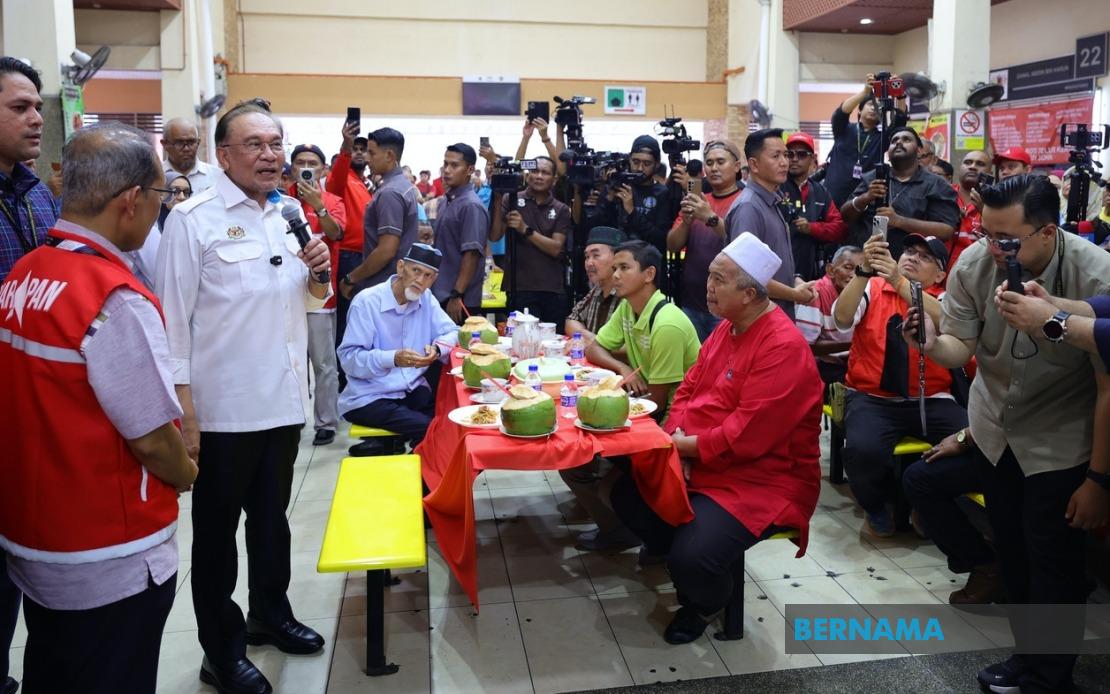
Prime Minister Datuk Seri Anwar Ibrahim has made a direct appeal to voters in Negeri Sembilan to return Pakatan Harapan to power in the state election, framing the vote as a referendum on political stability and orderly development. Speaking during campaign events in Seremban on July 22, Anwar emphasised that a renewed mandate would strengthen the coalition's ability to govern the state in coordination with the federal administration, ensuring that development projects and welfare initiatives reach citizens efficiently and without obstruction.
As both Prime Minister and chairman of Pakatan Harapan, Anwar positioned the election within a broader narrative of national governance. He argued that continuity of coalition rule at state level would prevent the friction and policy conflicts that arise when rival coalitions control different tiers of government. In Malaysia's federal system, states with different ruling coalitions from the federal government often experience delays in infrastructure funding, bureaucratic complications, and competing political agendas that ultimately slow development and frustrate residents. Negeri Sembilan, under the current Pakatan Harapan administration led by Menteri Besar Datuk Seri Aminuddin Harun, has not faced such divisions, allowing for smoother implementation of programmes.
Anwar highlighted that the state has enjoyed relative political calm over the past three years under Aminuddin's leadership, attributing this stability to cross-party cooperation and shared commitment to the state's welfare. He implicitly contrasted this with the instability and factional disputes that periodically erupt in states where coalition cohesion weakens or where frequent leadership transitions create uncertainty. The emphasis on stability reflects voter concerns across Malaysia about whether their state governments can function effectively without being paralysed by internal power struggles or constant political turmoil.
The Prime Minister acknowledged candidly that the Pakatan Harapan administration has not achieved perfection in all its policies or programmes. This frank admission served a tactical purpose: by conceding imperfection while framing the vote as a choice between continued improvement and potential regression, Anwar positioned a new mandate not as endorsement of flawless governance but as permission to continue iterative reform. He explicitly invited voters to provide feedback on areas needing improvement, suggesting that the coalition remains responsive to public criticism and willing to adjust course.
Anwar's messaging also reflects the practical reality that Pakatan Harapan must actively campaign for state control rather than assume that its federal presence guarantees state-level victory. Malaysian voters frequently split their support between federal and state governments, and state elections often turn on local grievances, personality factors, and perceptions of how well an incumbent administration has addressed neighbourhood-level concerns such as flooding, rubbish collection, local business support, and community safety. National-level arguments about stability and coordination, while important, may not sway voters prioritising immediate local service delivery.
The Pakatan Harapan slate for Negeri Sembilan reflects careful coalition management and seat-sharing arrangements. The coalition is contesting all 36 state seats, with the Democratic Action Party (DAP) fielding 11 candidates, the People's Justice Party (PKR) contributing 16, and the National Amanah Party fielding nine. This distribution reflects both demographic realities in different constituencies and the internal dynamics of coalition politics, where seat allocation is negotiated to balance the interests and electoral strengths of member parties. The concentration of PKR candidates suggests the party's dominance in the state party structure, while DAP's significant representation reflects its urban support base.
The Election Commission has scheduled polling day for August 1, with early voting permitted on July 28. This timeline provides the coalition and opposition parties with roughly a week of intensive campaigning following Anwar's initial rally. For voters, particularly those who may be out of state on polling day, the early voting provision offers flexibility. The compressed campaign calendar means that messaging from party leaders and on-ground mobilisation by grassroots organisations become critical in reaching swing voters and consolidating support among the party faithful.
For Negeri Sembilan specifically, state elections are fought not only on national themes but on how well the state's unique economic and social needs have been addressed. The state's economy depends partly on manufacturing, agriculture, and small-scale trade, alongside commuter communities linked to Kuala Lumpur and Selangor. Infrastructure projects, agricultural support, and connectivity improvements are likely campaign issues. The local government track record of the incumbent administration—whether roads have been improved, schools maintained, and business-friendly policies adopted—will weigh heavily on voters' decisions.
Anwar's campaign visit underscores the significance Putrajaya attaches to retaining Negeri Sembilan within the Pakatan Harapan fold. A loss of the state would represent not only a local setback but a broader signal of erosion in the coalition's electoral appeal and governing legitimacy. Conversely, a strong win would validate the coalition's stability narrative and provide momentum heading into future elections. The outcome in Negeri Sembilan will be closely watched as a bellwether for coalition support in states that are traditionally competitive.
The broader subtext of Anwar's appeal is that Malaysian voters face a fundamental choice between stability and uncertainty. Political stability is neither glamorous nor exciting, and its benefits—smooth administration, predictable policy, incremental improvement—are less visible than dramatic policy announcements or charismatic leadership promises. Yet after years of coalition instability at federal level, shifting alliances, and changing governments, Anwar's emphasis on steady governance and alignment between state and federal administrations reflects lessons learned from Malaysia's recent turbulent political history. Whether Negeri Sembilan voters prioritise this stability or seek change will illuminate the current mood among Malaysian electorates.

