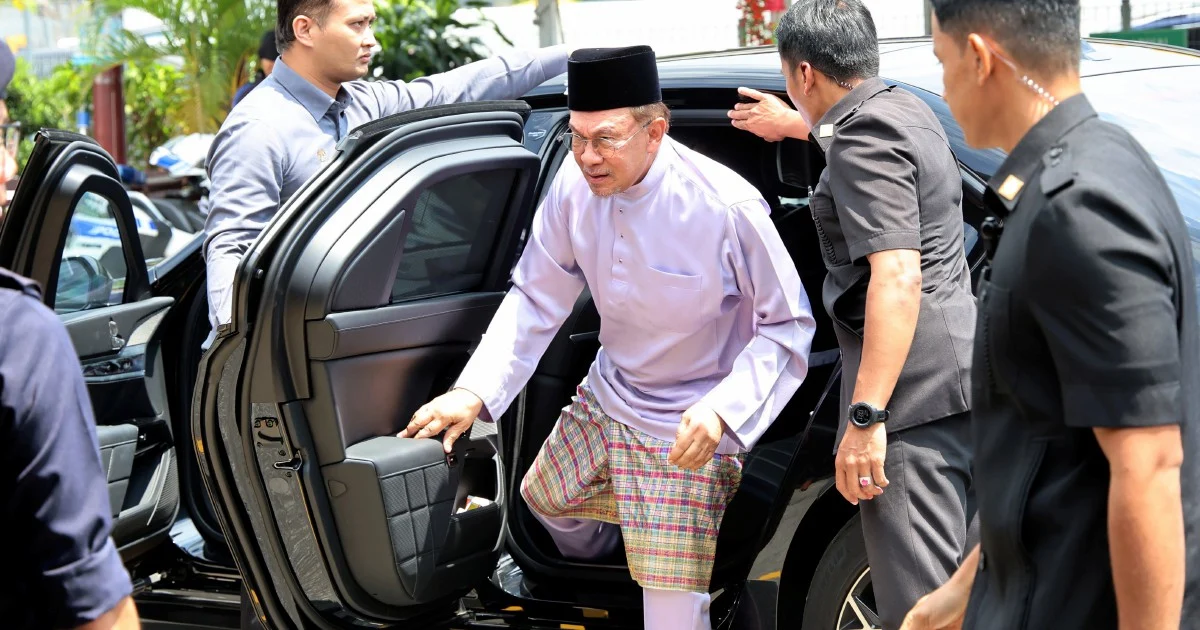
Prime Minister Datuk Seri Anwar Ibrahim has issued a clear directive to all political parties participating in the Johor state election, emphasising the importance of maintaining decorum and moral standards during their campaign efforts. Speaking at an event in Dengkil, Anwar stressed that respectful engagement with voters and opponents alike remains essential to the integrity of Malaysia's democratic process, cautioning against the temptation to resort to arrogant or dismissive tactics that could undermine public confidence in the electoral system.
The message from Malaysia's highest elected official reflects broader concerns about the tenor of recent electoral campaigns across the country, where accusations of mudslinging and personal attacks have occasionally overshadowed substantive policy debates. By positioning himself as an advocate for ethical campaign conduct, Anwar aims to set a benchmark for how parties should interact with one another during the closely watched Johor contest, which carries significant implications for his government's political standing and the opposition's challenge to his administration.
Johor, one of Malaysia's largest and most strategically important states, has historically served as a bellwether for national political sentiment. The state election therefore assumes outsized significance beyond its geographic boundaries, attracting scrutiny from political analysts and observers across Malaysia and the wider region. Anwar's emphasis on respectful campaigning suggests his administration recognises that the conduct of this election will shape public perceptions of the ruling coalition's commitment to democratic values and good governance.
The Prime Minister's remarks underscore a tension that characterises modern Malaysian politics: the competition for electoral advantage on one hand, and the need to preserve institutional legitimacy on the other. When sitting leaders call for civility and restraint among contestants, they implicitly acknowledge that electoral processes can generate pressures that tempt parties to abandon ethical boundaries. Anwar's intervention suggests that he and his team view this risk seriously enough to merit explicit public guidance to party operatives and candidates.
For voters in Johor, the Prime Minister's call for dignified campaigning establishes a standard against which they can evaluate the actual behaviour of candidates and parties in the months ahead. Should campaigning descend into personal attacks or inflammatory rhetoric, voters will have a clear benchmark—articulated by the nation's top political leader—by which to assess whether competing parties have lived up to stated democratic values. This creates accountability mechanisms that rest ultimately with the electorate's judgment.
The notion of avoiding arrogance in political contests carries particular weight in the Malaysian context, where perceptions of entitlement or disrespect toward voters can rapidly undermine a party's electoral prospects. Anwar's invocation of this principle reflects practical political wisdom gained through his own lengthy career in Malaysian politics, during which he has witnessed how voter antipathy toward perceived arrogance has shifted electoral outcomes. By crystallising this concern into explicit guidance, the Prime Minister signals that his administration takes such dynamics seriously.
Upholding good values throughout a campaign season requires discipline from party members at all levels, from senior leadership to grassroots organisers. Anwar's directive thus carries an implicit expectation that party leaders will invest effort in ensuring that their supporters and representatives adhere to these standards, rather than tolerating breaches of conduct simply for the sake of short-term electoral gains. This vertical accountability—from party leadership through to individual campaigners—remains crucial to translating the Prime Minister's call into actual behavioural change.
The broader context of Anwar's remarks includes mounting concerns across Malaysia about electoral politics becoming increasingly personalised and disconnected from substantive policy discussions. Respectful campaigning, by definition, creates space for genuine debate about competing visions for Johor's future, economic development priorities, and governance approaches. Campaigns that degenerate into mutual recrimination and personal attacks typically leave less room for such substantive engagement, potentially leaving voters less informed about the actual platforms and records of competing parties.
For Southeast Asia more broadly, Anwar's intervention carries resonance as Malaysia navigates its role as a leading democracy in a region where electoral processes have sometimes been marred by violence, intimidation, or institutional manipulation. By publicly advocating for campaign dignity, Anwar positions Malaysia as a jurisdiction where electoral competition, while spirited, remains fundamentally respectful and rule-bound. This matters not only for Malaysian domestic politics but also for Malaysia's standing as a regional advocate for democratic governance.
The upcoming Johor election will test whether Anwar's call for respectful campaigning actually influences party behaviour on the ground. Political scientists and observers will likely monitor whether candidates and parties honour this implicit covenant, and whether violations of the standard generate meaningful consequences or public criticism. The test of Anwar's leadership on this issue will lie not merely in articulating the standard, but in whether the political culture that his government influences actually conforms to it.
Looking forward, the Johor contest provides an opportunity for Malaysian politics to demonstrate that electoral competition and democratic decency need not be sacrificed for partisan advantage. If parties across the political spectrum embrace Anwar's call for respectful engagement, the election could reinforce norms of dignified democratic conduct that strengthen public institutions. Conversely, if campaigning devolves into the kind of behaviour the Prime Minister cautioned against, it would signal that ethical exhortations from national leaders carry limited weight when electoral stakes run high.

