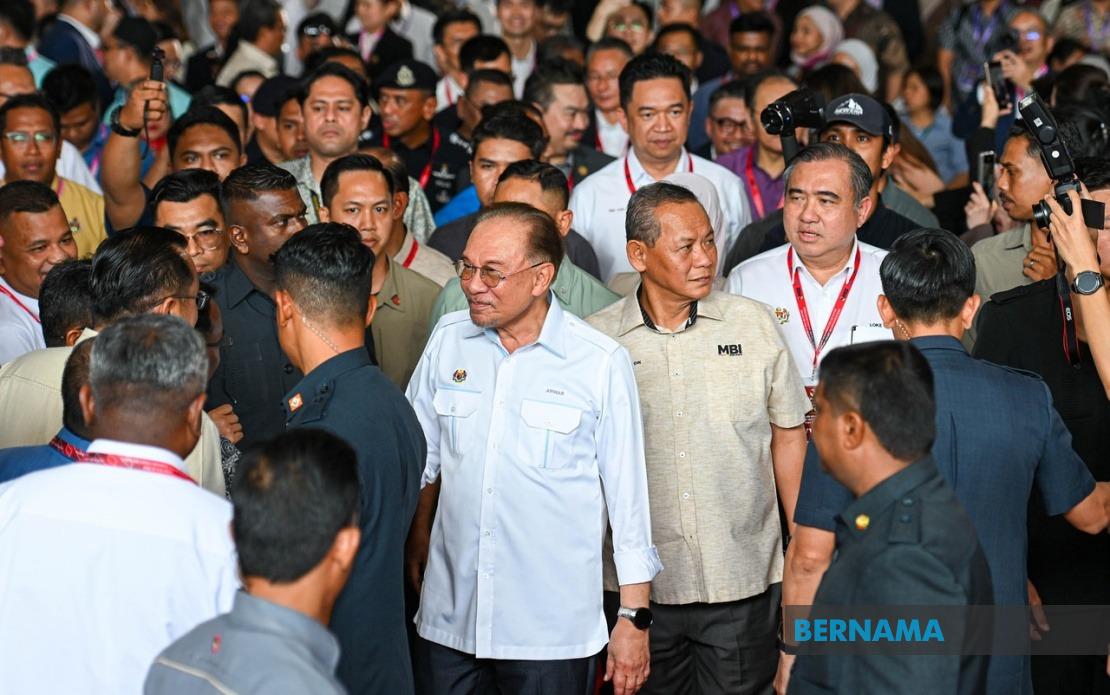
Prime Minister Datuk Seri Anwar Ibrahim has made a direct appeal to Melaka DAP to reconsider its decision to withdraw from the state government, seeking to preserve the ruling coalition's stability in the eastern seaboard state. Speaking to journalists at the Port Dickson port facility where he inaugurated an artificial intelligence-powered container terminal project, Anwar expressed hope that the party would defer its exit to allow the state administration to function uninterrupted until the next general election.
The appeal comes after Melaka DAP announced its immediate withdrawal from the state government in response to constitutional amendments passed by the state assembly that would enable the appointment of nominated assemblymen. Melaka DAP chairman Khoo Poay Tiong framed the decision as a principled stance against what the party characterises as anti-democratic measures, contending that the amendments undermine the integrity of electoral processes. The party's departure would reduce the coalition's bench strength in the Melaka state assembly at a critical juncture.
As chairman of Pakatan Harapan, the federal ruling coalition, Anwar indicated he had already engaged directly with DAP secretary-general Anthony Loke and Melaka Chief Minister Datuk Seri Ab Rauf Yusoh to broker negotiations. The prime minister's intervention signals the seriousness with which federal leadership views the breakdown in relations between coalition partners at the state level, and demonstrates his willingness to step into intra-coalition disputes personally rather than delegate the matter entirely to party machinery.
Anwar's remarks underscored a broader philosophy on coalition management, one that acknowledges inevitable disagreements among disparate political partners while arguing for subordinating such differences to larger national and state development agendas. He suggested that while component parties may harbour fundamentally different positions on certain issues, these should not become obstacles to pursuing economic growth initiatives or social welfare programmes that benefit ordinary Malaysians. This framing attempts to elevate the conversation beyond the constitutional dispute to encompass the practical consequences of coalition fracture.
The prime minister's language reflected recognition that the loss of DAP representation in Melaka could complicate decision-making in the state assembly and potentially weaken the coalition's ability to pass legislation. The timing is particularly sensitive given that the nation remains in the electoral cycle, with political realignments at the state level often foreshadowing broader shifts in national politics. Melaka's political stability has become increasingly important as a bellwether for coalition unity heading toward the next general election.
The constitutional amendments at the heart of the dispute represent a longstanding point of contention within Malaysian politics regarding the balance between democratic representation and executive flexibility. DAP's opposition to nominated assemblymen stems from the party's ideological commitment to electoral democracy and its historical positioning as a champion of representative governance. The party views such appointments as circumventing the democratic process and enabling governments to manufacture legislative majorities without popular endorsement.
For Anwar, the challenge lies in managing competing imperatives: respecting DAP's principled objections while also maintaining the coalition's operational effectiveness in Melaka. The state government cannot function optimally if a significant coalition partner withdraws representation, yet forcing DAP to remain part of a government pursuing policies it opposes risks deeper fractures within Pakatan Harapan. Anwar's appeal for postponement effectively seeks a pause to allow emotions to cool and alternative solutions to emerge through quiet diplomacy.
From the perspective of Malaysian political stability, coalition governance remains delicate at both federal and state levels. The Melaka situation exemplifies the tensions inherent in multi-party coalitions where ideological differences, practical governance needs, and electoral calculation must be constantly balanced. If DAP proceeds with withdrawal and other component parties face similar pressures, the entire Pakatan Harapan architecture could be tested in ways that would reverberate throughout the political system.
The incident also highlights the extent to which state-level governance disputes have assumed national significance in Malaysia's contemporary politics. Decisions made in Melaka's legislative assembly now immediately engage the prime minister's office, reflecting how fragmented state coalitions have become crucial to overall federal stability. For regional observers, this dynamic demonstrates the complexity of managing coalition governments across Malaysia's federal structure, where state and national politics have become increasingly interwoven.
The coming days will reveal whether Anwar's intervention succeeds in creating space for continued negotiation, or whether DAP proceeds with its exit, setting a precedent that could encourage other coalition partners to resort to withdrawal when facing objectionable state government policies. The resolution of this dispute will likely influence how smoothly Pakatan Harapan manages internal differences through the remaining period before the next general election.

