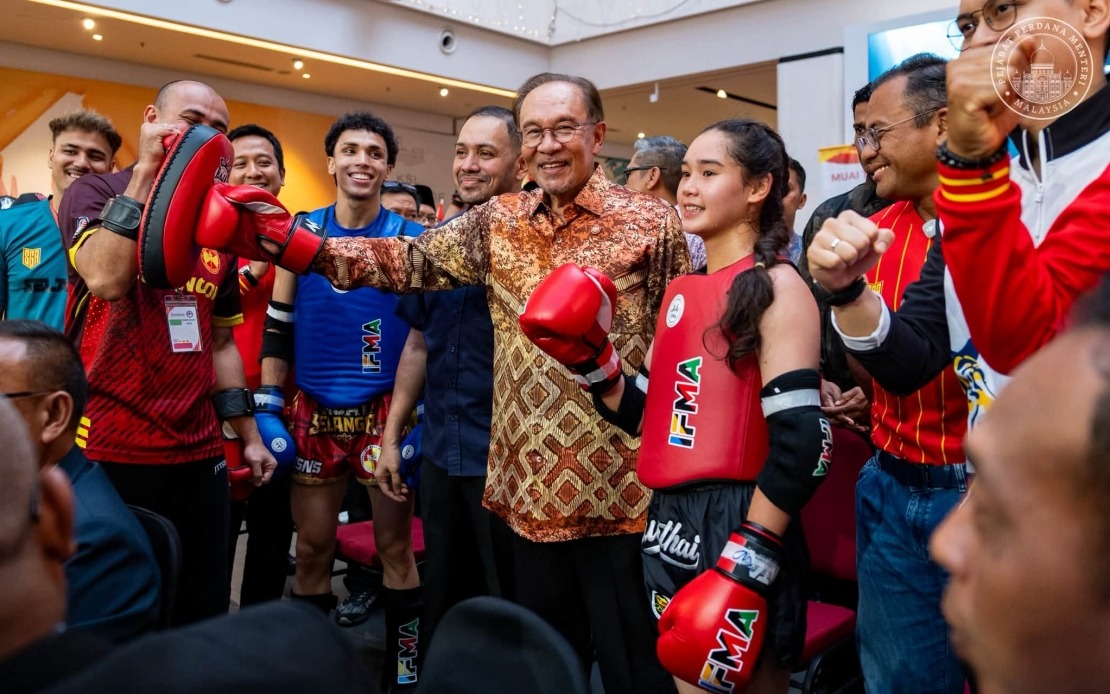
Prime Minister Datuk Seri Anwar Ibrahim has thrown his backing behind the thousands of young competitors at the 2026 Selangor Malaysia Games, expressing confidence that the best among them will one day carry the national flag on international sporting platforms. The premier's endorsement comes as the biennial competition enters its final week, with the five-day tournament drawing to a close on August 24 after hosting more than 5,000 athletes from every corner of the country.
Anwar's remarks, shared publicly on social media, reflected his personal observations after spending time with the competitors and witnessing Muay Thai events firsthand. The Prime Minister was struck by what he witnessed in their performances—not merely technical skill, but the intangible qualities that define elite athletes: unwavering commitment to excellence, mental fortitude, and a willingness to push beyond perceived limitations. These attributes, he suggested, form the bedrock upon which Malaysia's future sporting prowess will be built.
The 2026 edition of SUKMA represents a significant moment for Selangor, which reclaims hosting duties for the Games after a 28-year interval. The scale of the competition underscores its importance within Malaysia's sports development ecosystem. With 37 sports contested and 468 gold medals distributed across the various disciplines, the Games provide an unparalleled platform for identifying and nurturing young talent that might eventually graduate to national teams and international competitions.
Selangor's return as host carries additional symbolic weight for Malaysian sport governance. The state's previous hosting experience in 1998 preceded a period of significant Malaysian achievement in regional competitions. By once again taking centre stage, Selangor signals the nation's continued commitment to grassroots athletic development and competitive excellence at the developmental level. The Games themselves serve as a crucial filtering mechanism, enabling national sports associations and coaching frameworks to identify prospects with the right combination of physical ability and psychological resilience.
Anwar's specific mention of Muay Thai reflects the diversity of sporting disciplines represented at SUKMA. Traditionally dominated by Southeast Asian nations, Muay Thai's inclusion at the Games acknowledges both the sport's cultural significance within the region and Malaysia's growing investment in martial sports development. The presence of national leadership at such events sends a powerful signal to young athletes about the value society places on their endeavours, transcending the purely competitive dimensions of sport.
The broader context of Anwar's remarks touches on a perennial challenge for Malaysian sports policy: translating domestic competitive success into sustained international performance. While Malaysia has produced notable champions across various disciplines, the journey from promising junior competitor to world-class athlete requires not only individual talent but also sustained institutional support, quality coaching, and investment in training infrastructure. Anwar's public recognition of SUKMA athletes contributes to building a narrative around national sporting ambition that extends beyond the Games themselves.
From a regional perspective, Malaysia's commitment to developing young athletes through platforms like SUKMA positions the nation competitively within Southeast Asia. Countries throughout the region employ similar models of grassroots sporting development, recognising that international success begins with identifying and nurturing young prospects at the domestic level. The Games thus operate as both a celebration of emerging talent and a strategic investment in Malaysia's future standing in regional and global sporting competitions.
The significance of SUKMA extends beyond the athletic arena into broader questions of national development and social mobility. For many young competitors from less affluent backgrounds, participation in the Games represents a rare opportunity to receive world-class coaching and exposure to competitive frameworks that might otherwise remain inaccessible. By championing these athletes, political leadership reinforces the principle that sporting excellence can serve as a pathway for talented individuals regardless of their socioeconomic circumstances.
Anwar's intervention also reflects an apparent recalibration of how Malaysia's highest political offices engage with grassroots sporting development. Rather than confining attention to international tournaments or professional sports, the Prime Minister's visible participation in SUKMA proceedings demonstrates recognition that sustainable sporting achievement depends fundamentally on the quality of domestic competitions and the depth of the talent pool from which national teams are eventually drawn. This perspective aligns with best practices observed in countries with strong international sporting records, where political and institutional support for developmental competitions receives sustained attention.
Looking ahead, the challenge for Malaysian sports authorities will be ensuring that the enthusiasm and momentum generated by SUKMA translates into concrete pathways for identified athletes. Young competitors recognised at the Games require ongoing support through structured training programmes, access to elite coaching, and opportunities for competition at increasingly demanding levels. The gap between promising junior performer and international-standard athlete remains substantial, and bridging it demands commitment extending well beyond a single Games event.

