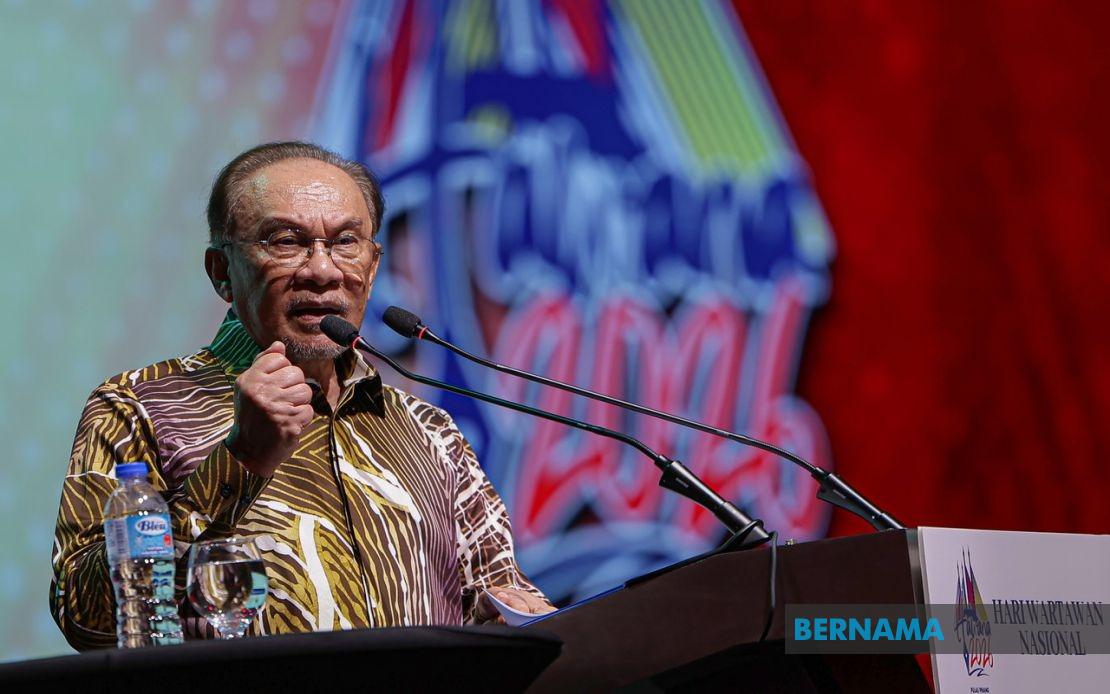
Prime Minister Datuk Seri Anwar Ibrahim has publicly endorsed the appointment of former Federal Court judge Tan Sri Nallini Pathmanathan as chairman of the Malaysian Media Council, signalling the government's confidence that her distinguished background will lift the council's standing among the public. Speaking at the National Journalists' Day 2026 celebration in Butterworth on June 20, Anwar emphasised that Nallini's selection followed a thorough vetting process that examined her credentials, professional accomplishments and personal integrity. The prime minister expressed optimism that her tenure would restore public trust in an institution tasked with maintaining journalistic standards and protecting media freedom across the country.
Nallini's appointment represents a significant moment for Malaysia's media governance framework, which operates under the newly enacted Malaysian Media Council Act 2025. The legislation established the MMC as a self-regulatory institution with a broad mandate spanning multiple dimensions of media oversight. Beyond managing public complaints and addressing breaches of journalistic conduct, the council is charged with promoting ethical practices across newsrooms and upholding media freedom as a fundamental democratic principle. This multi-faceted role requires leadership that can navigate the complex terrain between ensuring accountability and preserving the independence that journalists require to serve the public interest.
The selection of a former senior judge signals a deliberate strategy to position the council as an impartial arbiter rather than a political instrument. Nallini's tenure on the Federal Court provided her with extensive exposure to constitutional matters, judicial reasoning and the legal frameworks underpinning democratic institutions. These qualifications address longstanding concerns about media regulatory bodies in Southeast Asia, where questions about independence and political neutrality frequently undermine their effectiveness. By appointing someone whose career was spent interpreting law rather than administering political directives, Malaysian policymakers appear intent on distinguishing their approach from regulatory capture that has plagued similar bodies elsewhere in the region.
The MMC board achieved unanimity in endorsing Nallini during a formal meeting held on May 26, indicating consensus among media industry representatives, civil society figures and government appointees about her suitability for the role. This consensus carries symbolic weight in a landscape where media regulatory decisions often prove contentious and subject to accusations of partisan motivation. A unanimously supported appointment provides Nallini with a broader mandate and greater legitimacy when addressing contentious disputes or enforcing editorial standards that might otherwise invite criticism of bias.
Anwar's intervention at the journalists' gathering underscored government backing for the appointment while simultaneously validating the broader institutional framework. The presence of senior figures including Penang Chief Minister Chow Kon Yeow and Communications Minister Datuk Fahmi Fadzil reflected the political importance attached to media governance in contemporary Malaysia. These officials recognised that effective media regulation serves government interests by establishing clear boundaries and professional standards that reduce frivolous complaints while maintaining public confidence in journalism's credibility. The assembled leadership signalled that robust media institutions ultimately benefit all stakeholders by clarifying expectations and depoliticising routine disputes.
For Malaysian journalists and news organisations, Nallini's appointment offers both opportunities and uncertainties. On one hand, leadership grounded in judicial experience may bring greater rigour and consistency to complaints adjudication, improving the council's reputation for fairness and reasoned decision-making. On the other hand, individuals transitioning from judicial roles sometimes apply standards of conduct and proof derived from criminal or civil law that may not perfectly align with journalistic practice and the inherent tensions between accuracy, timeliness and public interest reporting. The council's early decisions under Nallini's stewardship will establish crucial precedents regarding how strictly it enforces standards and whether it demonstrates sensitivity to journalism's operational realities.
The MMC's establishment reflects growing recognition across Southeast Asia that media industries require independent quality-assurance mechanisms to maintain public credibility. Traditional regulatory approaches relying primarily on government oversight have become politically contested and internationally scrutinised. Self-regulatory frameworks, when properly resourced and staffed with respected figures, can potentially preserve professional standards while reducing government interference. Malaysia's adoption of this model places it within a regional trend toward institutional separation between political power and media governance, though the success of such arrangements depends heavily on implementation and leadership commitment to independence.
Nallini's background as a woman in Malaysia's senior judiciary also carries symbolic significance in an institution affecting an industry where gender representation remains uneven at senior decision-making levels. Her leadership may influence organisational culture and signalling effects regarding diversity in media governance positions throughout the region. This dimension, while secondary to questions of competence and judicial temperament, contributes to broader institutional legitimacy by ensuring that regulatory bodies reflect the diversity of communities they serve.
The practical effectiveness of Nallini's tenure will ultimately depend on the MMC's operational independence and the resources allocated to its complaints investigation and adjudication processes. High-profile appointments matter less than institutional design and political willingness to respect adverse decisions when governments or politically connected entities are involved in disputes. Malaysia's media community and international observers will scrutinise early cases to assess whether the council's decisions reflect genuine independence or merely provide bureaucratic cover for predetermined political outcomes. The real test of confidence-building will occur when the council must rule against powerful interests while maintaining its reputation for impartiality and rigorous reasoning.
%22%2F%3E%3C%2Fpattern%3E%3C%2Fdefs%3E%3Crect%20width%3D%22100%25%22%20height%3D%22100%25%22%20fill%3D%22url(%23ph1o3zeg)%22%2F%3E%3Crect%20width%3D%22100%25%22%20height%3D%22100%25%22%20fill%3D%22url(%23ph1o3zep)%22%2F%3E%3Ctext%20x%3D%2250%25%22%20y%3D%2250%25%22%20text-anchor%3D%22middle%22%20dominant-baseline%3D%22central%22%20fill%3D%22rgba(255%2C255%2C255%2C0.95)%22%20font-family%3D%22Georgia%2C%20'Times%20New%20Roman'%2C%20serif%22%20font-weight%3D%22700%22%20font-size%3D%22170%22%20letter-spacing%3D%22-0.02em%22%3ENational%3C%2Ftext%3E%3C%2Fsvg%3E)
%22%2F%3E%3C%2Fpattern%3E%3C%2Fdefs%3E%3Crect%20width%3D%22100%25%22%20height%3D%22100%25%22%20fill%3D%22url(%23ph4gh41g)%22%2F%3E%3Crect%20width%3D%22100%25%22%20height%3D%22100%25%22%20fill%3D%22url(%23ph4gh41p)%22%2F%3E%3Ctext%20x%3D%2250%25%22%20y%3D%2250%25%22%20text-anchor%3D%22middle%22%20dominant-baseline%3D%22central%22%20fill%3D%22rgba(255%2C255%2C255%2C0.95)%22%20font-family%3D%22Georgia%2C%20'Times%20New%20Roman'%2C%20serif%22%20font-weight%3D%22700%22%20font-size%3D%22170%22%20letter-spacing%3D%22-0.02em%22%3EMalaysia%3C%2Ftext%3E%3C%2Fsvg%3E)
%22%2F%3E%3C%2Fpattern%3E%3C%2Fdefs%3E%3Crect%20width%3D%22100%25%22%20height%3D%22100%25%22%20fill%3D%22url(%23ph4a2eeg)%22%2F%3E%3Crect%20width%3D%22100%25%22%20height%3D%22100%25%22%20fill%3D%22url(%23ph4a2eep)%22%2F%3E%3Ctext%20x%3D%2250%25%22%20y%3D%2250%25%22%20text-anchor%3D%22middle%22%20dominant-baseline%3D%22central%22%20fill%3D%22rgba(255%2C255%2C255%2C0.95)%22%20font-family%3D%22Georgia%2C%20'Times%20New%20Roman'%2C%20serif%22%20font-weight%3D%22700%22%20font-size%3D%22136%22%20letter-spacing%3D%22-0.02em%22%3EGovernment%3C%2Ftext%3E%3C%2Fsvg%3E)