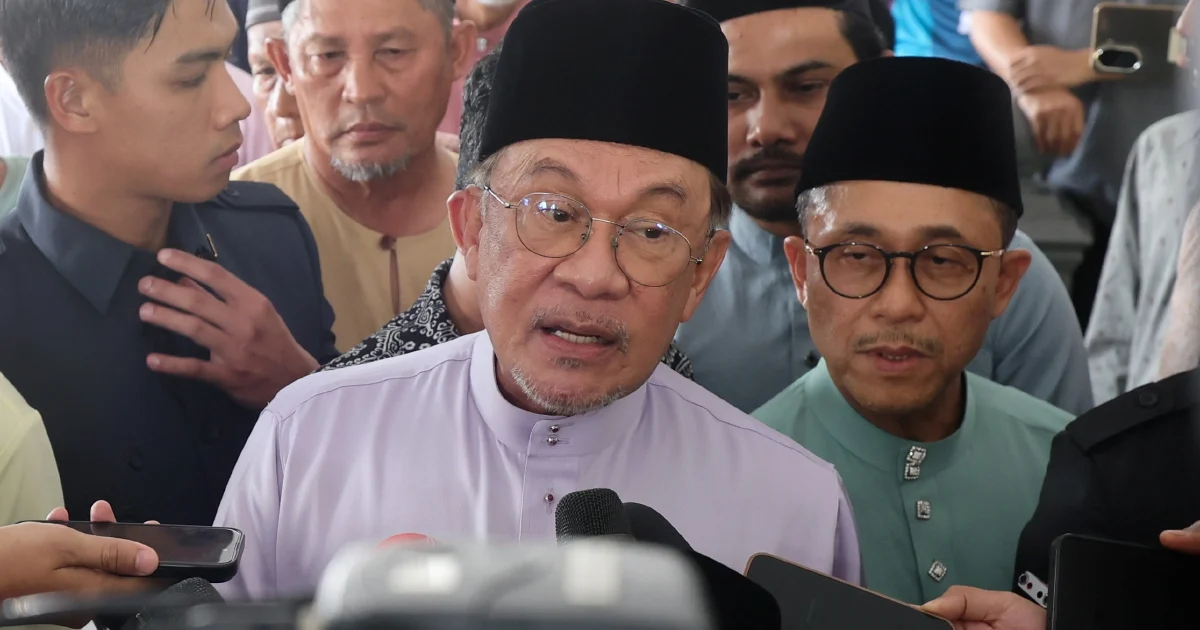
Prime Minister Datuk Seri Anwar Ibrahim has sought to address growing concerns among non-Muslim communities by emphasising that proposed enhancements to Malaysia's Syariah court framework will not erode their constitutional guarantees to practise religion freely. Speaking in Putrajaya, the Prime Minister attempted to balance the government's commitment to strengthening Islamic judicial institutions with assurances that such moves remain within constitutional parameters and do not threaten the legal protections afforded to other faith communities.
The announcement represents a carefully calibrated response to mounting debate within Malaysian civil society about the scope and jurisdiction of religious courts. For non-Muslim minorities—comprising roughly 40 per cent of Malaysia's population—questions have arisen about whether expanding Syariah court authority or elevating their institutional status might indirectly affect property rights, family law matters, or other areas where multiple legal frameworks intersect. The Prime Minister's clarification signals the government's intention to proceed with judicial reforms while simultaneously attempting to contain anxieties about institutional overreach.
Malaysia's constitutional architecture has long maintained a distinctive separation between civil and religious court systems, with the former handling matters across all communities and the latter addressing Islamic personal law for Muslim citizens. This dual system has remained largely stable since independence, though periodic tensions have emerged when the boundaries between jurisdictions blur. The government's recent focus on enhancing Syariah institutions reflects both Islamic political constituencies within the ruling coalition and broader regional trends toward strengthening religious judicial structures in Muslim-majority democracies.
Anwar Ibrahim's statement carries particular weight given his historical positioning as an advocate for Islamic reform and modernisation. His tenure as Prime Minister has involved navigating multiple competing pressures—from religiously conservative constituencies within Umno and PAS, from secular and pluralist segments of society, and from international observers monitoring Malaysia's democratic institutions. By explicitly linking Syariah court elevation to reassurances about non-Muslim protections, he seeks to present the reforms as developmentally sophisticated rather than ideologically expansionist.
The timing of these assurances reflects Malaysia's ongoing political realignment. The inclusion of PAS in the federal coalition following the 2022 elections has elevated Islamic policy matters within government discourse. Simultaneously, the government faces scrutiny regarding minority rights protections, particularly following various incidents where Syariah enforcement officers have been perceived as overstepping jurisdictional bounds. Anwar's clarification attempts to demonstrate that the administration can simultaneously strengthen Islamic institutions and honour constitutional commitments to religious pluralism.
Constitutionally, Malaysia's Article 11 guarantees freedom of religion for all citizens, including rights to propagate faith among followers, establish and maintain religious institutions, and observe religious rites and rituals. These protections theoretically remain independent of how the state structures or elevates particular judicial frameworks. However, non-Muslim communities have expressed concern that enhanced Syariah court status might influence policy-making at state and federal levels in ways that incrementally narrow their practical enjoyment of these rights, even if constitutional language remains formally unchanged.
The proposed elevation of Syariah courts likely involves enhanced funding, infrastructure, training for Islamic judges, and potentially broadened jurisdictional reach in areas like Islamic family law and Islamic finance. Proponents argue such strengthening responds to Malaysia's growing Muslim population and the need for efficient, specialised courts handling Islamic legal matters. Critics worry that institutional elevation without vigilant safeguards might create momentum for further jurisdictional expansion that could eventually affect non-Muslims, particularly in mixed-faith families or commercial contexts involving Islamic financial products.
Regionally, Malaysia's approach differs subtly from neighbouring jurisdictions. Indonesia's recent expansion of religious court authority, particularly following local Islamic law implementation in certain regions, has drawn scrutiny from international human rights monitors. Thailand's handling of Islamic courts in southern provinces reflects yet another model. Malaysia's stated commitment to maintaining dual-track systems while enhancing religious judiciary appears intended as a middle path—accommodating Islamic constituencies while maintaining the Federal Constitution's foundational framework.
For non-Muslim political parties and civil society organisations, Anwar's assurance provides rhetorical comfort but leaves implementation details undefined. Key questions persist: How will Syariah court elevation be legislatively structured? Will there be additional safeguards preventing institutional scope creep? How will jurisdictional conflicts between civil and religious courts be resolved, particularly in marriage and guardianship matters affecting children of mixed-faith backgrounds? These specifics will likely shape whether the government's stated intentions translate into actual minority protection.
The broader context involves Malaysia's identity as a constitutional monarchy with Islam holding special constitutional status while simultaneously being a multi-religious federation with minority faiths enjoying constitutionally-protected rights. This foundational tension has produced decades of careful institutional balancing. Any significant elevation of religious judicial authority inherently requires navigating this constitutional duality with precision. The Prime Minister's statement indicates awareness of this complexity, though translating awareness into legislative and administrative practice remains the crucial test.
Moving forward, the government will likely face continued scrutiny from both religious constituencies demanding comprehensive Syariah implementation and from minority communities monitoring whether assurances materialise into binding protections. The success of these reforms in maintaining social cohesion depends significantly on transparent consultation processes, clear legislative language protecting existing rights, and robust mechanisms preventing jurisdictional overreach. Anwar Ibrahim's statement represents an opening position in what promises to be sustained negotiation between Malaysia's competing constitutional commitments.

