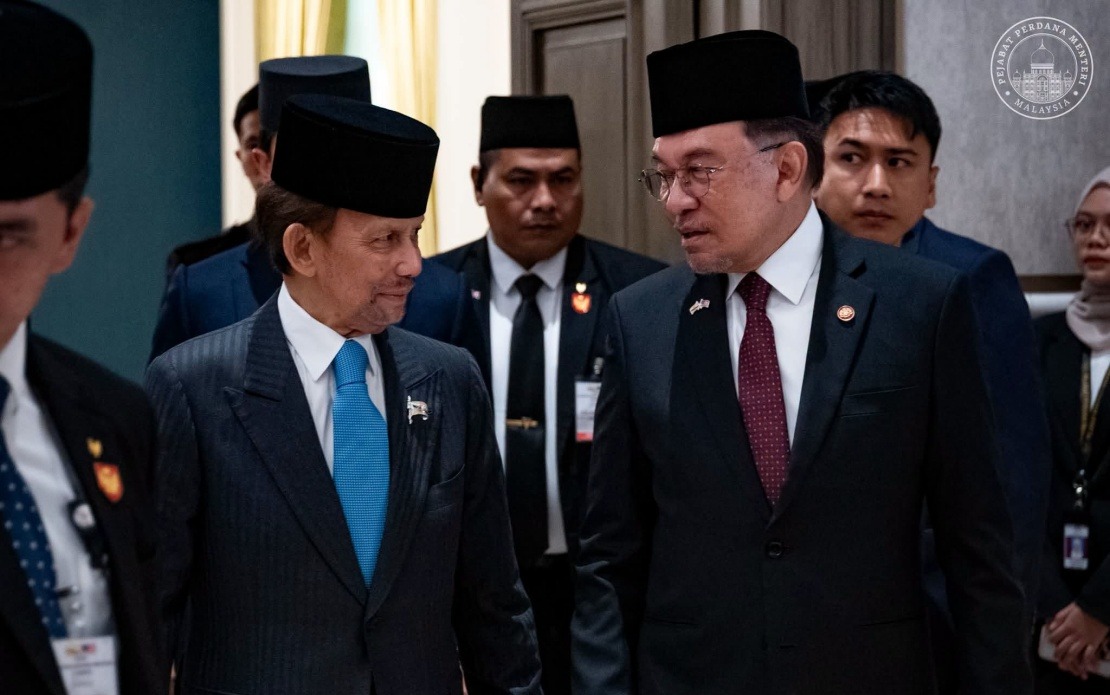
Prime Minister Datuk Seri Anwar Ibrahim has publicly acknowledged the warm wishes and prayers extended by Sultan Hassanal Bolkiah of Brunei Darussalam, who placed a personal call to inquire about the Malaysian leader's wellbeing. The gesture reflects the close diplomatic ties between Kuala Lumpur and Bandar Seri Begawan, underpinned by decades of bilateral cooperation and shared regional interests.
The phone conversation took place shortly after Anwar's elective laparoscopic procedure to address a para-umbilical hernia, a minimally invasive surgical intervention performed last Monday. The Malaysian premier, sharing details of the call through a Facebook post, expressed his appreciation for the Brunei monarch's thoughtfulness during what constitutes a recovery period. Such personal exchanges between regional leaders, particularly during moments of health concern, underscore the significance placed on bilateral relationships within Southeast Asia's diplomatic landscape.
In his public response, Anwar reciprocated the goodwill by offering prayers for the Sultan's continued good health and divine protection. This reciprocal expression of concern demonstrates the respectful protocol maintained between neighbouring ASEAN nations, where personal regard between heads of state carries both symbolic and practical weight in strengthening institutional relationships. The tone of such exchanges often reflects broader patterns of cooperation that extend far beyond ceremonial courtesies.
The timing of Sultan Hassanal Bolkiah's call gains added significance given Malaysia's ongoing efforts to maintain steady diplomatic engagement across the region during a period of considerable domestic political attention. Anwar's recovery from the surgical procedure has naturally drawn public interest, and the Sultan's proactive approach in reaching out provides reassurance regarding the Prime Minister's continued capacity to lead while under medical supervision. Medical specialists remain closely monitoring Anwar's progress, indicating that the procedure was routine yet requires appropriate post-operative care and observation.
Most substantially, the two leaders are set to convene in Bandar Seri Begawan the following week, where they will participate in the 27th Annual Leaders' Consultation between Malaysia and Brunei. This biennial mechanism represents one of the region's most significant bilateral forums, providing structured opportunity for high-level discussions on matters spanning trade, defence, cultural exchange, and regional security architecture. The scheduled meeting will proceed despite Anwar's recent surgery, suggesting confidence in his recovery trajectory and the importance both governments place on maintaining continuity in their bilateral engagement.
The Malaysia-Brunei relationship carries particular weight within ASEAN dynamics, given both nations' shared maritime borders, overlapping economic interests, and complementary security concerns. Brunei, though smaller in population and economy than Malaysia, maintains considerable regional influence through its substantial hydrocarbon wealth and strategic positioning along critical shipping lanes. Regular high-level consultation mechanisms like the ALC ensure that bilateral matters receive sustained attention at the highest political level, preventing misunderstandings and reinforcing cooperative frameworks.
Anwar's leadership of Malaysia over recent years has placed considerable emphasis on strengthening ASEAN cohesion and Southeast Asian regional integration. The forthcoming meeting with Sultan Hassanal Bolkiah provides an opportunity to address various bilateral agenda items, potentially including maritime cooperation, economic collaboration, and coordinated approaches to regional challenges. Such consultations typically encompass discussions on ASEAN affairs, given both nations' prominent roles within the regional bloc.
The personal dimension of the Sultan's outreach also reflects broader patterns within Southeast Asian statecraft, where relationships between monarchs and elected leaders often require careful calibration. Brunei's absolute monarchy and Malaysia's constitutional monarchy within a democratic system have coexisted peacefully, with both systems finding common ground on issues of regional stability and mutual interest. These personal gestures between leaders help maintain the diplomatic channels that facilitate such coexistence.
For Malaysian readers, the exchange underscores how their nation's regional standing remains robust despite domestic political developments. Neighbouring leaders continue to engage Malaysia's Prime Minister at appropriate levels, and the Sultan's proactive concern demonstrates that bilateral relationships transcend individual political circumstances. This consistency in diplomatic engagement provides reassurance regarding Malaysia's continued relevance and influence within ASEAN and broader Asian geopolitical calculations.
Looking ahead, the planned consultation in Bandar Seri Begawan will likely address issues ranging from defence cooperation to economic partnership opportunities. Both nations benefit from sustained institutional engagement, and the routine scheduling of such high-level meetings reflects maturity in bilateral relations. The consultations typically result in joint statements outlining agreed priorities and reaffirming commitment to cooperation across multiple sectors, thereby setting the diplomatic tone for the ensuing months.
Anwar's anticipated participation in the ALC, despite his recent medical procedure, signals his fitness to continue performing his duties as Prime Minister while under medical supervision. The Malaysian government's transparency regarding his condition and recovery demonstrates public confidence in the nation's leadership continuity. The Sultan's supportive call, while seemingly a simple courtesy, carries symbolic weight in affirming that Malaysia's international standing and bilateral partnerships remain unaffected by temporary health challenges affecting individual leaders.
The upcoming meeting between Anwar and Sultan Hassanal Bolkiah will thus serve multiple purposes: it provides opportunity for substantive bilateral discussion on matters of mutual interest, demonstrates both leaders' commitment to maintaining robust diplomatic engagement, and reinforces ASEAN's internal cohesion during a period when regional cooperation faces various external pressures and challenges. Such meetings, while routine in appearance, constitute essential components of the institutional architecture that has maintained peace and stability within Southeast Asia for decades.

