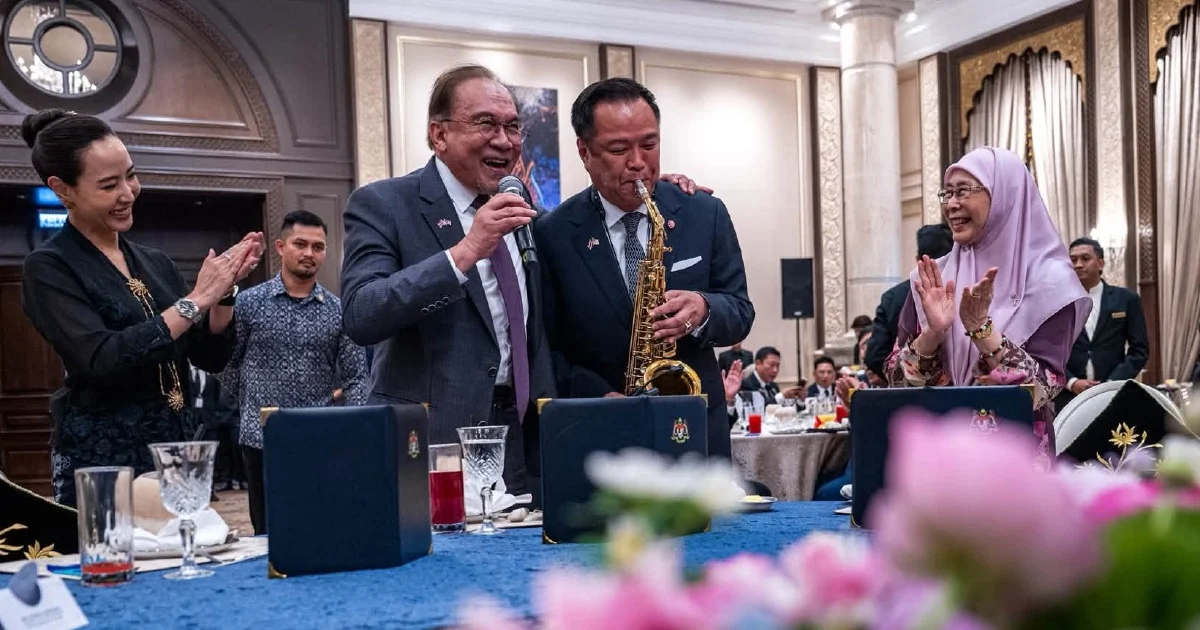
An unexpected moment of levity unfolded at an official luncheon in Putrajaya when Prime Minister Datuk Seri Anwar Ibrahim and Thai Prime Minister Anutin Charnvirakul abandoned formality to perform an impromptu rendition of Frank Sinatra's classic ballad My Way. The impromptu performance, which saw Anwar take centre stage with vocals while Anutin accompanied on saxophone, provided a striking counterpoint to the diplomatic negotiations that had preceded the meal, offering a rare glimpse of personal rapport between two regional leaders.
The musical interlude emerged following substantive bilateral discussions between Malaysia and Thailand, marking a moment when the carefully choreographed nature of high-level diplomacy briefly gave way to spontaneity. Such instances are seldom documented at official state functions, where protocol and decorum typically dominate proceedings. The choice of My Way—a song about personal conviction and independence—carried an understated symbolic weight, particularly given the song's enduring appeal across Asian audiences and its association with performers who have commanded widespread regional admiration.
Anutin's presence as Thailand's Prime Minister represents continuity in Bangkok's approach to regional engagement, while Anwar's role reflects Malaysia's broader strategy of strengthening ties with neighbouring countries through both formal mechanisms and personal diplomacy. The luncheon setting itself underscores how bilateral relations between the two nations extend beyond trade statistics and defence agreements to encompass people-to-people connections and the cultivation of personal relationships among senior officials. This dimension of statecraft, though often overlooked in analyses focused on economic or security cooperation, frequently determines the trajectory and warmth of long-term regional partnerships.
The performance highlighted a growing trend among Southeast Asian leaders of using cultural moments to humanise diplomatic engagement and project an image of approachability beyond their official roles. In an era where public perception shapes international standing, such moments gain amplified significance through social media circulation and news coverage. The spontaneous nature of the performance—rather than a stage-managed spectacle—enhanced its authenticity and appeal, suggesting a genuine comfort between the two leaders rather than a scripted demonstration of regional camaraderie.
Thailand and Malaysia maintain complex relations rooted in shared maritime boundaries, complementary economic interests, and historical cultural ties, alongside occasional points of friction. The informal warmth displayed at this luncheon serves to reinforce the positive trajectory of bilateral engagement, signalling to domestic audiences in both countries and regional observers that leadership is committed to collaborative approaches. Such gestures prove particularly valuable during periods when diplomatic relations face nuanced challenges or require reinforcement of underlying goodwill.
For Malaysian observers, the moment also provided insight into Anwar's personal demeanour and willingness to engage in informal settings—a departure from the more formal public persona that typically characterises his official appearances. The incident demonstrates how leaders can leverage cultural common ground and shared entertainment references to build rapport, transcending the formal distance that often characterises state-level interactions. The choice of a Frank Sinatra composition suggests both leaders possess familiarity with Western popular culture, a characteristic that reflects their generation's cosmopolitan exposure.
The saxophone performance by Anutin added particular colour to the moment, indicating musical inclinations that had perhaps not been widely publicised or recognised in Malaysian media circles previously. Such personal details humanise political figures and create memorable narratives that resonate with the public far more effectively than lengthy communiqués detailing policy alignments or trade figures. The luncheon thus achieved a dual purpose: conducting necessary bilateral business while simultaneously generating goodwill and positive media coverage.
From a regional perspective, moments like these contribute to an atmosphere of cooperation and mutual respect that underpins ASEAN cohesion and bilateral partnerships within Southeast Asia. When senior leaders demonstrate comfort with one another and willingness to engage in informal cultural exchanges, it sets a positive tone for government officials at lower levels who must implement agreements and conduct day-to-day diplomatic work. The ripple effects of such personal rapport often prove essential when navigating complex negotiations or managing disagreements that inevitably arise between neighbouring nations.
The incident also reflects broader patterns within Southeast Asian diplomacy, where leaders increasingly recognise that fostering genuine personal relationships complements formal institutional frameworks. While bilateral agreements and trade arrangements remain crucial, the personal dynamics between leaders shape how effectively those arrangements function and how quickly new initiatives gain traction. The My Way performance thus transcends mere entertainment, representing an investment in the human foundations upon which successful regional partnerships rest.
Looking forward, such moments contribute to a positive narrative surrounding Malaysia-Thailand relations, potentially easing public perception on both sides and creating political capital that leaders can draw upon when addressing more contentious issues. The image of Anwar and Anutin engaging in musical performance—relaxed, smiling, and clearly enjoying each other's company—projects a vision of Southeast Asian leadership focused on cooperation and cultural celebration rather than confrontation. In an increasingly fractious global environment, such displays of regional solidarity hold particular value.

