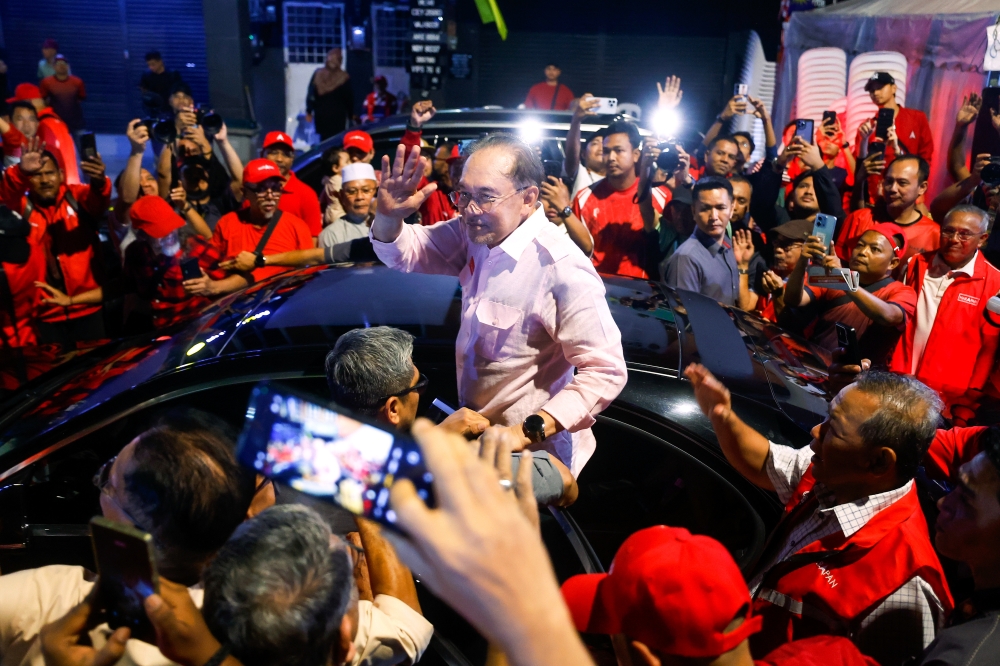
Prime Minister Datuk Seri Anwar Ibrahim has moved to quell concerns about the durability of Malaysia's federal unity coalition, declaring in Seremban on July 23 that the multi-party government remains firmly anchored despite mounting political pressures. His comments come as the administration faces intermittent challenges from various quarters seeking to test the cohesion of the ruling alliance that was carefully constructed following the 2022 general election to prevent any single faction from dominating parliament.
The Prime Minister's reassurance reflects a broader pattern of political messaging aimed at reassuring investors, international observers, and domestic stakeholders that Malaysia's governance structure can weather internal strains without collapsing into instability. The unity government, comprising parties from across the traditional political spectrum, represents an unconventional arrangement designed to promote consensus and prevent the adversarial gridlock that characterized earlier parliamentary sessions.
Anwar's positioning of the federal coalition as resilient carries significant weight in a Malaysian context where coalition stability directly influences macroeconomic confidence. International investors monitor such signals closely, as political uncertainty can trigger currency volatility and affect foreign direct investment flows. The Prime Minister's emphasis on governmental continuity appears calculated to maintain the perception of predictable policy implementation, a crucial element for countries competing for manufacturing relocation from China and seeking to consolidate their position within regional supply chains.
The accompanying assertion regarding economic fundamentals suggests government confidence in current growth trajectories and structural reforms underway across multiple sectors. Malaysia's economy, whilst navigating global headwinds including elevated interest rates and geopolitical tensions, has demonstrated comparative resilience within Southeast Asia. The administration has focused on digital economy expansion, semiconductor manufacturing consolidation, and renewable energy transition as pillars for sustained expansion beyond traditional resource dependencies.
However, the necessity for such affirmations hints at underlying tensions within the unity framework. Coalition governments inherently require continuous negotiation and compromise, with smaller parties wielding disproportionate leverage over legislative outcomes. This dynamic can slow decision-making on contentious issues ranging from tax policy to subsidy reforms, potentially constraining the government's ability to implement comprehensive structural adjustments needed for long-term competitiveness.
The timing of Anwar's comments, delivered in Negeri Sembilan, carries strategic significance as the state has represented a political bellwether in Malaysian elections. Public statements made in such locales often serve dual purposes—simultaneously addressing immediate regional audiences whilst signalling broader national intent to media observers and political analysts tracking coalition stability.
For Malaysia's business community, continued governmental cohesion remains essential for executing the medium-term policy agenda outlined through mechanisms like the Twelfth Malaysia Plan. Investor appetite for long-term infrastructure participation, privatisation initiatives, and pension fund reforms depends substantially on predictable government tenure and legislative capacity to pass necessary framework amendments. Disruption to this arrangement could defer critical national development projects and complicate efforts to attract foreign technology partnerships.
The regional dimension also warrants consideration. Southeast Asian governments, competing for influence and economic partnerships, benefit from projecting internal stability. Malaysia's ability to execute consistent foreign policy, maintain reliable trade relationships, and participate effectively in regional institutions like ASEAN depends partly on domestic political continuity. Prolonged coalition fragmentation could weaken Malaysia's negotiating position on transnational issues including maritime disputes and semiconductor trade agreements.
Economic headwinds, whilst not catastrophic, do create pressure points that test coalition commitment. Inflation pressures, wage growth expectations, and demands for enhanced subsidy coverage during periods of global commodity volatility have historically strained multiparty arrangements. The government must balance populist spending demands with fiscal sustainability imperatives—a tension that frequently emerges within diverse coalitions lacking unified ideological direction.
The unity government's success ultimately rests upon member parties recognizing mutual benefits from continued collaboration over confrontational opposition politics. Should electoral calculations suggest greater advantage in alternative arrangements, coalition members retain the option to realign. Anwar's messaging therefore serves to reinforce the mutual interest calculus whilst demonstrating that current arrangements deliver tangible outcomes in economic management and governance effectiveness.
Looking forward, the sustainability of Malaysia's unity coalition will likely correlate with demonstrated economic performance and visible improvements in public service delivery. Citizens and coalition members alike measure government success through observable outcomes: employment creation, infrastructure completion, reduced corruption, and improved educational standards. The Prime Minister's emphasis on economic stability attempts to anchor the coalition's legitimacy in material improvements rather than purely political considerations, recognizing that coalition durability ultimately depends on perceived performance rather than institutional structures alone.

