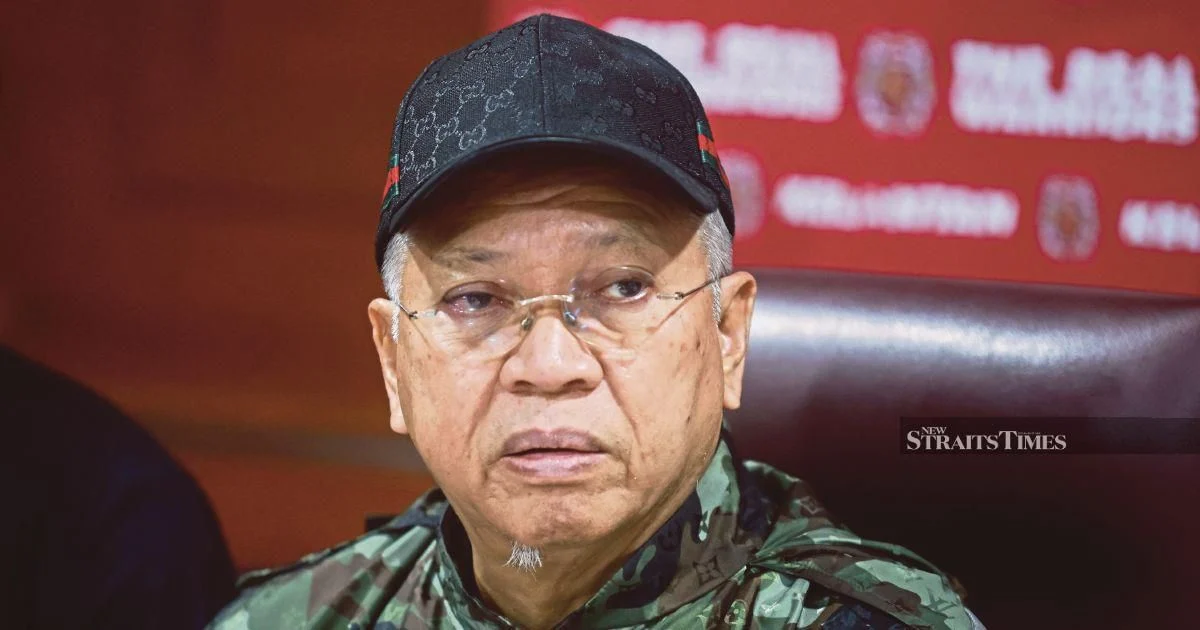
Tan Sri Annuar Musa has disclosed that his personal mediation attempts between Pas and internal factions within Bersatu have ultimately proved unsuccessful, raising fresh concerns about the stability of the Perikatan Nasional coalition. Speaking in Kota Baru, the senior politician revealed he had pursued multiple channels to bridge the growing chasm between the Islamic party and the competing groups within Bersatu, seeking to preserve the strategic partnership that has underpinned Malaysia's current political framework.
The failure of these reconciliation efforts underscores mounting tensions within Perikatan Nasional that threaten to unravel the delicate balance sustaining the present administration. The coalition, which governs Malaysia with support from Barisan Nasional, depends heavily on maintaining unity across its constituent parties. Divisions within Bersatu, compounded by disagreements with Pas, represent the most significant internal challenge the arrangement has faced since its formation.
Annuar's candid acknowledgement of the impasse signals that senior coalition figures have exhausted conventional diplomatic channels. His personal involvement in the mediation process—itself noteworthy given his prominence within Perikatan Nasional—suggests the leadership hierarchy views the situation as sufficiently grave to warrant high-level intervention. The fact that such efforts failed indicates the underlying grievances run considerably deeper than typical intra-party disputes.
Pas and Bersatu have operated as the two dominant forces within Perikatan Nasional, commanding substantial parliamentary representation and significant influence over coalition decision-making. The emergence of competing factions within Bersatu creates additional complexity, as it fragments what should theoretically be a unified voice within the partnership. This fragmentation effectively amplifies disagreements between the two parties, making consensus-building substantially more difficult.
The timing of Annuar's disclosure carries particular significance for Malaysian political observers. Coalition tensions typically intensify during periods of legislative importance or approaching electoral cycles, when parties manoeuvre for advantage. The public revelation of failed reconciliation attempts—rather than maintaining a unified façade—suggests coalition leadership has concluded that concealment is no longer viable or strategically beneficial.
For Malaysian readers, the ramifications extend beyond parliamentary mathematics. A destabilised governing coalition could impact policy implementation across multiple sectors, from economic management to social programmes. Investors closely monitor political stability as a key determinant of Malaysia's economic trajectory, and visible cracks within the government can influence business confidence and capital flows.
Within the broader Southeast Asian context, Malaysia's political stability carries regional significance. The country's role as a major economic player and security partner to several neighbouring nations means that extended internal political uncertainty could have cascading effects. Coalition instability might weaken Malaysia's negotiating position on regional issues or delay important policy initiatives affecting the wider region.
The Pas-Bersatu relationship has always contained inherent tensions rooted in different ideological orientations and constituencies. Pas appeals primarily to conservative Islamic voters and draws substantial support from rural areas, whilst Bersatu developed as a multiracial party with roots in Umno defections. Bridging these fundamental differences requires sustained commitment from both parties, commitment that may be eroding.
Bersatu's internal factions represent another complicating layer. The party has experienced competing leadership ambitions and strategic disagreements since its formation, with various groupings advocating different approaches to coalition engagement and political objectives. These fissures prevent Bersatu from negotiating as a unified entity with Pas, effectively requiring Annuar and other mediators to navigate multiple conversation streams simultaneously.
The breakdown of informal reconciliation mechanisms is particularly concerning because Malaysian political actors traditionally resolve such disputes through behind-the-scenes dialogue rather than public confrontation. Annuar's public disclosure suggests that private channels have been exhausted and that coalition parties may be preparing for potential confrontation or reorganisation.
Moving forward, coalition stability will likely depend on whether Perikatan Nasional leadership can identify alternative frameworks for managing these divisions. Some analysts suggest structural reforms to coalition governance could improve dispute resolution, whilst others question whether the coalition can survive its current internal stresses regardless of institutional modifications.
The weeks ahead will prove instructive regarding the coalition's viability. Further public disclosures of internal discord would likely accelerate broader political realignments, potentially prompting individual politicians or entire factions to reconsider their coalition affiliations. Malaysian political history demonstrates that such transitions, once initiated, often accelerate unpredictably.