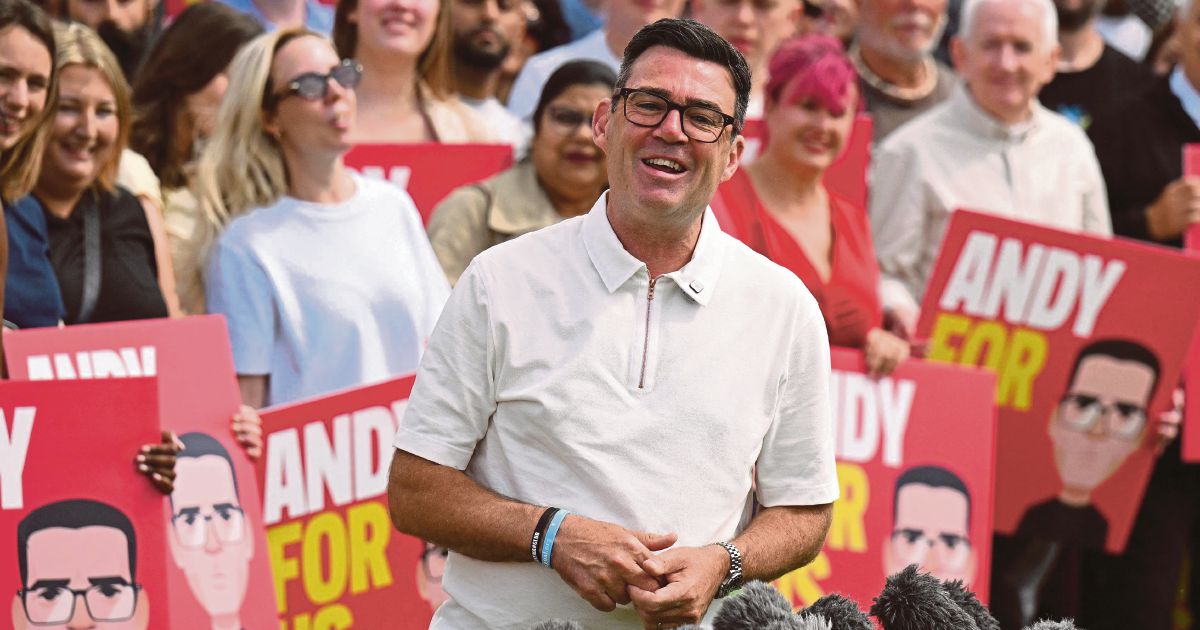
Andy Burnham has assumed office as Britain's seventh prime minister in ten years, marking yet another leadership transition in a nation grappling with persistent economic and social headwinds. The politician, who earned his 'King of the North' moniker through his tenure leading Manchester, enters Downing Street with an ambitious agenda to fundamentally restructure how government operates and responds to citizen concerns.
The rapid turnover in British premierships over the past decade—spanning from David Cameron through to Burnham—reflects deeper instability within Westminster politics and the electorate's frustration with traditional governance approaches. Each incoming prime minister has faced mounting public dissatisfaction, raising questions about whether institutional change alone can restore confidence in British leadership. Burnham's ascension suggests voters have demanded a different political voice, one positioned outside the conventional establishment.
Central to Burnham's platform is his commitment to "rewire" the nation, a metaphor suggesting more than cosmetic adjustments but rather a comprehensive recalibration of political priorities and government machinery. This framing indicates recognition that incremental reforms have failed to deliver tangible improvements in citizens' everyday lives, necessitating more radical institutional thinking. For a country where public discourse increasingly focuses on service deterioration and household financial strain, the promise of systemic restructuring carries considerable electoral appeal.
The cost-of-living crisis remains at the forefront of public anxiety across Britain. Households have endured years of squeezed incomes relative to inflation, energy costs, and housing expenses, creating widespread economic insecurity even among previously comfortable middle-class families. Previous governments struggled to provide meaningful relief or clear pathways toward improvement, leaving populations cynical about political solutions. Burnham's specific emphasis on this issue signals that tackling immediate economic hardship will constitute a primary governmental focus rather than a secondary concern.
Beyond economics, the state of public services has become a defining grievance for British voters. The National Health Service faces unprecedented operational challenges, with waiting lists stretching to record lengths and staff morale at historic lows. Education systems report resource constraints affecting classroom quality, whilst social care infrastructure remains fragmented and underfunded. These institutional failures directly touch citizens' lives, creating tangible frustration with governance competence. By highlighting service performance as a core agenda item, Burnham acknowledges that his legitimacy depends substantially on demonstrable improvements in practical public provision.
Burnham's background as Greater Manchester mayor provided him extensive experience managing devolved authority and regional governance challenges. This track record distinguishes him from prime ministers with primarily Westminster parliamentary experience, potentially offering fresh perspectives on how central government can better coordinate with local authorities and communities. His northern credentials also represent symbolic acknowledgment that power concentration in London and the southeast has created governance disconnects with other regions experiencing economic stagnation or demographic challenges.
For Malaysian and Southeast Asian observers, Burnham's elevation illustrates broader democratic instability affecting even long-established Westminster systems. The frequency of British prime ministerial changes suggests that electoral processes and party politics no longer effectively resolve fundamental governance crises, instead producing cycles of short-term leadership without coherent long-term direction. This pattern carries implications for regional stability and predictability in British foreign policy engagement with Asian partners, where consistency and clear strategic direction traditionally supported bilateral relationships.
The incoming administration faces significant structural constraints limiting the scope of promised reforms. The British state's fiscal position, constrained tax bases, and existing spending commitments create real budgetary limitations on expansive new initiatives. Burnham will confront difficult choices about resource allocation, potentially forcing compromises between electoral promises and fiscal reality. Whether his "rewiring" agenda can materialize substantively or devolves into incremental adjustments remains unclear, particularly given the institutional inertia and vested interests embedded within British governance structures.
International perspectives on Burnham's premiership may initially focus on continuity concerning NATO commitments, trade relationships, and security alliances rather than dramatic foreign policy reorientation. However, his emphasis on domestic restructuring could influence Britain's capacity to engage strategically abroad or maintain consistent diplomatic engagement with partners including those across Asia. Regional governments will monitor whether domestic preoccupations dilute British foreign policy capacity or whether renewed governmental effectiveness enhances Britain's international standing and relational consistency.
The appointment also reflects generational shifts within British politics, as Burnham represents a different political cohort than his immediate predecessors. His emphasis on regional development, public service functionality, and cost-of-living pressures suggests responsiveness to demographic groups—particularly younger families and working-class communities—whose concerns received insufficient attention under previous administrations. Whether this represents genuine realignment toward broader social coalitions or merely rhetorical repositioning will emerge through policy implementation and budgetary allocation decisions over coming months.
As Burnham settles into office, the immediate test concerns translating campaign promises into executable policy frameworks. His government must navigate competing demands from various constituencies whilst maintaining fiscal discipline and navigating complex international relationships. The 'King of the North' now governs an entire kingdom facing mounting expectations for transformative change, placing considerable pressure on the new prime minister to deliver tangible improvements rapidly and sustain momentum against inevitable institutional resistance to comprehensive reform.

