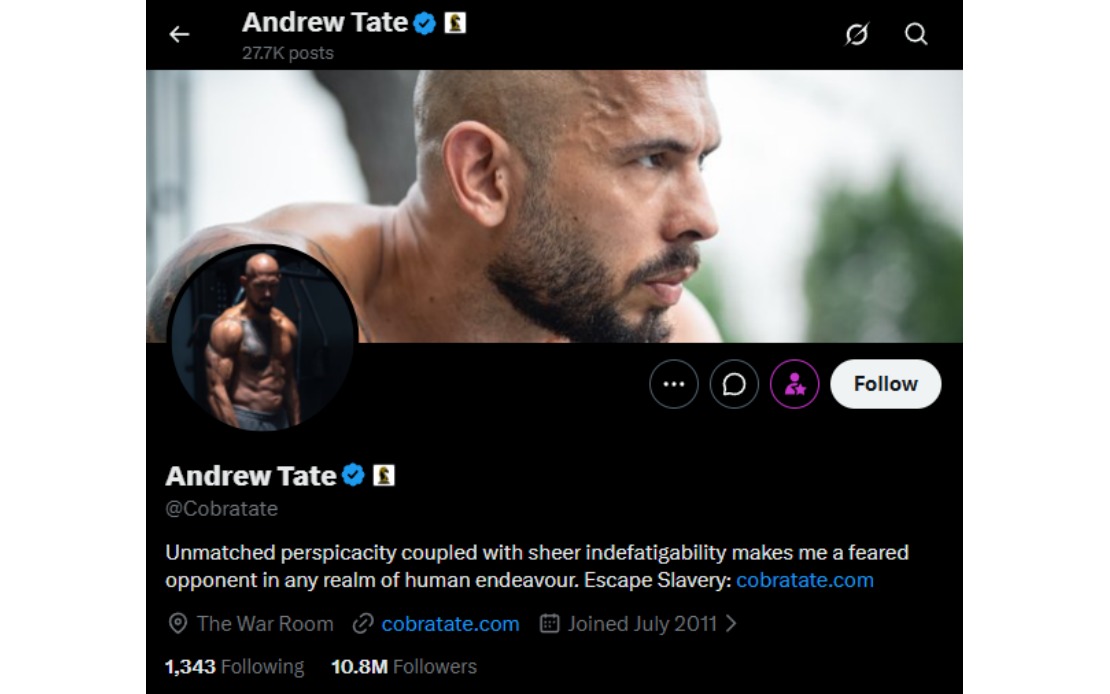
The arrest of Andrew Tate and his brother Tristan in Miami on Saturday marks a significant escalation in a legal saga that has captivated international audiences and sparked wider conversations about online influence and accountability. The operation, carried out by the US Marshals Service, followed the filing of new charges by Britain's Crown Prosecution Service, signalling the complex cross-border nature of contemporary criminal proceedings in an interconnected digital age.
Andrew Tate, who rose to prominence through social media platforms before becoming a polarising figure, faces allegations that extend beyond previous legal difficulties. The decision by British prosecutors to file fresh charges relating to rape and sex-trafficking represents a significant development in a case that has already generated considerable public and media scrutiny. Such charges carry grave legal implications and reflect the seriousness with which authorities have approached the investigation into the brothers' conduct.
The involvement of the US Marshals Service underscores how international law enforcement agencies collaborate when addressing allegations that transcend national boundaries. Miami's selection as the location for the arrest carries particular significance, as the United States has extradition agreements and legal frameworks that facilitate the prosecution of individuals accused of serious crimes. The coordination between British and American authorities demonstrates the infrastructure now in place to pursue cases involving digital personalities whose influence spans multiple continents and jurisdictions.
For Malaysian readers and Southeast Asian observers, this case illuminates broader questions about the accountability of online influencers who operate across regional borders. The rapid rise of social media personalities has created a generation of public figures whose influence often exceeds that of traditional celebrities, yet whose conduct remains subject to varying legal standards depending on jurisdiction. The Tate brothers' prominence in certain online circles, particularly among younger male audiences in Southeast Asia, makes developments in their legal status particularly relevant to the region.
The transition from mere allegations to formal charges represents a threshold moment in the investigation. British prosecutors would not have filed these additional charges without what they determined to be sufficient evidence to proceed. The timing of these charges, coming after the initial legal difficulties the brothers have faced, suggests that the investigation has progressed considerably and that authorities have identified conduct they believe warrants prosecution for serious offences.
The case also raises questions about platform responsibility and the mechanisms by which social media companies moderate content created by their most influential users. Andrew Tate's content, which often attracted criticism from those concerned about its portrayal of women and relationships, circulated widely across platforms before various companies moved to restrict his presence. The arrest underscores that content moderation and legal consequences operate within distinct but intersecting spheres.
For the international legal system, this case exemplifies the challenges posed by pursuing individuals whose primary infrastructure operates through digital channels rather than physical locations. The brothers' previous residence in Romania, their subsequent detention, and now their arrest in the United States demonstrate how modern criminal networks and individuals can operate across multiple jurisdictions, requiring sophisticated coordination among law enforcement agencies worldwide.
The alleged offences carry maximum penalties that, if convicted, could result in substantial prison sentences in the United Kingdom. The involvement of multiple charges suggests that prosecutors believe the evidence supports a pattern of conduct rather than isolated incidents. Sex-trafficking allegations in particular represent among the most serious charges in contemporary criminal law, reflecting international consensus about the gravity of such offences and their impact on victims.
The case will likely generate continued interest across Southeast Asian social media platforms, where discussions about online accountability, the nature of influencer culture, and appropriate consequences for misconduct will inevitably surface. Malaysian audiences, accustomed to consuming content from global figures but increasingly aware of content moderation issues, will observe how different legal systems handle prominent online personalities accused of serious crimes.
The arrest also occurs within a broader context of increased regulatory scrutiny of social media platforms and their most influential contributors. Governments and regulatory bodies across the region and globally have become more assertive in holding platforms accountable for the conduct of users who have amassed large followings. This case may contribute to evolving standards regarding platform responsibility and the relationship between free speech principles and the protection of vulnerable individuals.
As the legal proceedings continue, the case will remain under intense observation from multiple constituencies. Victims' advocates, digital rights observers, and those concerned with online safety will monitor developments closely. For Malaysian viewers of online content, the case serves as a reminder that even the most prominent digital personalities remain subject to law enforcement and judicial processes, and that international cooperation increasingly ensures that geography provides no shield against prosecution for serious allegations.

