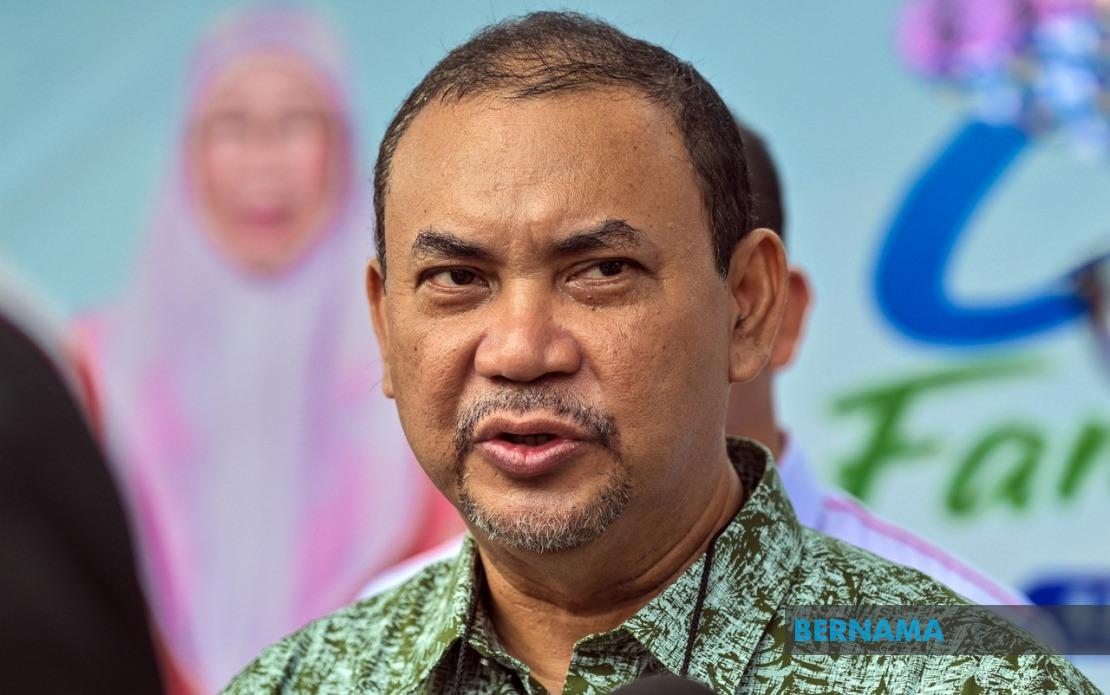
Datuk Azman Abidin, who serves as the Prime Minister's Political Secretary, has assumed his new role as Ampang Parliamentary Constituency Coordinator with a mandate to revamp how government assistance reaches residents. Following his appointment by Prime Minister Datuk Seri Anwar Ibrahim, Abidin has outlined an ambitious framework designed to eliminate bureaucratic bottlenecks and ensure that welfare programmes operate with greater transparency and responsiveness.
The coordinator's strategy centres on establishing a more cohesive administrative structure that bridges multiple government entities. Rather than forcing residents to navigate disparate departments, Abidin's office will serve as a central processing point for welfare applications originating from the Ampang constituency. This consolidation approach aims to reduce processing delays and administrative friction that often frustrate citizens seeking assistance, a persistent challenge in constituencies across Malaysia where residents frequently encounter unclear channels for accessing government support.
Integration with the Implementation Coordination Unit within the Prime Minister's Department represents a significant institutional improvement. The ICU functions as a cross-agency liaison office designed to monitor and expedite government programme implementation. By anchoring the constituency coordinator's work within this framework, welfare initiatives can be tracked systematically and obstacles identified promptly. This alignment suggests a broader effort to move beyond ad-hoc service delivery toward a data-driven approach that measures outcomes and identifies gaps in coverage.
Abidin's commitment to coordinate closely with elected representatives across multiple governance levels underscores the complexity of Malaysian administration. Ampang constituency contains multiple state assembly seats, and effective welfare delivery requires synchronisation between federal, state and local actors. By explicitly committing to engage with assemblymen and community leaders, the coordinator acknowledges that residents' needs often transcend political and administrative boundaries. This multi-layered coordination proves particularly important in urban constituencies like Ampang, where diverse demographic groups have vastly different assistance requirements.
The structural arrangement also reflects evolving expectations about the Prime Minister's office in Malaysian politics. Over recent years, the portfolio of Prime Minister's Political Secretary has expanded beyond ceremonial functions to encompass substantial administrative responsibilities. By appointing a political secretary as constituency coordinator, the Prime Minister's office has blurred traditional distinctions between political and administrative roles, positioning itself as an active agent in service delivery rather than a distant oversight body. This development signals to constituencies that prime ministerial attention extends beyond parliament into granular constituent affairs.
For residents in Ampang, the practical implication involves a clearer submission pathway for welfare applications. Previously, individuals seeking assistance might have encountered uncertainty about which government office possessed authority over particular requests. The new arrangement consolidates this information and creates a single entry point, though effectiveness ultimately depends on how efficiently the coordinator's office processes submissions and escalates matters to appropriate agencies. Residents will be able to direct applications directly to the Office of the Prime Minister's Political Secretary, theoretically accelerating assessment timelines.
Abidin's emphasis on professionalism, integrity and accountability suggests awareness of public cynicism regarding welfare administration in Malaysia. Citizens frequently voice concerns about nepotism, political patronage and inconsistent application of assistance criteria. By foregrounding these institutional values, the coordinator is attempting to differentiate his approach and rebuild confidence in the system. However, public perception of welfare programmes improves only through consistent demonstration of these principles over extended periods, not through public pledges alone.
The appointment also carries implications for how other constituencies might restructure their service delivery mechanisms. If Ampang's new system produces measurable improvements in resident satisfaction and processing speed, other constituencies may petition for similar coordinator arrangements. This could represent a modest expansion of prime ministerial infrastructure, with potential long-term budgetary implications. Alternatively, if implementation proves disappointing, the initiative might serve as a cautionary example of administrative reorganisation without corresponding resource allocation.
For Southeast Asian observers monitoring Malaysian governance trends, this development illustrates how political leaders respond to public demands for more accessible government services. Rather than introducing entirely new welfare programmes, Abidin's approach optimises existing delivery mechanisms through administrative restructuring. This strategy proves attractive to resource-constrained governments seeking efficiency gains without substantial budget expansion. The emphasis on coordination among existing agencies rather than creating parallel bureaucracies reflects pragmatic recognition of Malaysia's fiscal constraints.
The success of this initiative will ultimately depend on sustained commitment from government agencies and consistent resource allocation to the coordinator's office. Welfare delivery involves countless individual applications, each requiring attention and follow-up. Initial enthusiasm frequently dissipates as administrative pressures accumulate and staffing challenges emerge. The real test will emerge several months into implementation, when the novelty wears off and the coordinator's office faces the routine demands of processing hundreds of applications while managing relationships with multiple government partners.
Looking forward, Ampang residents should monitor whether response times improve, whether applications receive transparent documentation of their processing status, and whether the coordinator's office successfully resolves cases that previously languished in bureaucratic limbo. These practical benchmarks matter far more than rhetorical commitments. The coordinator's mandate to improve welfare delivery represents a potentially significant enhancement to constituent services, provided the administrative machinery actually functions as designed.

