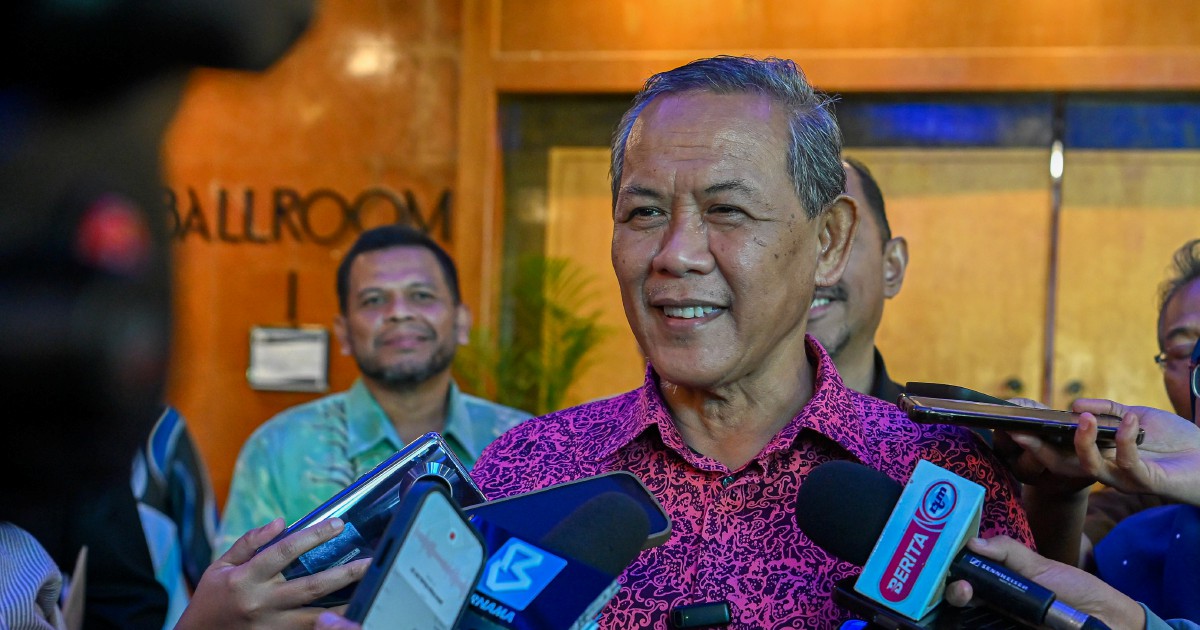
Negri Sembilan's Menteri Besar Datuk Seri Aminuddin Harun has made a direct appeal to the electorate not to weaponise the Linggi flooding crisis for political advantage, instead urging voters to evaluate the state administration's tangible progress in addressing one of the region's most persistent environmental challenges. Speaking from Seremban, Aminuddin framed the issue as one demanding collective responsibility and evidence-based assessment rather than opportunistic campaign rhetoric as Negri Sembilan prepares for its 16th state election.
The Linggi River flooding saga represents a decades-old headache for Negri Sembilan, with communities along its banks experiencing recurrent inundation during monsoon seasons and heavy rainfall events. The river has historically been prone to overflow, particularly affecting low-lying residential and agricultural areas in and around the Seremban district. These periodic disasters disrupt livelihoods, damage property, and create significant hardship for affected families who have grown weary of temporary relief measures and post-flood recovery cycles that fail to provide lasting solutions.
Aminuddin's statement signals that the state government views mitigation infrastructure and drainage enhancement as central to its electoral narrative. Rather than passively accept flood-prone geography as inevitable, his administration has apparently shifted toward a modernisation approach focused on engineering interventions and water management protocols. This positioning reflects growing pressure across Malaysia's urban and semi-urban zones to transition from reactive disaster response to proactive environmental management, a shift increasingly expected by voters conscious of climate variability and extreme weather patterns.
The reference to "mitigation works underway" suggests that the administration has commissioned projects aimed at reducing flood severity and frequency. Such initiatives typically involve riverbank reinforcement, drainage system upgrades, flood wall construction, or upstream water retention schemes designed to moderate peak flow rates during heavy precipitation. These are capital-intensive undertakings requiring sustained funding and technical coordination across multiple government agencies, making them ideal metrics by which electoral performance can be measured in concrete, visible terms.
For Malaysian constituencies watching the Negri Sembilan situation, the political dimensions are instructive. Flood management has become an increasingly salient election issue as climate patterns grow more unpredictable and urbanisation concentrates vulnerable populations in flood-prone areas. Politicians across the peninsula have discovered that credible flood prevention commands electoral loyalty, as voters prioritise personal safety and property protection above abstract policy platforms. The Linggi issue thus emblematises a broader shift in state-level politics toward infrastructure-driven governance narratives.
Aminuddin's framing also contains a defensive element. By characterising political exploitation of flooding as inappropriate, he preemptively delegates opposition criticism to the realm of partisan opportunism rather than legitimate governance concern. This rhetorical strategy attempts to insulate the administration from scrutiny by painting any critical examination of flood response as merely electoral manoeuvring. Yet the appeal also acknowledges that flooding remains a visceral issue capable of determining voter behaviour, especially in marginal constituencies where undecided voters might be swayed by visible progress on basic quality-of-life issues.
The timing of the statement—with the state election approaching—underscores the political salience of environmental management in contemporary Malaysian campaigning. Parties now recognise that voters evaluate administrations partly on their environmental stewardship and disaster preparedness, not merely on economic performance or religious credentials. The Linggi case becomes a referendum on state competence and administrative effectiveness, territories where electoral outcomes are increasingly contested.
For communities along the Linggi River, Aminuddin's commitment to ongoing mitigation works offers hope, though scepticism remains warranted given the problem's longevity. Residents who have endured multiple flood cycles naturally approach governmental promises with caution, requiring visible evidence that funds allocated for flood control actually materialise into functional infrastructure. This explains why Aminuddin emphasises the projects' status as "underway" rather than completed—a rhetorical hedge that conveys progress without committing to specific timelines or guarantees.
From a Southeast Asian perspective, Negri Sembilan's approach mirrors broader regional patterns in urban flood management. Malaysia, Thailand, the Philippines, and Indonesia all grapple with similar challenges as rapid urbanisation outpaces drainage infrastructure development. Cross-border learning and technology transfer in flood management are becoming increasingly relevant as climate change intensifies precipitation variability. The Linggi situation thus constitutes both a local governance challenge and a window into how Malaysian administrators address climate-related resilience in an era of heightened environmental unpredictability.
Aminuddin's appeal ultimately reflects a maturation in how Malaysian political discourse engages with environmental issues. Rather than dismiss flooding as natural misfortune, contemporary politicians increasingly stake reputational claims on concrete mitigation measures. This evolution suggests that future electoral contests may hinge significantly on infrastructure credentials and demonstrable environmental management capabilities. The Linggi River situation will therefore likely determine not only how Negri Sembilan voters cast their ballots but also how other state administrations throughout Malaysia approach their own flood vulnerability challenges.

