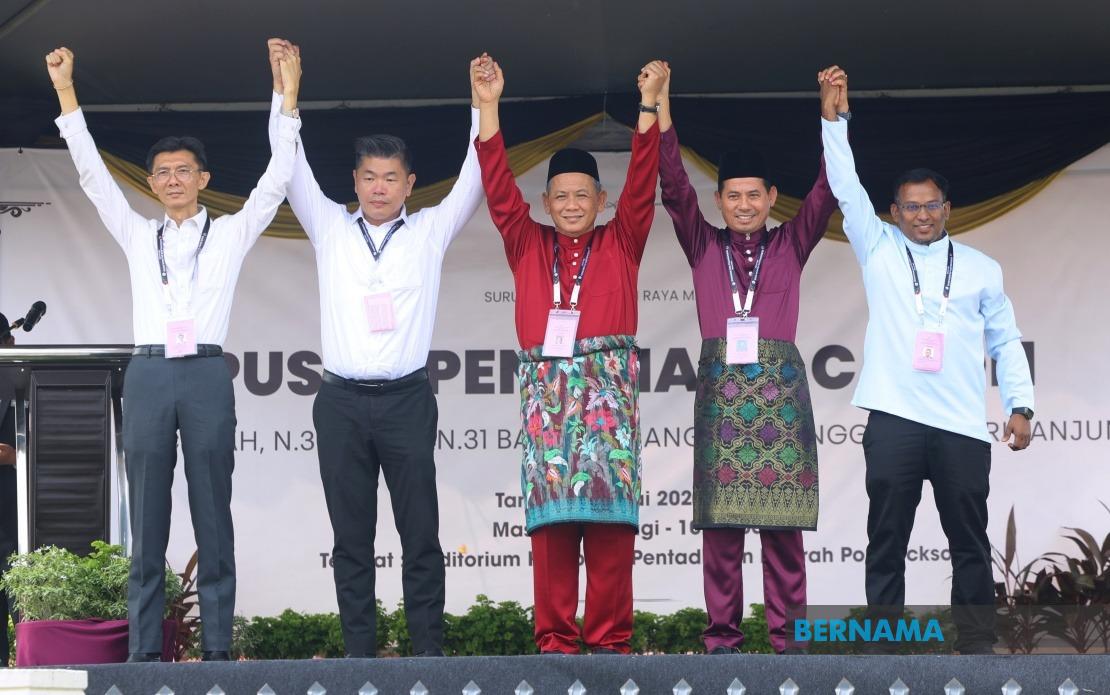
Negeri Sembilan Menteri Besar Datuk Seri Aminuddin Harun has unveiled an ambitious blueprint for economic transformation in the Linggi constituency, centring on the creation of a port facility and accompanying industrial complex. The proposal emerges as a cornerstone of his Pakatan Harapan campaign strategy ahead of the 16th Negeri Sembilan state election scheduled for August 1, marking a significant policy pledge aimed at bolstering the region's commercial infrastructure and attracting investment to the historically BN-aligned seat.
Speaking after the nomination process at the District Administration Complex Auditorium in Port Dickson on July 18, Aminuddin framed the port and industrial development as part of a comprehensive economic agenda designed to unlock growth potential in Linggi and deliver tangible benefits to constituents. The initiative reflects broader efforts by the Pakatan Harapan machinery to present viable alternatives to incumbent Barisan Nasional governance, particularly in constituencies traditionally regarded as secure opposition strongholds.
The Negeri Sembilan Pakatan Harapan chairman acknowledged the formidable challenge posed by contesting in a seat long dominated by the BN coalition, yet conveyed conviction that his party's ground operations would sustain momentum throughout the campaign period. His personal endorsement of the development proposal to party leadership, subsequently approved, signals the level of priority attached to transforming Linggi's economic landscape and positioning the constituency as a growth corridor within Negeri Sembilan's broader development strategy.
Aminuddin's entry into the Linggi race has created a three-cornered contest involving incumbent Datuk Mohd Faizal Ramli of Barisan Nasional and Datuk Zamri Md Said representing Bersatu, fragmenting the opposition vote and intensifying competition for a seat historically viewed as secure BN territory. The configuration reflects the complex realignment of Malaysia's political landscape following the 2022 general election and subsequent coalition shifts, with Bersatu positioning itself as an alternative opposition force.
The port development proposal carries particular significance for Port Dickson's economic future, given the district's historical role as a maritime hub and its strategic location along the west coast corridor connecting Selangor and Johor. An expanded port facility could potentially enhance the district's capacity to handle regional trade flows, reduce shipping costs for Malaysian exporters, and create employment opportunities across logistics, warehousing, and ancillary industries. The industrial zone would logically complement port operations, attracting manufacturing and processing enterprises seeking proximity to maritime infrastructure.
For Negeri Sembilan specifically, such infrastructure development would represent a substantial investment in economic diversification. The state has traditionally relied on manufacturing and plantation agriculture, with limited deep-water port capacity constraining industrial development and regional trade competitiveness. Aminuddin's proposal addresses this structural constraint, potentially unlocking investment in downstream industries and positioning Negeri Sembilan as a gateway for Klang Valley hinterland logistics.
However, the viability and timeline of such megaprojects remain undefined in the campaign narrative. Port development requires substantial capital expenditure, regulatory approvals from federal authorities overseeing maritime zones, and coordination with existing port operators. The political dimension adds uncertainty, as infrastructure projects of this magnitude typically require sustained political consensus across election cycles and state-federal government alignment.
Mohd Faizal's response underscored the BN coalition's recognition that complacency threatens even traditionally secure constituencies. His call for a campaign devoid of excessive provocation reflects apprehension that inflammatory political rhetoric could mobilize anti-establishment voters in Linggi, particularly younger constituents frustrated with economic stagnation or service deficiencies. The BN campaign machinery's acknowledgment that Linggi cannot be taken for granted represents a tactical shift from earlier assumptions of automatic victory.
The contest exemplifies the intensifying competition for Malaysian parliamentary and state seats as voter behaviour becomes less predictable. Ethnically diverse urban constituencies like Linggi, with mixed commercial and residential character, increasingly respond to economic messaging and service delivery records rather than purely communal appeals. Aminuddin's infrastructure proposal directly addresses this dynamic, offering concrete economic benefits rather than relying on party affiliation.
The August 1 polling date provides a compressed campaign window of approximately two weeks for candidates to communicate their platforms and mobilize supporters. In this constrained timeframe, the clarity and resonance of Aminuddin's port and industrial development pledge becomes strategically important, offering voters a tangible vision of economic transformation against which to evaluate incumbent performance and alternative candidates' vision statements.
Regional implications extend beyond Negeri Sembilan's borders, as infrastructure investments in Port Dickson could affect maritime transport patterns across the western corridor connecting Kuala Lumpur, Selangor, Perak, and Johor. Enhanced port capacity would strengthen intra-regional supply chain connectivity and potentially attract manufacturing investment seeking alternative locations to congested Klang Valley facilities. Malaysian exporters shipping to regional markets would benefit from reduced berthing times and expanded handling capacity.
The Linggi contest also reflects broader Pakatan Harapan strategy of contesting seats previously conceded to BN, signalling renewed organizational ambition following the coalition's 2022 general election performance. Fielding the Menteri Besar in a traditionally opposition-hostile constituency represents significant confidence in ground-level organization and constituent receptivity to PH messaging. Success here would vindicate this strategic approach; defeat would question whether PH investment in such contests diverts resources from winnable seats.
As campaign dynamics unfold toward August 1, the port and industrial development proposal will likely feature prominently in Linggi's electoral discourse, with voters evaluating its credibility against past political promises and assessing whether infrastructure transformation justifies supporting political change. The proposal's ultimate realization will depend less on campaign rhetoric than on post-election political positioning and the successful candidate's capacity to mobilize resources and navigate bureaucratic pathways toward implementation.

