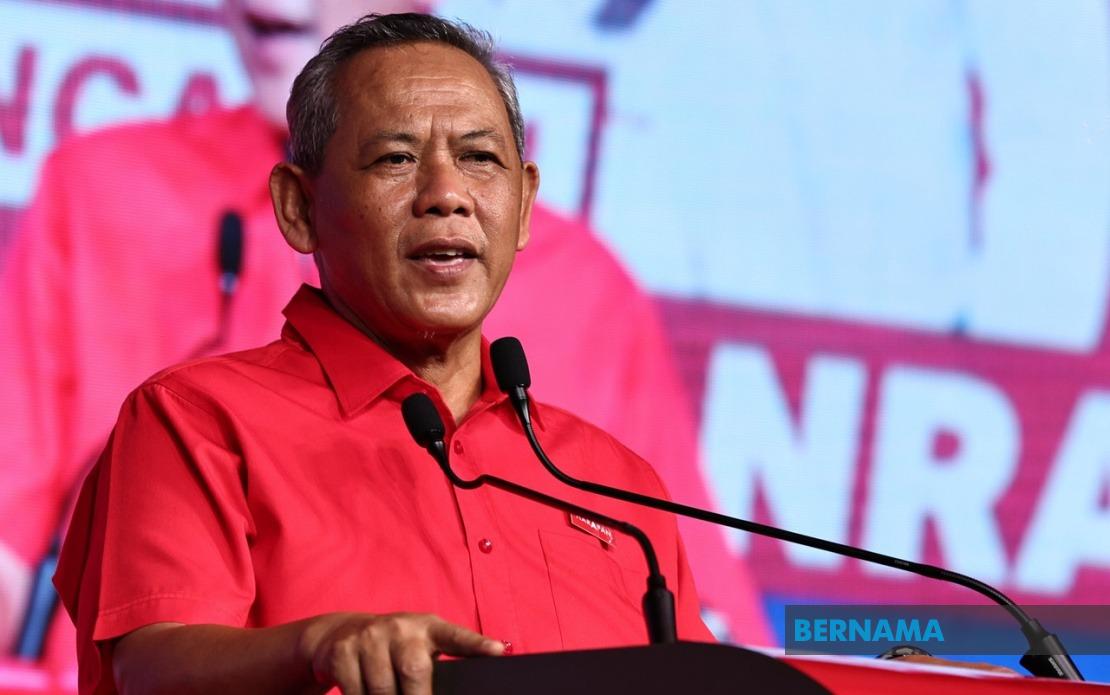
Negeri Sembilan Menteri Besar Datuk Seri Aminuddin Harun has made a direct appeal to constituents in the Linggi state seat to evaluate his administration's track record on resolving the area's persistent flood crisis, cautioning against allowing infrastructure concerns to be weaponised during the campaign for the 16th state election. Speaking to reporters after Friday prayers in Seremban on July 17, Aminuddin framed the flooding issue as one requiring patience and systematic intervention rather than quick political fixes, positioning it as a test of voter discernment in distinguishing between meaningful governance and opportunistic rhetoric.
The Linggi flooding problem has become increasingly visible on social media platforms, with residents documenting instances where prolonged rainfall causes water to inundate the district. This visibility has created political space for various actors to claim credit for solutions or to blame the incumbent administration for inaction. Aminuddin's statement reflects awareness that flooding narratives can significantly influence electoral outcomes, particularly in constituencies where environmental hazards directly affect daily life and property values. By framing the issue as one demanding technical expertise and inter-governmental coordination rather than partisan blame, the Menteri Besar is attempting to shift the conversation away from emotional responses toward assessment of administrative competence.
Central to Aminuddin's position is the assertion that two major flood mitigation projects have secured approval and are currently in implementation phases through joint state-federal coordination. He acknowledged that such infrastructure initiatives inherently require extended timelines for completion, rejecting the premise that flood problems can be rapidly eliminated through political will alone. This framing serves multiple purposes: it demonstrates that action is occurring, it establishes realistic expectations about timeline, and it implicitly criticises opponents who might suggest simple or immediate solutions. For Malaysian voters accustomed to infrastructure delays and project complications, this candid acknowledgment of complexity may resonate as pragmatic rather than evasive.
As the Pakatan Harapan candidate for Linggi, Aminuddin's intervention carries implications beyond flood management. The Negeri Sembilan Pakatan Harapan chairman explicitly stated that his coalition intends to campaign on its documented administrative record and ongoing development initiatives rather than engaging in what he characterised as sentiment-based politicking. This positioning reflects a strategic calculation that the coalition's governance achievements in Negeri Sembilan over recent years constitute sufficient grounds for voter support without recourse to emotive appeals. Given Pakatan Harapan's mixed electoral fortunes across Malaysia, such a confidence in incumbency advantage suggests the coalition believes it has consolidated support in Negeri Sembilan or at minimum possesses stronger institutional credibility there than opposition challengers.
The broader context of Aminuddin's remarks involves the compressed electoral timeline set by the Election Commission. With nomination day scheduled for July 18, early voting on July 28, and polling day on August 1, candidates have limited opportunity to shape narratives or respond to emerging issues. Aminuddin's preemptive strike against the politicisation of Linggi's flooding represents an attempt to establish the terms of debate before opposition candidates can fully mobilise arguments around environmental management. By encouraging voters to focus on concrete projects rather than blame attribution, he aims to prevent the issue from becoming a dominant campaign narrative that could disadvantage Pakatan Harapan.
The flooding situation itself reflects broader environmental and infrastructure challenges across Malaysia's urbanising and semi-urbanised areas. Seremban and surrounding districts have experienced rapid development that has altered drainage patterns and flood management requirements. Addressing such problems requires coordination between state urban planning authorities, federal works ministries, local government, and drainage specialists. The fact that Aminuddin emphasises federal-state collaboration suggests recognition that sustainable solutions demand transcending partisan boundaries, even as he competes for electoral advantage. This dual positioning—simultaneous partisan campaigning and invocation of inter-governmental cooperation—reflects the complex reality of Malaysian federalism where state governments must maintain functional relationships with federal structures regardless of political affiliation.
Among Negeri Sembilan voters in Linggi and beyond, assessments of whether two flood mitigation projects genuinely address longstanding grievances will likely determine whether Aminuddin's framing proves persuasive. Technical merit of proposed solutions, evidence of competent execution, and visible progress toward completion all constitute factors that voters can observe independently. Opposition parties will presumably counter-argue that projects are inadequate in scale, unlikely to be completed before the election validates any claim, or represent belated responses to problems that earlier action could have prevented. The flood issue thus becomes a proxy for broader questions about governmental effectiveness, responsiveness, and priority-setting that typically drive state elections.
Aminddin's explicit invitation for voters to exercise judgment about opposition strategies represents a rhetorical move designed to inoculate Pakatan Harapan against attacks. Rather than directly confronting opposition messaging, he appeals to voter sophistication and maturity, implying that constituents are capable of distinguishing substantive governance proposals from political opportunism. This approach assumes a level of political engagement and information access that may vary significantly across the constituency, particularly between urban and rural areas. Social media visibility of flooding incidents suggests that information about the problem is widely available, but access to information about mitigation project details and timelines may be less evenly distributed.
The Negeri Sembilan Menteri Besar's stance also reflects broader patterns within Malaysian state politics where incumbent administrations attempt to leverage incumbency advantages through emphasis on development projects and administrative continuity. Pakatan Harapan's governance record in Negeri Sembilan since 2018 becomes the primary asset available for electoral mobilisation. In constituencies like Linggi where specific infrastructure issues affect constituent satisfaction, such campaigns necessarily focus on demonstrating that problems are being systematically addressed even if solutions remain incomplete. The electoral calendar and project implementation timelines create inherent tension: voters may wish to see completed solutions before voting, while governments can only present projects in progress as evidence of commitment.
Looking forward to the August 1 polling day, the Linggi flooding issue will likely remain a factor in constituent decision-making but its ultimate salience depends on how effectively various political actors can connect it to broader narratives about governance competence, responsiveness, and environmental stewardship. Aminuddin's intervention has staked Pakatan Harapan's electoral position on the premise that voters will reward demonstrated commitment to systematic problem-solving over opposition claims that the government has neglected environmental issues. Whether this gambit succeeds will provide insights into voter priorities in Negeri Sembilan and inform how Malaysian political parties calibrate environmental and infrastructure messaging in future campaigns.

