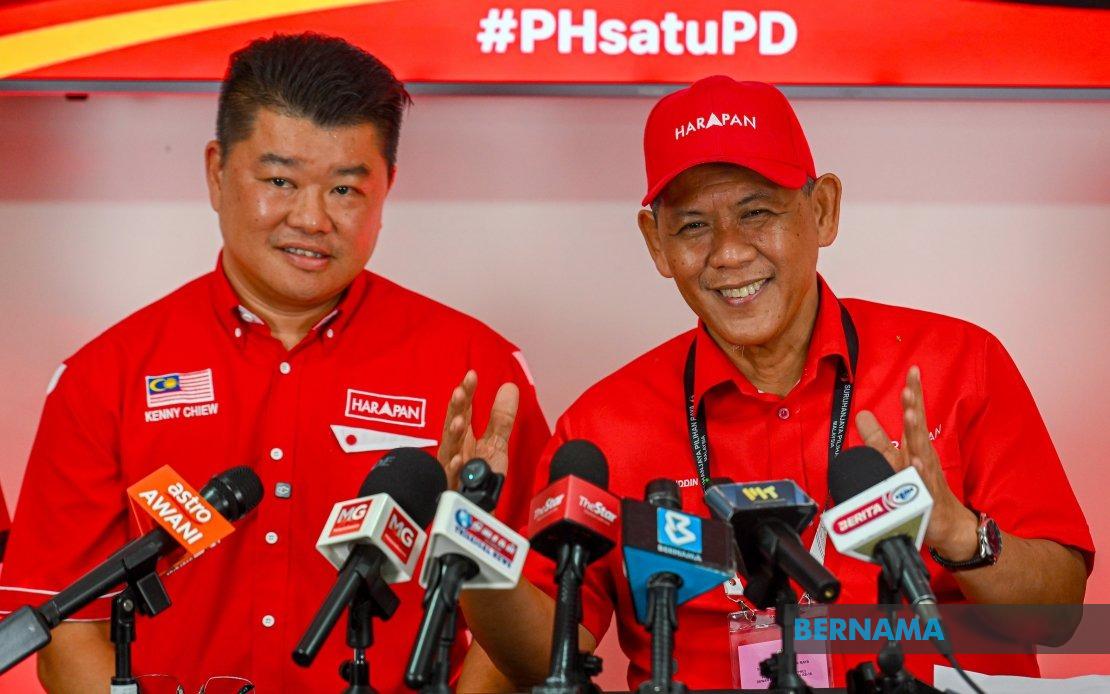
The 16th Negeri Sembilan State Election has been marred by incidents of campaign material destruction, prompting the state's chief executive to issue a forceful plea for political discipline and respect for democratic norms. Datuk Seri Aminuddin Harun, who leads the state administration and is contesting the Linggi seat for Pakatan Harapan, has called on all competing parties to demonstrate maturity and civility throughout the campaign period, which began this week with polling scheduled for August 1.
The Menteri Besar's intervention follows multiple reports of vandalism that have surfaced since campaigning commenced. Pakatan Harapan's coalition operations centre documented several instances of destruction affecting party materials, including the torching of flags in Palong and damage to flagpoles in Chembong. These incidents, while not unprecedented in Malaysian electoral contests, represent a troubling departure from the standards expected in a developed democracy. The coalition's decision to publicise these incidents underscores growing concern that the campaign could descend into tit-for-tat violence if strong voices from political leadership do not intervene early.
Speaking while canvassing voters in the Linggi constituency on July 20, Aminuddin articulated a vision of campaigning rooted in persuasion rather than intimidation or sabotage. He emphasised that destructive behaviour contradicts the principles of a civilised state and undermines public confidence in the electoral process itself. His remarks carry particular weight given his dual role as both a major candidate and the sitting Menteri Besar responsible for maintaining order and upholding constitutional norms across Negeri Sembilan. The challenge he has outlined extends beyond mere campaign etiquette—it touches on the fundamental health of democratic institutions in the state.
Law enforcement agencies have begun documenting complaints related to the vandalism. The Negeri Sembilan Police Chief, Datuk Alzafny Ahmad, confirmed that officers had logged reports concerning campaign material damage in Jempol, while a parallel investigation into the Chembong incident continues. This official engagement suggests authorities are taking the incidents seriously and may be preparing to take action under existing election laws. The involvement of police adds another dimension to Aminuddin's call for restraint, signalling that those responsible for vandalism may face legal consequences.
The timing of these disturbances is significant. The state legislative assembly was dissolved on June 5, with the Election Commission establishing July 28 as the date for early voting and August 1 for general polling. This compressed campaign calendar—spanning less than two weeks of intensive electioneering—can intensify tensions as parties mobilise supporters and compete aggressively for visibility. In such high-pressure environments, maintaining discipline becomes crucial, yet the early incidents suggest that at least some activists have already abandoned restraint.
For Malaysian observers familiar with state-level elections, the pattern of vandalism is troubling but not surprising. Previous campaigns in Selangor, Pahang, and other states have witnessed similar destruction of posters, flags, and signage. Yet each election presents an opportunity for political parties to collectively demonstrate that Malaysia's democratic processes can remain vibrant and contestatory without descending into disorder. Aminuddin's intervention represents an attempt to reset expectations before the campaign momentum becomes too intense to manage.
The appeal to public judgment is also noteworthy. By urging voters to assess candidates and parties based on their conduct rather than the volume of campaign materials visible in constituencies, Aminuddin is effectively arguing that ethical behaviour matters more than aggressive promotion. This argument resonates particularly in constituencies where multiple parties are competing and where undecided voters may still be forming preferences. A campaign characterised by civility and issue-based debate could theoretically enhance voter engagement and trust in the eventual outcome.
Negeri Sembilan's positioning as a strategically important state adds weight to these concerns. With a Menteri Besar from Pakatan Harapan and a legislature that has witnessed shifting dynamics in recent years, the state remains a bellwether for electoral trends across Malaysia. How the 16th state election unfolds—whether it demonstrates institutional maturity or slides into disorder—will carry implications for perceptions of democratic health not only within the state but across the broader Southeast Asian region. International observers and neighbouring countries often monitor Malaysian elections as indicators of political stability and institutional integrity.
The police statement regarding ongoing investigations suggests that authorities may ultimately hold individuals or party workers accountable if evidence of vandalism can be established. Malaysia's election laws contain provisions against campaign conduct that violates public order, and prosecutors have demonstrated willingness in past cases to pursue charges where evidence is strong. The knowledge that legal consequences are possible may itself serve as a deterrent to further escalation of vandalism and disorder during the remaining campaign period.
Aminutddin's statement also carries a message to party workers and grassroots supporters across Negeri Sembilan. Political campaigns at the state level often involve intense local rivalries and neighbourhood-level competition that can encourage overzealous conduct. By explicitly condemning vandalism and appealing to civic values, the Menteri Besar is attempting to shape the behaviour of activists beyond the formal party hierarchy. Whether this messaging penetrates to all party workers and sympathisers will largely determine whether the campaign can remain orderly through polling day.
The broader context of Malaysian politics suggests that such appeals for restraint, while necessary, often prove insufficient without consistent enforcement and top-level commitment from all competing parties. The ideal scenario would involve leaders from all major contesting parties—not just Pakatan Harapan—issuing similar calls for ethical conduct and disciplining their own supporters who engage in destructive behaviour. Such collective commitment would signal that democratic competition can coexist with democratic responsibility across the political spectrum.

