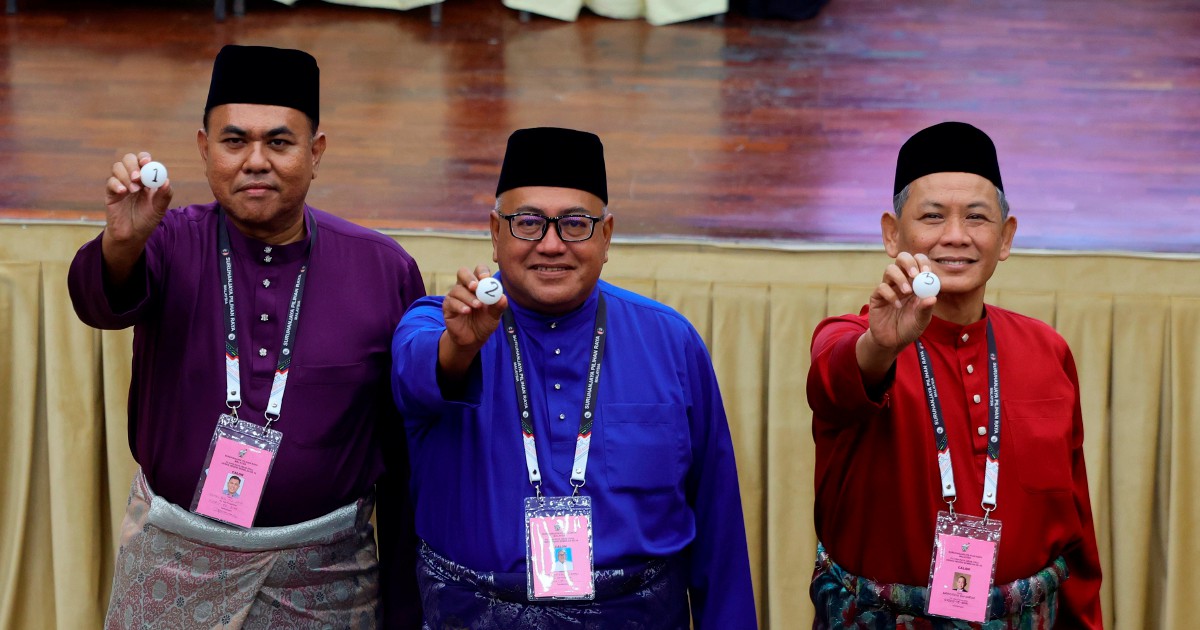
Caretaker Menteri Besar Datuk Seri Aminuddin Harun has struck a cautious note regarding his electoral prospects in Linggi, openly characterising the upcoming contest as a genuinely competitive affair with outcomes poised delicately between victory and defeat. Speaking in Port Dickson, Aminuddin assessed his chances at what amounts to a statistical toss-up, reflecting the complex political currents now flowing through what has traditionally been regarded as a Barisan Nasional stronghold in Negri Sembilan.
The candid assessment from the senior UMNO figure signals that even parties with deep-rooted support networks cannot take voter loyalty for granted in contemporary Malaysian politics. Linggi's competitive complexion underscores broader shifts in how constituencies behave during election cycles, particularly in states where voters have demonstrated increasing willingness to cross traditional party lines. The seasoned politician's acknowledgement of uncertainty, rather than projecting typical pre-election confidence, suggests either genuine apprehension about ground conditions or a strategic attempt to mobilise supporters through a reality-check approach.
Negri Sembilan's political landscape has been experiencing notable turbulence in recent years. The state's electoral dynamics reflect the wider Malaysian phenomenon where no seat can be considered entirely secure, regardless of historical voting patterns. Urban and semi-urban constituencies have become particularly volatile, with shifting demographics, youth mobility, and evolving policy priorities reshaping voter preferences across generational lines.
Aminuddin's position as caretaker Menteri Besar places him in the spotlight as BN attempts to consolidate its hold on the state administration. The role commands significant visibility and carries expectations of delivering constituency-level development that resonates with voters' immediate concerns. Yet visibility cuts both ways—it elevates a leader's profile while simultaneously subjecting them to intense scrutiny of their governance record and delivery on electoral promises.
The Linggi constituency itself reflects characteristics common to many Malaysian seats where demographic transitions have altered the electorate's composition. Population movements, changing employment patterns, and shifting economic priorities among different voter cohorts have created competitive environments where previous assumptions about inherited support prove unreliable. The constituency's composition likely includes both traditional rural BN supporters and increasingly influential urban or suburban voters with different political sensibilities.
Opposition parties in Negri Sembilan have clearly identified Linggi as an opportunity, mounting campaigns that directly challenge BN's historical dominance in the seat. The competitive dynamics evident in Aminuddin's assessment reflect the opposition's success in presenting credible alternatives and effectively mobilising supporters in constituencies previously considered safely blue. This pattern has become increasingly common across Malaysia's political map, where opposition parties have substantially improved their organisational capacity and messaging sophistication.
The stakes surrounding Linggi extend beyond a single constituency contest. A strong performance by BN in Negri Sembilan's state election remains strategically important for the coalition, particularly given broader national political developments and the significance of state governments in Malaysia's federal structure. Aminuddin's willingness to candidly discuss electoral uncertainty might also reflect calculations about managing expectations—setting a realistic narrative that positions any victory as hard-won rather than inevitable.
For Malaysian voters, particularly those in Negri Sembilan, the competitive nature of contests like Linggi represents a tangible indication that their votes genuinely matter. In constituencies where outcomes appear predetermined, voter engagement often diminishes and turnout suffers. Conversely, genuinely competitive seats tend to generate higher participation rates as voters perceive their choices as consequential. The 50-50 characterisation therefore potentially contributes to elevating civic engagement.
The Linggi contest also provides a microcosm of Malaysia's broader political evolution. Traditional power structures and established parties must now earn voter support rather than merely inherit it based on historical precedent. This transformation, while creating challenges for established political forces like BN, ultimately strengthens democratic accountability by forcing all contenders to articulate compelling visions and demonstrate genuine responsiveness to constituent concerns.
Aminuddin's acknowledgement of the competitive nature of his own seat suggests that Negri Sembilan's state election will likely feature several closely contested races rather than a predictable sweep by either major coalition. This pattern has become the new Malaysian electoral norm, where state and national contests increasingly pivot on marginal constituencies where mobilisation efforts, campaign messaging, and local grievance resolution prove decisive. The coming weeks will demonstrate whether Aminuddin can convert his experienced governance profile into voter confidence, or whether Linggi's electorate opts for political change.

