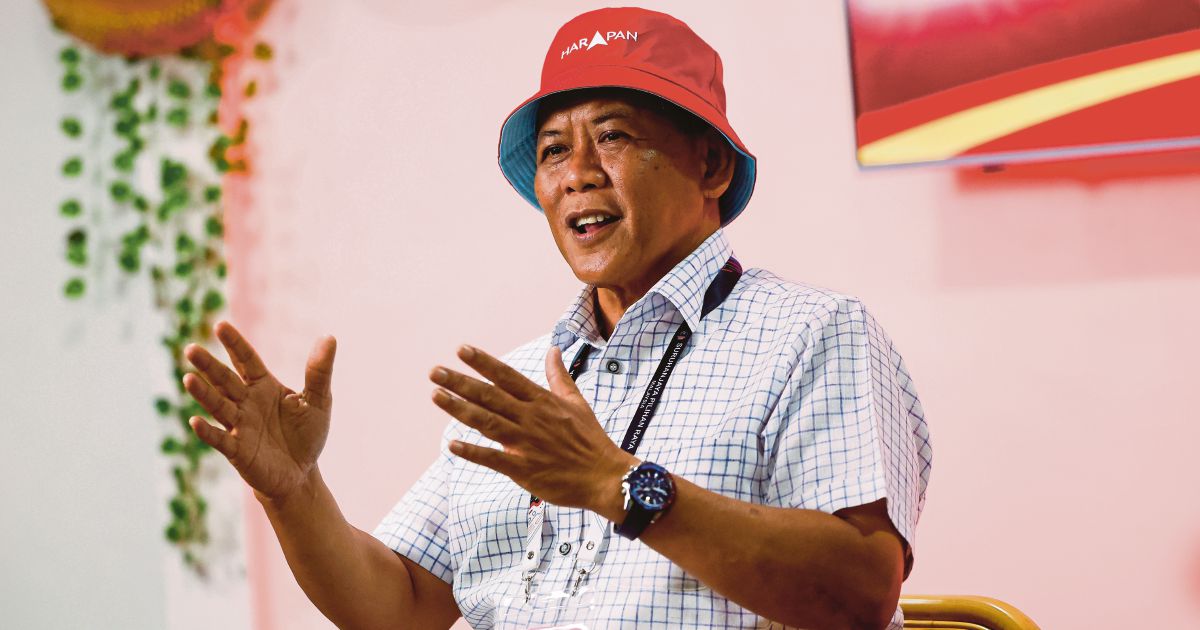
Caretaker Negri Sembilan Menteri Besar Datuk Seri Aminuddin Harun is pinning his electoral prospects on demonstrated governance achievements, believing the state administration's policy successes will resonate with constituents in Linggi ahead of the 16th state election taking place tomorrow.
Aminuddin's strategy reflects a broader trend among incumbent regional governments seeking re-election by emphasizing tangible development outcomes and administrative efficiency rather than campaign promises. This approach carries particular significance in Negri Sembilan, where the Linggi constituency represents a critical battleground given the state's competitive political dynamics and the delicate balance of power in the state assembly.
The caretaker Menteri Besar's confidence stems from what his administration characterises as substantive achievements across multiple policy domains. The emphasis on demonstrating concrete results rather than rhetorical appeals suggests his campaign team has identified infrastructure development, public services delivery, and economic initiatives as key voter concerns in the Linggi district. Such focus areas typically resonate strongly in semi-urban constituencies that have experienced moderate but steady development over recent years.
Linggi's demographic composition and socioeconomic profile make it particularly susceptible to swing voting patterns. As a constituency that encompasses both urban and semi-rural elements, voter preferences often hinge on practical improvements in daily living conditions—transport connectivity, local amenities, educational facilities, and employment opportunities. Aminuddin's emphasis on track record directly addresses these bread-and-butter concerns that typically influence electoral outcomes in such mixed-composition constituencies.
The timing of this electoral contest also carries significance for Negri Sembilan's political trajectory. State elections in Malaysia frequently serve as bellwethers for emerging political sentiment, particularly when they precede federal elections or occur during periods of national political realignment. A strong performance by Aminuddin and his coalition would provide momentum for coalition-affiliated candidates in other constituencies and potentially influence perceptions of political viability heading into subsequent election cycles.
For Malaysian voters broadly, Negri Sembilan's election outcome offers insights into how regional governance records factor into electoral calculations. The prominence Aminuddin has given to track record assessment suggests his political strategists believe voters are increasingly evaluating parties and leaders based on administration quality and service delivery rather than personality cults or historical voting patterns. This potentially reflects a maturing electorate that demands accountability and measurable outcomes.
The Linggi contest also reflects the evolving nature of electoral competition in semi-urban Malaysian constituencies. Where once demographic variables and community sentiment dominated electoral outcomes, contemporary campaigns increasingly centre on comparative governance records and policy differentiation. Aminuddin's approach exemplifies this shift, positioning his administration's achievements as the primary reason voters should grant continued mandate.
From a Southeast Asian perspective, Negri Sembilan's electoral dynamics illustrate how subnational politics increasingly drives electoral competition in mature democracies. Rather than abstract ideological platforms, voters in developed regional economies tend to evaluate parties through the lens of concrete service delivery and infrastructure provision. This pattern appears consistent across several Southeast Asian democracies where regional administrations actively compete on governance credentials.
The outcome of the Linggi contest will provide valuable data regarding voter receptiveness to track-record based campaigns. Should Aminuddin secure victory with a decisive margin, it would validate the hypothesis that Malaysian voters increasingly prioritize demonstrable governance performance. Conversely, a narrow result might suggest that traditional political allegiances and other factors continue exerting substantial influence on electoral outcomes despite incumbent efforts to emphasise achievement.
For the broader coalition's fortunes, Linggi's result assumes outsized importance given its symbolic value and the state's overall political balance. A loss in this constituency would reverberate beyond Negri Sembilan, potentially signalling vulnerability in other semi-urban strongholds and complicating coalition narratives regarding effective governance. Conversely, a comfortable victory would reinforce messaging about administrative competence and sustained voter confidence in coalition leadership at state level.
The election outcome will also carry implications for how subsequent Malaysian state elections are contested. Should track-record emphasizing campaigns prove effective, opposition parties may accelerate development of alternative governance narratives, either by highlighting perceived shortcomings in current administrations or by positioning themselves as more capable alternative managers. This would likely elevate substantive policy discussion in future electoral contests across Malaysia's states.

