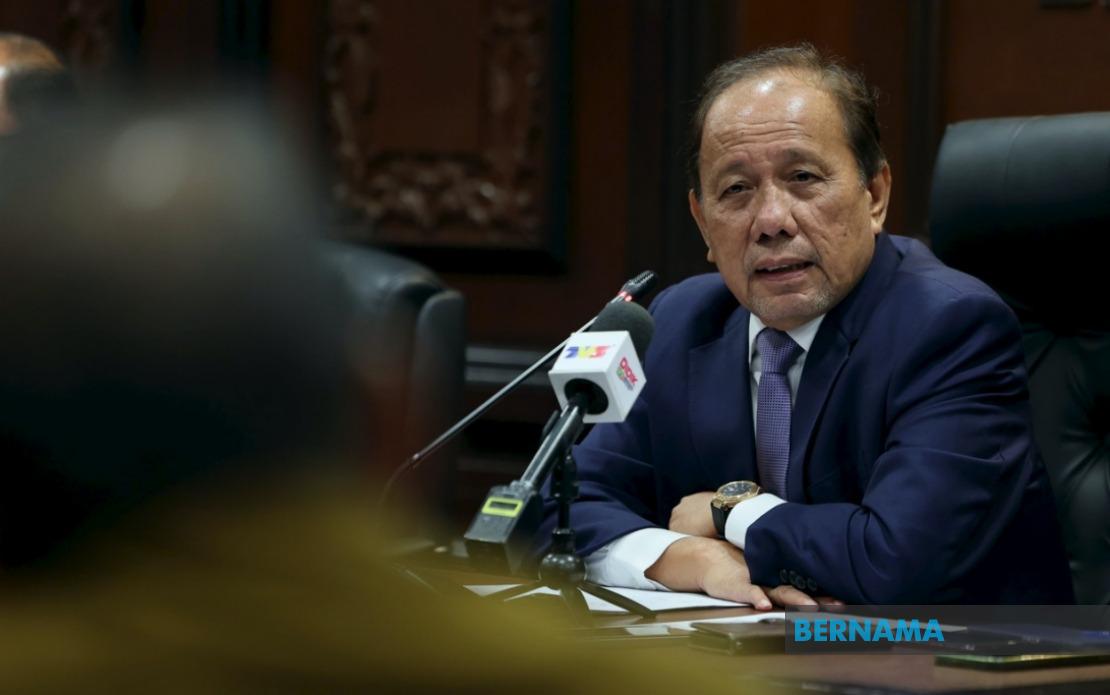
Negeri Sembilan Menteri Besar Datuk Ismail Lasim has singled out former menteri besar Datuk Seri Aminuddin Harun as the sole ex-Pakatan Harapan state assemblyman to have completely returned his allocations, contrasting sharply with the partial compliance shown by his former colleagues. The revelation underscores ongoing financial accountability issues following the state assembly's dissolution on June 5, which triggered a regime change in Malaysia's central state.
Ismail disclosed that multiple former PH assemblymen, notably the coordinators representing Paroi and Labu constituencies, commenced repayment of their allocated funds from June 30 onwards, yet none has settled their full outstanding balances. This partial compliance reflects a broader pattern of incomplete financial rectification across the former opposition-aligned administration, raising questions about resource management during the transition period.
The menteri besar clarified that his office has been monitoring reimbursement efforts since June 30, but the amounts returned fall short of actual disbursements made during the previous administration. He suggested that some former assemblymen may have already expended portions of their allocations on constituency welfare programmes and other approved initiatives, making full repayment impossible without securing additional documentation and spending records.
Accounting discrepancies appear to have complicated the recovery process, with Ismail indicating that allocation amounts varied significantly between different state representatives depending on their individual constituencies and roles. This variance means customised demand letters will eventually be issued to each former assemblyman, with the outstanding amounts tailored to their specific financial circumstances as revealed through the menteri besar's office records.
The Negeri Sembilan administration is currently conducting a comprehensive audit of allocation records to establish precise outstanding figures from each former representative. This administrative review process must be completed before formal recovery demands can be issued, reflecting the complexity of financial reconciliation during political transitions in Malaysian state governance.
Significantly, Ismail acknowledged that state executive councillors serving during the previous administration, including Aminuddin, retained ex-officio status until July 31 and were accordingly permitted to utilise allocations during that extended transitional month. This provision appears to have applied to Aminuddin's position, yet he still managed complete repayment, distinguishing him from his former peers.
The one-month repayment deadline that Ismail issued to all former PH assemblymen and constituency coordinators applies to allocations from the July to September cycle, calculated from the assembly's June 5 dissolution date. This timeframe represents the government's attempt to expedite financial accountability while allowing sufficient time for former representatives to compile supporting documentation and arrange transfers.
Negeri Sembilan DAP chairman J. Arul Kumar, representing the Nilai constituency, mounted a defence of the previous administration's spending practices, asserting that pre-dissolution allocations were channelled exclusively toward constituent welfare rather than partisan political activities. Kumar furthermore contended that all unexpended balances had been voluntarily returned to the menteri besar's office by July 10, accompanied by comprehensive financial documentation for each affected state constituency.
Kumar's statement suggests at least some former assemblymen have attempted compliance with financial obligations, though Ismail's public remarks indicate these efforts remain incomplete relative to initial disbursements. This discrepancy hints at either genuine difficulty in recovering fully expended funds or resistance from certain former representatives to complete financial reconciliation.
The allocation recovery issue carries broader implications for Malaysian state administration, particularly regarding how political transitions affect public fund management and fiscal accountability mechanisms. The situation reflects systemic challenges in tracking constituency spending during periods of governmental flux, when former representatives may dispute allocation calculations or claim legitimate expenditures that cannot be readily reversed.
Aminuddin's complete repayment stands out precisely because full restitution typically proves difficult when funds have been deployed across multiple welfare initiatives within constituencies. His unique compliance demonstrates either superior financial management practices during his tenure or access to alternative funding sources enabling repayment without compromising community programmes.
For Southeast Asian observers monitoring Malaysian governance standards, the Negeri Sembilan allocation recovery process illustrates evolving accountability frameworks in Malaysian states following political realignment. The emphasis on documented spending records and itemised expenditure justification reflects modernising approaches to public fund oversight, though implementation inconsistencies across former assemblymen suggest enforcement mechanisms remain unevenly applied.
The outcome of Negeri Sembilan's allocation recovery efforts will likely influence how other Malaysian states handle financial reconciliation during future political transitions, potentially establishing precedents for demanding transparency and restitution from outgoing administrations. Whether full compliance ultimately materialises will signal the effectiveness of state-level fiscal oversight in Malaysia's federal system.

