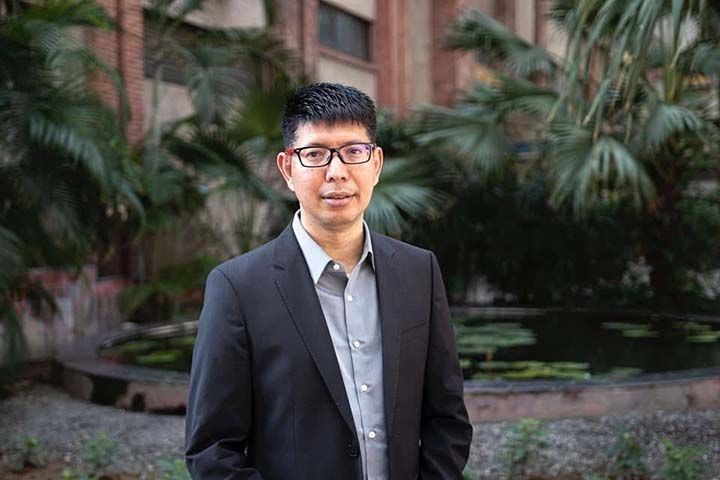
An American researcher studying Myanmar affairs was apprehended in the southwestern Chinese city of Kunming in early June while travelling to participate in an academic conference, according to the research institute he founded. The detention of Min Zin, who heads the Institute for Strategy and Policy (ISP) - Myanmar, occurred weeks before a planned state visit by Myanmar's military leader, highlighting rising tensions between scholar advocacy and authoritarian governance in the region. The circumstances surrounding his arrest underscore the precarious position independent researchers face when working on sensitive geopolitical topics in Southeast Asia and China.
China's diplomatic authorities confirmed last week that Min Zin had been taken into custody on suspicion of conducting espionage and threatening national security. The institute issued a forceful statement on Wednesday rejecting what it characterised as baseless accusations, emphasising that the detained academic had travelled solely to deliver presentations and participate in scholarly discussions at an established workshop. The organisation stressed the importance of protecting intellectual freedom and the ability of research bodies to operate without fear or coercion, a principle increasingly tested across Asia's authoritarian and semi-authoritarian states.
The United States has moved swiftly to challenge Beijing's allegations against Min Zin. American State Department representatives have dismissed the espionage charges as unfounded and confirmed that consular personnel have already visited the detained scholar to provide assistance. Washington has engaged directly with Chinese officials to press for his release, demonstrating how detention cases involving Western citizens can rapidly become diplomatic incidents with broader implications for bilateral relations. The episode illustrates the vulnerability of academic professionals who engage in cross-border research on politically sensitive matters.
China's foreign ministry maintained its position that Min Zin faces legitimate criminal allegations and indicated the case would proceed through standard legal channels. This response reflects Beijing's broader approach to controlling discourse around sensitive international relations and security matters, particularly those involving neighbouring countries. The apparent contradiction between China's presentation as a partner for regional development and its detention of a scholar studying bilateral relations raises questions about the environment for independent research in the region.
Min Zin's arrest carries significant symbolism given its timing relative to Myanmar's political trajectory. The military leadership in Yangon, which seized power in February 2021 by overthrowing the elected government of Aung San Suu Kyi, maintains extraordinarily close ties with Beijing. China has emerged as Myanmar's most strategically important foreign ally, providing military support, investment, and diplomatic cover as the junta faces mounting domestic resistance. The detention appears designed to constrain international scholarly analysis of Myanmar's deteriorating situation and China's role in sustaining military rule.
Since the coup, Myanmar has descended into armed conflict on an unprecedented scale. What began as street protests against the military takeover evolved into a nationwide insurgency, with newly established pro-democracy militia groups collaborating alongside longstanding ethnic armed organisations that have fought for autonomy for decades. This transformation has destabilised one of Southeast Asia's most strategically located countries, drawing closer Chinese involvement to maintain its influence and protect substantial economic interests in Myanmar.
Min Zin brought considerable credentials to his research role. As a former participant in Myanmar's seminal 1988 pro-democracy uprising—a pivotal moment in the country's modern history—he possessed lived experience of political resistance and democratic aspirations. His academic training in political science at the University of California, Berkeley equipped him with international scholarly perspectives. He subsequently founded the ISP to analyse Myanmar's trajectory, drawing on both personal commitment to democratic values and professional expertise.
The Institute for Strategy and Policy initially operated from within Myanmar but relocated abroad following the 2021 coup, reflecting how the military's consolidation of power forced critical researchers into exile. From its overseas base, the organisation has produced detailed analysis addressing the armed conflict's humanitarian dimensions, Myanmar's economic collapse, and the intricate relationship between Beijing and Yangon. This work has provided international audiences with independent assessment of developments obscured by military censorship and propaganda.
The think tank's research programme directly addresses matters the Chinese and Myanmar governments prefer to keep opaque. Examining bilateral relations, trade dynamics, and the military's dependency on Chinese support challenges official narratives and constrains authoritarian governments' ability to manage international perceptions. For Southeast Asian countries grappling with similar pressures from powerful neighbours, Min Zin's detention signals the risks scholars face when producing work that complicates geopolitical power dynamics.
The detainment also reflects broader regional patterns where authoritarian and semi-authoritarian states increasingly weaponise espionage laws to silence critics and researchers. Academic freedom and cross-border intellectual exchange—foundational to progress in understanding complex regional issues—face systematic pressure. For Malaysia and other ASEAN members concerned about preserving space for independent scholarship and policy analysis, the Min Zin case demonstrates how quickly security allegations can transform respected researchers into political prisoners.
The institute's statement emphasising the necessity for academic organisations to function without intimidation speaks to fundamental questions about what kind of region Southeast Asia will become. If researchers cannot safely study security relations, economic partnerships, and political transitions without risking detention, the intellectual capacity to address shared challenges deteriorates. This affects not only foreign scholars but domestic analysts attempting to understand their own countries' international positioning.
Min Zin's case also illuminates how Myanmar's political crisis extends beyond its borders. The country's instability has created refugee populations, drug trafficking expansion, and regional security complications that affect neighbouring nations. Independent research examining these transnational dimensions has become essential for informed policymaking. Yet the detention of prominent scholars studying these issues may discourage others from conducting similar work, reducing the available analysis necessary for Southeast Asian governments to craft effective responses to Myanmar-related challenges.