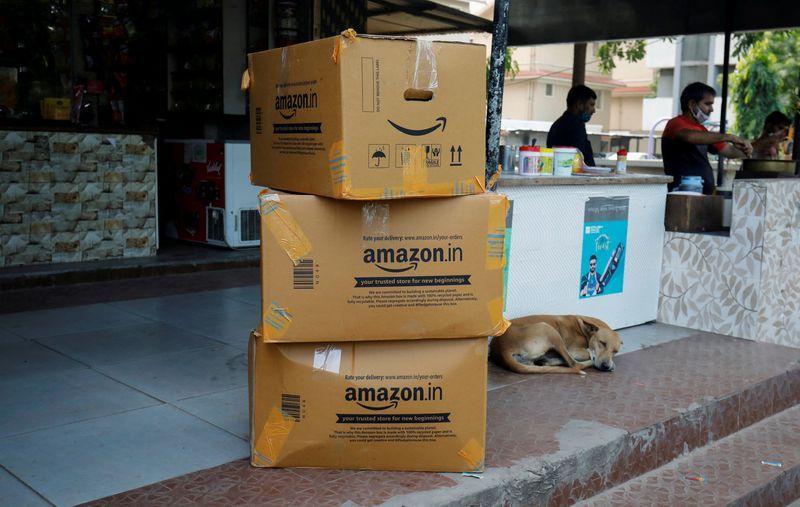
Amazon has committed to taking action against its delivery partner M&M Logistics Solutions following a fatal fire in the northern Indian state of Uttarakhand that killed two workers in early June. The e-commerce giant said it will implement "appropriate action" once local police authorities complete their investigation into the incident, while simultaneously conducting an internal review of what went wrong.
The tragedy exposed serious safety lapses at the facility. According to police documents reviewed by Reuters, the building housing M&M Logistics Solutions lacked essential fire safety infrastructure—there was no valid fire safety clearance certificate, no fire alarm system, no smoke detectors, and crucially, no proper emergency exit. These omissions represent a fundamental failure of basic workplace safety standards that should have prevented the loss of life.
Amazon's response signals a broader reckoning within India's e-commerce sector over working conditions and safety compliance. The company's internal code of conduct for suppliers and vendors explicitly prohibits unsafe working environments, including unprotected fire hazards, and permits suspension or termination of third-party contractors who violate these standards. Whether Amazon will invoke these provisions remains to be seen once the police investigation concludes.
M&M Logistics Solutions operates a substantial network across northern India, managing 45 Amazon delivery centers spread across 21 cities according to a 2023 Amazon press release. This scale underscores how deeply integrated third-party logistics partners are with Amazon's operations in the Indian market, and raises questions about oversight mechanisms across the broader network of affiliated vendors.
The incident arrives amid mounting scrutiny of Amazon's labour practices in India. Earlier this year, the National Human Rights Commission investigated allegations that the company violated labour laws during an intense heatwave at a warehouse facility near New Delhi. Following those complaints, state authorities initiated legal proceedings under India's labour legislation, signalling official concern about conditions within Amazon's supply chain ecosystem.
The Amazon India Workers Union has seized on the June fire as a pivotal moment, demanding an independent judicial investigation into the deaths rather than relying solely on police procedures. The union characterised the incident as symptomatic of systemic "grave failure of workplace safety and protection of human dignity," framing the tragedy not as an isolated accident but as evidence of deeper structural problems within Amazon's operations in India.
For Malaysian and Southeast Asian readers, this situation carries significant implications. As Amazon and other e-commerce giants expand regional operations, similar pressures are mounting across the ASEAN region regarding third-party compliance, worker safety standards, and corporate accountability. The Indian case demonstrates how rapidly reputational and regulatory risks can emerge when safety corners are cut.
Amazon's stated position that worker safety and wellbeing constitute its "top priority" now faces a credibility test. Investigators will scrutinise whether the company had adequate mechanisms to monitor safety conditions at partner facilities, whether warning signs were ignored, and whether cost-cutting incentives inadvertently pressured vendors to skimp on safety infrastructure. The answers will shape how regulators across Asia view the company's accountability for third-party operations.
The opacity surrounding M&M Logistics Solutions—the company and Uttarakhand police did not respond to Reuters enquiries—compounds the investigation's significance. This silence prevents clarification of whether safety violations were systematic or whether specific individuals bore responsibility. Without transparency, the incident risks becoming a rallying point for worker advocacy groups pressing for stricter enforcement of safety standards throughout India's rapidly growing gig logistics sector.
Amazon's committed timeline for taking action remains vague, anchored only to the conclusion of police investigations whose duration is unclear. This ambiguity may intensify pressure from labour advocates and regulatory bodies already questioning the adequacy of voluntary corporate accountability measures. The company faces a choice between treating this as a contained incident requiring minimal corrective action, or as a catalyst for comprehensive safety audits across its entire third-party vendor ecosystem in India.
The broader context matters here. India's e-commerce sector has grown explosively, with last-mile delivery becoming increasingly crucial to competitive advantage. This has created intense pressure on logistics partners to scale quickly and cost-effectively, sometimes at the expense of regulatory compliance. Amazon's response to this fire will signal whether the company believes profit and safety can coexist, or whether one must necessarily be sacrificed to achieve the other in competitive Indian markets.

