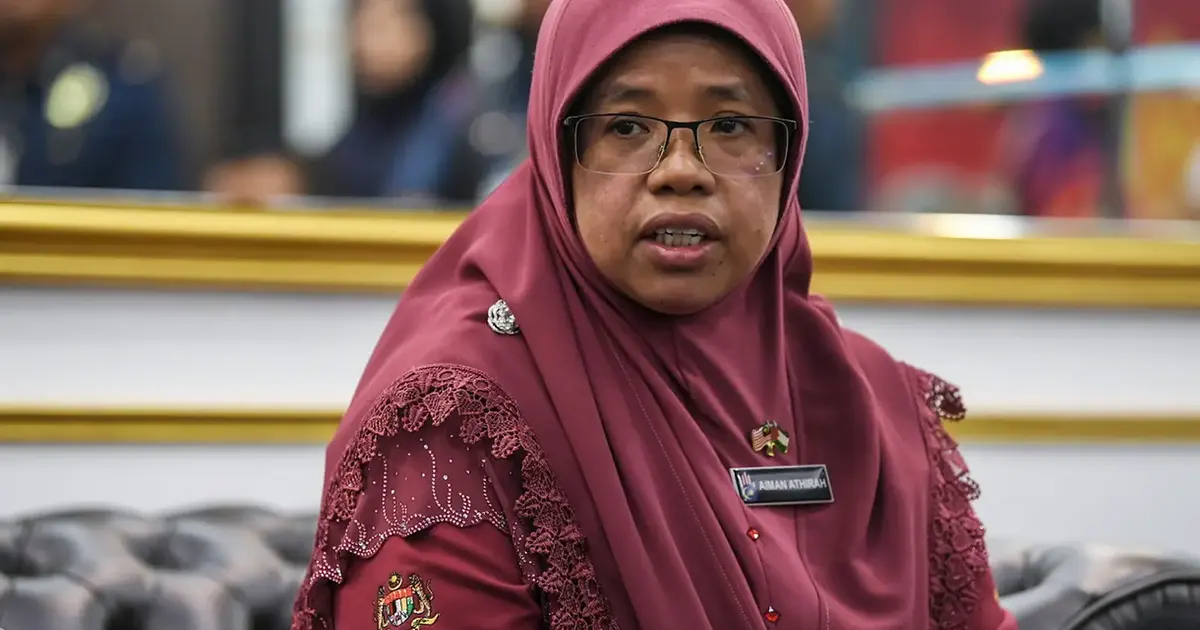
In a pointed political challenge, Amanah vice-president Aiman Athirah Sabu has demanded that PAS president Hadi Awang either produce tangible evidence of his allegations against DAP or pursue formal legal action, effectively calling the Islamic party's bluff over inflammatory rhetoric that has characterised recent political discourse.
The challenge represents an escalation in tensions within Malaysia's fractious political landscape, where accusations regarding religious commitment and Islamic principles have become increasingly weaponised in inter-coalition disputes. Aiman Athirah's intervention underscores growing frustration among reform-oriented Muslim politicians with what they characterise as baseless assertions designed to undermine rivals rather than advance substantive policy debate.
PAS has repeatedly levelled criticism at DAP, a predominantly Chinese-led secular party, suggesting the party's policies and political positions represent opposition to Islamic values and governance. These accusations have been central to PAS's messaging during electoral campaigns and parliamentary discourse, particularly since the formation of the Perikatan Nasional coalition which has positioned itself as the defender of Islam in Malaysian politics.
However, Aiman Athirah's challenge cuts to the heart of the matter: if PAS holds genuine conviction regarding DAP's alleged anti-Islamic stance, then Malaysian legal frameworks provide multiple mechanisms for pursuing such claims. Defamation laws, constitutional protections for Islam, and legislative provisions regarding sedition and public order offer potential avenues through which aggrieved parties may seek redress in the courts.
The silence on legal action speaks volumes about the nature of these allegations. Political rhetoric and courtroom evidence operate under fundamentally different standards. What may resonate effectively during campaign speeches or parliamentary statements requires substantially more rigorous substantiation when subjected to judicial scrutiny, where testimony may be challenged, documents examined, and claims tested against established law.
This dynamic reflects broader challenges within Malaysia's political culture, where religious claims have become increasingly instrumentalised for electoral advantage. The strategic deployment of such allegations allows parties to mobilise core constituencies without necessarily confronting questions about verifiability or proportionality. Yet public figures making such assertions also bear responsibility for the social consequences of their rhetoric, particularly in a multi-religious society where religious tensions can easily escalate beyond political calculation.
For DAP, which has consistently maintained that its secular orientation does not translate to opposition toward Islam or Muslim interests, Aiman Athirah's demand provides vindication of its position. The party has argued that protecting secular governance frameworks and advocating religious pluralism are not equivalent to hostility toward any faith. The fact that PAS appears unwilling to test its allegations in court lends weight to such defences.
Amanah's intervention is particularly significant given its positioning within Malaysia's political ecosystem. As a splinter from PAS, Amanah represents a competing vision of Islamic politics—one that incorporates reform, pluralism, and cooperation with multi-ethnic coalitions. The party's willingness to publicly challenge PAS on this issue reflects fundamental philosophical differences about how Islamic principles should inform Malaysian governance and political strategy.
The broader implications extend to questions about political accountability and the standards to which public figures should be held. Allegations touching on religious commitment carry immense weight in the Malaysian context, where Islam's constitutionally protected status creates particular sensitivities. When such allegations are deployed without substantiation, they contribute to a political environment where claims matter more than evidence, and where the effectiveness of rhetoric becomes unmoored from its relationship to reality.
Regional observers watching Malaysian politics should note that these disputes reflect real ideological differences about secularism, religious governance, and pluralism—disagreements that merit serious engagement. However, the tendency to resolve such disagreements through unsubstantiated claims rather than evidence-based debate weakens public discourse and erodes trust in political institutions.
Aiman Athirah's challenge therefore serves a constructive function, even if its reception in political circles remains uncertain. By insisting on either evidence or legal action, she has effectively demanded that political discourse maintain a connection to verifiable reality. Whether this call for greater accountability gains traction will likely depend on broader shifts in Malaysian political culture toward prioritising substantive debate over rhetorical flourish.

