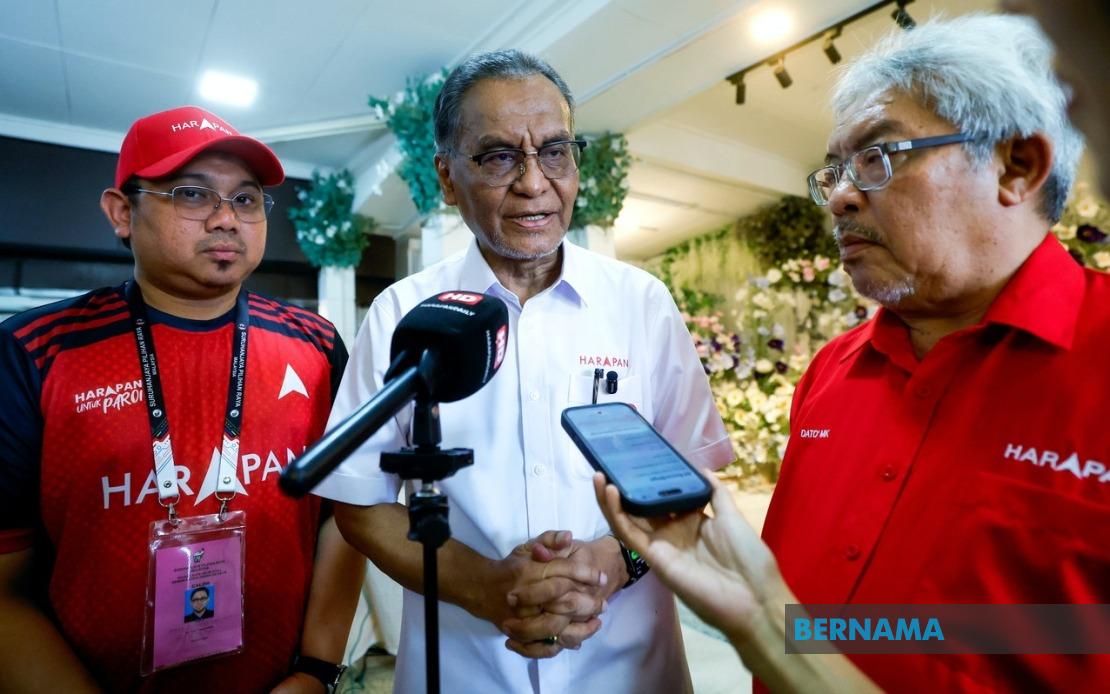
The 16th Negeri Sembilan state election will showcase Pakatan Harapan's strategy of grounding its campaign on tangible governance outcomes, with Parti Amanah Negara deploying nine candidates across multiple constituencies to highlight the coalition's administrative performance since the 2023 polls. This measured approach signals a shift away from rhetoric-heavy electioneering towards demonstrating results that directly affect voter welfare and community infrastructure.
Amanah vice-president Datuk Seri Dr Dzulkefly Ahmad articulated the coalition's broader philosophy during a campaign engagement in Seremban on July 21, characterizing the election as fundamentally about establishing voter confidence through proven problem-solving capacity rather than decibel levels on the campaign trail. His remarks underscore Pakatan Harapan's positioning as an administration comfortable defending its record—a posture that typically reflects confidence in incumbent performance, particularly important in a state where the coalition secured 17 of 32 seats in the previous election.
The seat distribution among Pakatan Harapan's component parties reveals carefully calibrated negotiations. Amanah contests nine seats within the 36-seat allocation agreed by the coalition, while Parti Keadilan Rakyat fields 16 candidates and the Democratic Action Party contests 11 constituencies. This arrangement suggests each party's negotiating strength reflects both membership size and electoral performance in the state, with PKR maintaining its dominant position as the coalition's largest component.
Dzulkefly's campaign framework emphasizes what he termed a "service-oriented approach," positioning Amanah and its coalition partners as governance-focused rather than populist. The strategy relies on mobilizing individual candidate credibility and demonstrated community engagement histories, betting that voters will reward administrative competence over simplistic messaging. This approach particularly suits candidates with established track records in their constituencies, as it converts length of tenure and accumulated local knowledge into campaign advantages.
The tactical execution of this strategy operates at multiple levels. Small-group discussions, door-to-door visits, and social media engagement form the campaign infrastructure, creating opportunities for candidates to identify constituent grievances and facilitate government responses through relevant agencies. This retail politics methodology transforms the campaign period into a diagnostic exercise, allowing representatives to surface problems before the election rather than after assuming office—a practice that theoretically generates goodwill while demonstrating responsive governance.
Paroi state constituency exemplifies the type of seat where this approach gains traction. With over 65,000 registered voters and approximately 140,000 residents, the constituency requires a representative capable of navigating complex interactions between state-level decision-making and local government authorities. Amanah's Paroi candidate Ahmad Shahir Mohd Shah articulated specific commitments to empowering small traders, proposing streamlined licensing procedures and business area upgrades developed collaboratively with local authorities. These concrete initiatives appeal to tangible constituent interests rather than abstract policy frameworks.
Amanah's nine candidates span geographically and demographically diverse constituencies. Incumbent Datuk Bakri Sawir defends Klawang, while other candidates contest seats ranging from rural Gemencheh and Bagan Pinang to mixed urban-rural areas like Senaling and Kota. This geographic spread requires candidates to address distinct economic circumstances—from agricultural livelihoods in rural areas to small business concerns in semi-urban zones. The diversity suggests Amanah is competitive across multiple constituency types, though it simultaneously indicates heavier reliance on particular regions compared to coalition partners.
The electoral context shapes the urgency of Pakatan Harapan's campaign emphasis. The 2023 Negeri Sembilan election resulted in a fragmented outcome: Pakatan Harapan won 17 seats, Barisan Nasional secured 14, and Perikatan Nasional captured five. This distribution provides Pakatan Harapan with a working majority but without commanding dominance, making incumbent performance the primary electoral asset. By contrast, opposition parties lack a clear narrative of alternative governance, potentially elevating the importance of the incumbent administration's track record in voter calculations.
The timing of electoral processes provides additional campaign dimensions. The Election Commission has designated July 28 for early voting, followed by general polling on August 1, creating a compressed campaign window. Early voting provisions, typically accessed by essential service workers and those unable to vote on polling day, could disproportionately benefit established administrative candidates whose campaigns can guide supporters through the early voting process. This logistical advantage complements Pakatan Harapan's broader strategy of leveraging governmental machinery and administrative experience.
For Malaysian voters evaluating state-level governance, the Negeri Sembilan election offers perspective on coalition performance beyond federal politics. Pakatan Harapan's emphasis on administrative track records and community service operates at the scale where voters most directly experience government—local infrastructure, licensing procedures, and responsiveness to constituent concerns. A campaign centered on these tangibles, particularly when embodied through candidates with identifiable community histories, potentially resonates more powerfully than national-level rhetoric focused on broader political principles.
The campaign's emphasis on small traders and business empowerment reflects economic priorities facing Malaysian communities beyond major urban centers. Licensing reform, business area development, and collaboration between state and local authorities address friction points that constrain entrepreneurial activity in smaller constituencies. By elevating these concerns to campaign prominence, Amanah and its coalition partners signal responsiveness to economic anxieties affecting ordinary Malaysians—a positioning that could prove decisive if opposition parties fail to articulate compelling economic alternatives.
The Negeri Sembilan election thus functions as a referendum on incumbent coalition performance at the state level, with Pakatan Harapan's campaign strategy reflecting confidence in its administrative record while acknowledging that voters increasingly demand concrete evidence of governance competence. The Amanah campaign exemplifies this orientation, transforming electoral politics into demonstrations of responsive administration capable of mobilizing government resources to address constituent problems.

