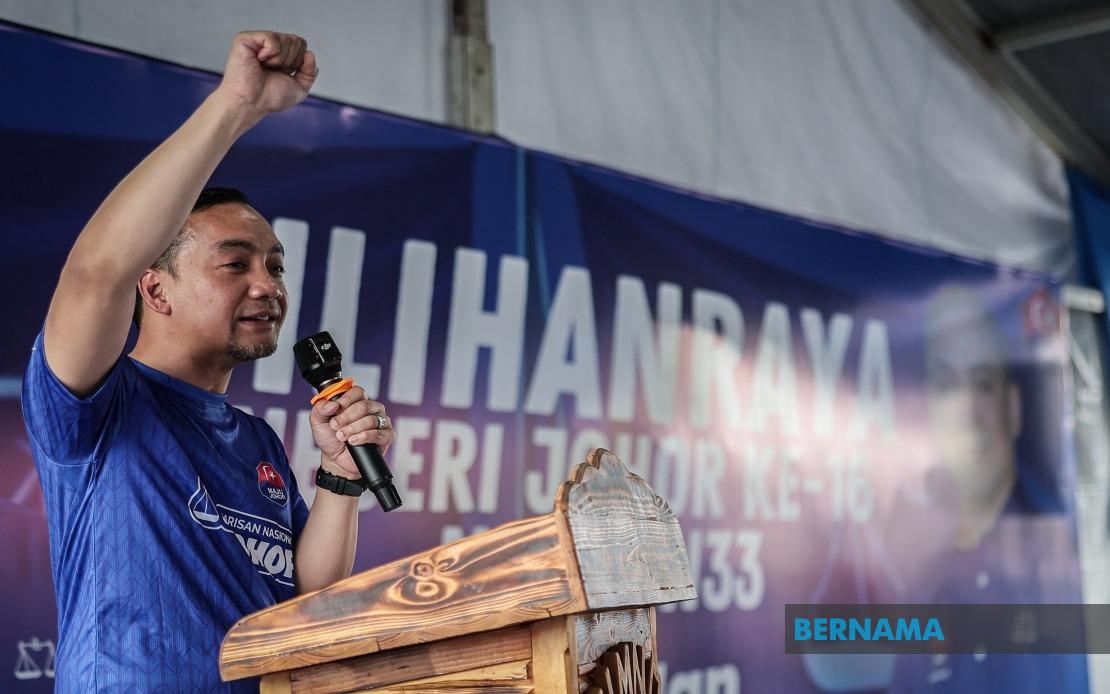
Barisan Nasional appears to have found fresh momentum in the Johor state election campaign, with party leadership attributing the shift to strong voter reception for Alwiyah Talib, the coalition's candidate in the Endau seat. Speaking during a campaign event in the district on June 29, BN chairman Datuk Onn Hafiz Ghazi expressed confidence that the positive grassroots sentiment surrounding Alwiyah's candidacy would accelerate the coalition's push towards polling day on July 11, signalling that momentum matters as much as vote tallies in the closing stages of any electoral contest.
Alwiyah's trajectory represents a notable narrative in contemporary Malaysian politics: the return of a defector to the coalition fold. Known affectionately as "Kak Awi" among constituents, she had previously represented Endau under the BN banner in the 14th General Election before switching to Bersatu and then contesting under Perikatan Nasional in the 2022 state elections. Her homecoming to BN carries symbolic weight beyond the local campaign, embodying what UMNO president Datuk Seri Dr Ahmad Zahid Hamidi has framed as the "Rumah Bangsa" concept—a philosophical approach emphasising unity and pragmatic coexistence within the coalition despite past political differences.
Onn Hafiz, who also serves as Johor Menteri Besar, was deliberate in highlighting Alwiyah's track record as a justification for her reintegration. According to his comments to reporters, her stint with opposition parties had not dimmed her commitment to constituent welfare, suggesting that BN values results over rigid ideological boundaries. This messaging attempts to rebrand defection as less of a betrayal and more as a politician following genuine conviction about where she can best serve her community—a framing designed to make such moves appear less opportunistic and more principled to voters.
In the 2022 state election, Alwiyah secured the Endau seat with a majority of 3,041 votes in a five-cornered contest, demonstrating personal electoral strength independent of which coalition banner she flew. This individual appeal is precisely what BN requires if it hopes to recapture ground lost over recent electoral cycles. The fact that she won despite being with Perikatan Nasional suggests her constituency appeal transcends party affiliation—a valuable asset in competitive Malaysian politics where personal popularity often outweighs institutional party machinery.
The campaign environment appears favourable for BN's purposes. Onn Hafiz reported that proceedings in both Endau and the neighbouring Tenggaroh constituency, where BN candidate Mohd Youzaimi Yusof is contesting, had progressed without major incidents. In Malaysian electoral contexts, the absence of controversy is itself noteworthy, reflecting a campaign climate perceived as stable. This matters because volatile campaigns can shift voter sentiment in unpredictable directions, while calm campaigns tend to entrench existing preferences.
The Johor state election holds particular significance for BN's national standing. Johor, Malaysia's second-largest state by population and historically a BN stronghold, has become increasingly competitive following the 2022 general election. Any consolidation of BN support in state-level contests provides crucial building blocks for future national campaigns. The Endau campaign, therefore, extends beyond local significance; it functions as a bellwether for BN's ability to maintain relevance in urban and semi-urban constituencies where swing voters increasingly determine outcomes.
Alwiyah's appeal to female voters merits consideration. As a female politician leading the charge in Endau, she potentially attracts women voters who seek representation from candidates who share their experiences. Malaysian electoral analysis has consistently shown that women's participation and voting preferences significantly influence competitive constituencies, making her candidacy potentially advantageous for BN in demographic terms.
The early voting scheduled for July 7 introduces a timing element into campaign calculations. Early voters tend to be more engaged citizens—government employees, those with mobility constraints, and the institutionally connected. BN's traditional organisational strength in mobilising such cohorts could prove decisive if campaign momentum translates into higher early voting turnout among its supporters. Onn Hafiz's invocation of "Insya-Allah" when expressing hope that momentum persists until polling day reflects both religious convention and genuine anxiety that electoral campaigns remain fluid until votes are cast.
BN's confidence regarding party machinery in Endau and Tenggaroh suggests the organisation has invested in ground-level preparations. In Malaysian state elections, especially in competitive constituencies, the quality of voter identification, transportation, and day-of-election coordination often determines outcomes as much as campaign messaging. The chairman's assertion of preparedness implies confidence in these unglamorous but essential operational elements.
For Malaysia's broader political landscape, the Endau contest exemplifies how coalition politics continues to evolve. The "Rumah Bangsa" framework represents an attempt to soften the edges of electoral competition, making defections and realignments appear less jarring. If successful in narratively repositioning Alwiyah's return, BN might establish precedent for attracting further defectors from opposition ranks—though such moves carry reputational risks if perceived cynically by voters.
The July 11 polling date will test whether grassroots enthusiasm translates into electoral success. Campaign sentiment and actual voting behaviour frequently diverge, particularly when voters face competing pressures in the ballot booth. Alwiyah's personal standing in Endau will ultimately matter more than any chairman's pronouncements, and her capacity to defend her 3,041-vote majority against renewed opposition competition remains uncertain despite current BN optimism.

