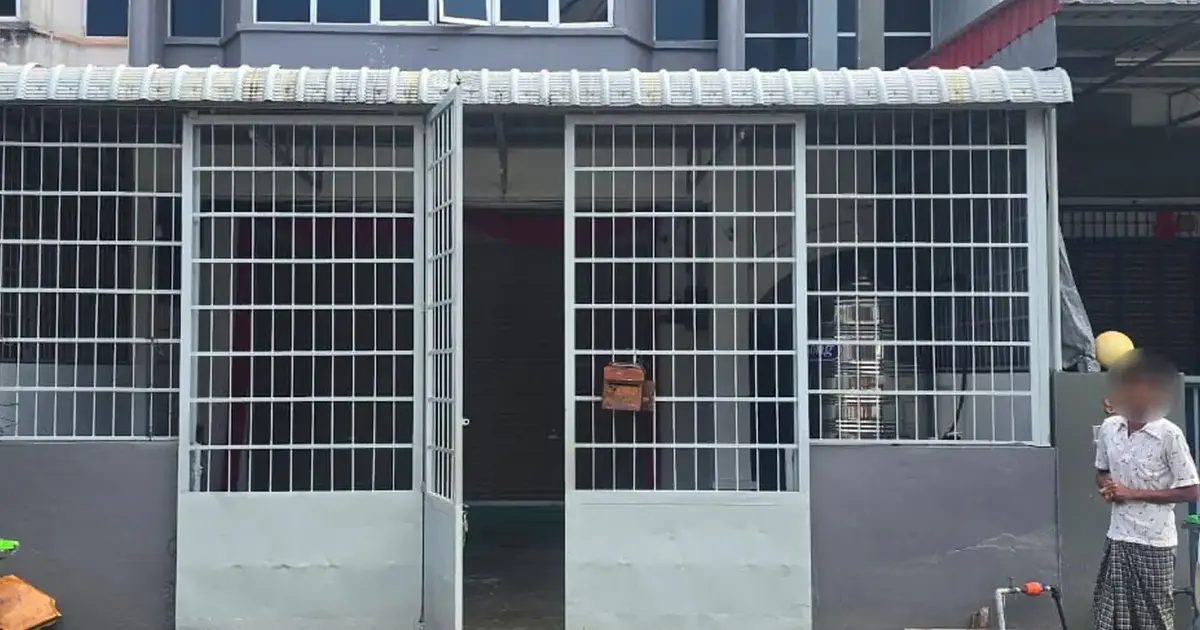
Alor Setar's municipal council has launched an enforcement operation against an industrial premises being repurposed as an unlicensed educational facility serving Rohingya children, signalling heightened scrutiny of informal education arrangements operating beyond regulatory oversight in Malaysia's urban centres.
The raid, which targeted facilities in the Kedah state capital, revealed premises zoned for industrial use had been converted to accommodate classroom activities for young Rohingya learners. Authorities are now investigating allegations of both zoning breaches and the operation of an unauthorised school, violations that carry potential penalties under local planning and education regulations. The dual-pronged approach reflects concerns about property misuse and the absence of proper licensing mechanisms for such institutions.
The discovery underscores broader challenges facing Malaysian municipal authorities in managing informal education networks that have emerged within refugee and migrant communities. Rohingya populations, displaced from Myanmar and scattered across Southeast Asian nations, often establish grassroots learning initiatives to maintain educational continuity for children unable to access formal schooling systems. While such efforts serve humanitarian purposes, they frequently operate outside regulatory frameworks designed to ensure pedagogical standards, facility safety, and teacher qualifications.
Malaysia's approach to Rohingya education remains complex and contentious. The country hosts one of Southeast Asia's largest Rohingya populations, estimated in the hundreds of thousands, yet formal pathways for educational access remain severely restricted. Most states prohibit Rohingya children from enrolling in public schools, forcing families to rely on community-based learning arrangements, religious institutions, or informal tutoring networks. This policy gap has inadvertently created an environment where unauthorised schools flourish, often operating discreetly to avoid detection and intervention.
The Alor Setar case illustrates tensions between regulatory compliance and humanitarian necessity. Municipal councils, tasked with enforcing zoning laws and building codes, must contend with facilities that technically breach regulations yet serve vulnerable populations without alternative options. Industrial premises, typically cheaper to rent and less conspicuous than commercial spaces, become attractive choices for operators seeking to establish educational hubs with minimal capital investment and reduced visibility to authorities.
From a planning perspective, the misuse of industrial zones for educational purposes raises legitimate concerns. Industrial areas are designated to accommodate manufacturing, warehousing, and light industry, with infrastructure and safety standards calibrated accordingly. Converting such spaces into schools without proper renovation, fire safety upgrades, emergency exits, and structural assessments poses genuine risks to occupants. Authorities cannot simply overlook these breaches without compromising public safety and urban planning integrity.
Yet the investigation's outcome may depend significantly on how Alor Setar's municipal administration weighs enforcement rigidity against community context. Some Malaysian councils have adopted more nuanced approaches, working with NGOs and community leaders to identify compliant solutions rather than simply shuttering facilities. This might include facilitating relocations to appropriately zoned spaces, assisting operators through licensing processes, or connecting programmes with registered educational entities that could provide legitimate oversight.
The case also reflects Malaysia's broader migration and education policy dilemmas, which extend beyond Rohingya communities. Undocumented migrant children from neighbouring countries similarly struggle accessing formal education, spawning informal learning networks in urban kampung areas and industrial zones nationwide. Enforcement actions, while legally justified, often displace rather than solve underlying problems, with education provision simply relocating to other unregulated venues.
International observers have increasingly critiqued Malaysia's restrictions on refugee education, arguing that denying schooling access contradicts humanitarian obligations and destabilises communities by leaving youth without structured development opportunities. Several UN bodies have recommended Malaysia formalise pathways for refugee children to attend school, either through dedicated curricula or controlled integration into existing systems. The country's current approach—neither preventing informal education nor formally accommodating refugees—remains untenable long-term.
Regional precedent suggests alternative models. Lebanon and Jordan, hosting vastly larger refugee populations, have negotiated frameworks permitting refugee students to attend public schools, albeit with resource constraints. Thailand similarly tolerates informal learning arrangements for migrant children, with minimal regulatory interference provided basic safety and health standards are met. Malaysia might consider comparable pragmatism, particularly given its economic capacity relative to those nations.
For stakeholders in Alor Setar, the immediate concern is whether the investigation results in facility closure or collaborative remediation. Operators face potential fines or prosecution; children lose educational continuity; and the underlying demand for Rohingya schooling remains unaddressed. Without policy-level changes permitting legitimate educational access, enforcement operations will continue generating cyclical disruption rather than systemic solutions.
The broader implication extends to Malaysian governance more generally. Urban authorities increasingly encounter misalignments between rigid regulations and community realities, particularly regarding vulnerable populations excluded from formal systems. Balancing enforcement responsibility with pragmatic problem-solving remains a defining challenge for municipal administrations navigating Malaysia's complex demographic and regulatory landscape.

