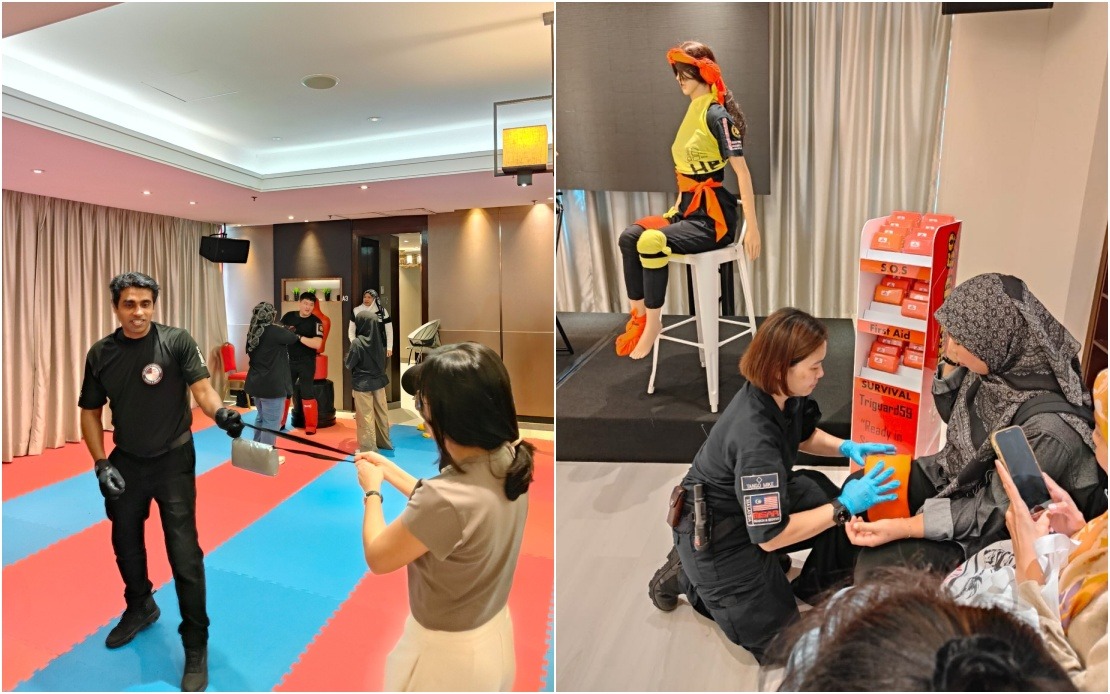
Allianz Malaysia Berhad has deepened its commitment to grassroots safety education through its ninth iteration of the Women's Street Crime Awareness Campaign, executed in partnership with Kelab Marshal Keselamatan Jalan Raya Kuala Lumpur (RSMC). The initiative, held at the Wisma Huazong YTL Hall in Seri Kembangan, Selangor, underscores a significant shift in how private insurers are leveraging their corporate social responsibility mandates to address public security concerns that disproportionately affect women across Malaysia's urban centres.
The campaign reached 200 women aged 16 and above, providing them with comprehensive training spanning multiple dimensions of personal safety. Rather than offering generic safety messaging, the programme delivered practical, actionable knowledge designed to help participants identify and mitigate specific threats they encounter in daily life. The curriculum covered home security vulnerabilities, street-level theft tactics including bag snatching, deceptive road schemes, stalking prevention, carjacking awareness, proper accident response protocols, hands-on self-defence techniques, and structured emergency preparedness protocols. This breadth of focus reflects an understanding that women's safety concerns extend far beyond a single threat vector, requiring multifaceted competency development.
What distinguishes this year's iteration is the introduction of a dedicated dialogue and awareness session that moved beyond didactic instruction. Participants gained direct access to RSMC experts in an interactive format, enabling them to discuss genuine safety anxieties and specific neighbourhood concerns while receiving contextualised guidance. This conversational approach acknowledges that street crime and safety risks vary significantly across different residential areas and community contexts, making personalised advice more valuable than standardised presentations. The shift toward participatory learning reflects global best practices in community safety education, where victim-centred approaches yield higher engagement and better knowledge retention.
For Malaysian readers, this campaign addresses a persistent gap in public safety infrastructure. While government agencies and municipal authorities bear primary responsibility for crime prevention and law enforcement, the involvement of private-sector actors like Allianz Malaysia signals that safety concerns are now mainstream business considerations. Insurance companies possess data on claim frequencies and loss patterns, giving them unique insights into prevailing crime trends. Their willingness to channel resources into prevention rather than merely indemnifying losses suggests a recognition that reducing crime benefits insurers, participants, and society collectively.
Sean Wang, Allianz Malaysia's chief executive officer, framed success not merely through attendance metrics but through knowledge dissemination beyond the event boundary. His observation that community leaders expressed interest in replicating the initiative in their own neighbourhoods points toward a potential cascading effect. If community representatives serve as multipliers, training additional cohorts using materials and frameworks developed through this campaign, the reach could expand exponentially without proportional investment from Allianz or RSMC. This model of knowledge transfer represents a more sustainable approach to community safety than one-off campaigns.
Captain K. Balasupramaniam, RSMC founder and president, articulated the philosophical underpinning of such initiatives: empowering individuals to make informed decisions during uncertain situations. This framing moves beyond fear-based messaging, which research suggests often paralyses rather than enables protective action. Instead, the campaign positions women as active agents capable of assessing risk, implementing preventive measures, and responding effectively to emergencies. The emphasis on fostering safety advocates within families and communities leverages social networks, recognising that peer influence often proves more persuasive than institutional messaging.
The Malaysian context adds particular urgency to such initiatives. Urban crime statistics, particularly regarding street theft and robberies, remain persistent concerns in major cities including Kuala Lumpur, Selangor, and Penang. Women frequently report feeling vulnerable during commutes, shopping excursions, and evening activities. Public awareness campaigns, while important, often fail to provide concrete tactical knowledge. This programme bridges that gap by translating awareness into specific, practisable skills. Participants leave equipped not just with information but with muscle memory from self-defence training and mental frameworks for recognising and responding to threats.
The ninth edition indicates sustained commitment rather than sporadic corporate benevolence. Institutional partnerships that persist across multiple years demonstrate genuine stakeholder alignment. Both Allianz Malaysia and RSMC have invested in understanding their audiences, refining programme content, and building trust within communities. The accumulation of nine campaigns suggests refined delivery methods, vetted curriculum, and institutional knowledge about what resonates with women participants. Potential participants familiar with previous iterations may exhibit greater trust and willingness to attend.
Regional implications extend beyond Malaysia's borders. Southeast Asian countries including Indonesia, Thailand, and the Philippines grapple with similar street crime concerns, particularly affecting women and young people. Successful models developed in Malaysia could be adapted for regional application. Allianz's presence across Southeast Asia provides potential pathways for scaling similar initiatives. Insurance industry associations across the region might explore collaborative approaches to community safety, creating networks of practice that elevate baseline safety competency across the region.
The campaign's success in attracting community leader interest suggests untapped demand for safety education programming. Government resources dedicated to crime prevention education remain limited, creating space for non-state actors to contribute meaningfully. However, this also raises questions about equitable access. Programmes anchored to corporate calendars and locations may inadvertently exclude women from lower-income communities with limited transportation or inflexible work schedules. Scalability considerations must account for accessibility barriers to ensure knowledge reaches those potentially most vulnerable to street crime.
Moving forward, measuring this campaign's impact requires metrics beyond participant counts. Tracking whether attendees implement recommended safety measures, whether their behaviour changes in measurable ways, and whether they successfully transmit knowledge to family members would provide evidence of genuine impact. Longer-term follow-up studies examining whether programme participants experience lower rates of victimisation compared to control groups would establish whether awareness translates to actual risk reduction. Such rigorous evaluation would strengthen arguments for continued investment and could inform improvements to the curriculum.
The initiative demonstrates how corporate responsibility programmes can address legitimate public security gaps when designed thoughtfully and executed in genuine partnership with established community organisations. As Malaysian women increasingly participate in the urban workforce and navigate public spaces independently, accessible safety education becomes essential infrastructure. Allianz Malaysia and RSMC's continued collaboration provides a valuable model, though scaling requires deliberate attention to ensuring geographic and demographic inclusivity across Malaysia's diverse population.

