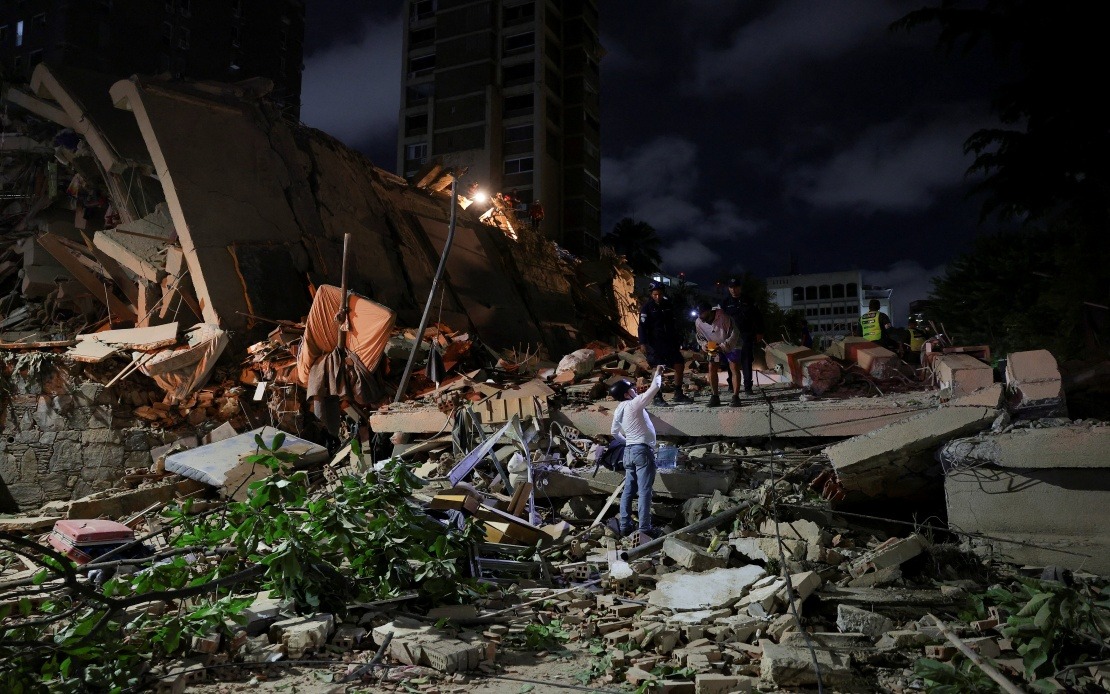
Malaysia's Foreign Ministry has accounted for all registered Malaysian citizens in Venezuela following a devastating pair of earthquakes that struck the South American nation's central region on Wednesday. The twin tremors, which registered magnitudes of 7.2 and 7.5 on the Richter scale, caused considerable structural damage across multiple states, but the Malaysian diplomatic mission reports that no citizens under their registry have been harmed. The confirmation comes as Venezuelan authorities continue their damage assessment efforts, with the full scope of casualties and destruction still being determined.
The epicentres of the earthquakes were located approximately 21 kilometres from Moron and roughly 168 kilometres to the west of Caracas, the Venezuelan capital. The seismic activity was widely felt throughout the country, with tremors reaching Caracas itself as well as several key states including Trujillo, Carabobo, Miranda, and La Guaira. Initial reports indicate that the earthquakes caused significant structural damage, with multiple buildings collapsing across affected areas. The Venezuelan authorities have not yet released comprehensive casualty figures or a detailed assessment of the material damage caused by the twin disasters.
Malaysia's Foreign Ministry, formally known as Wisma Putra, issued a statement on Thursday emphasising its ongoing coordination with Venezuelan authorities to monitor the situation. The ministry highlighted that it remains in constant communication with local emergency services and is actively tracking developments as Venezuelan officials work to quantify the impact of the earthquakes. This close liaison reflects the standard protocol followed by Malaysian missions abroad during international crises, ensuring rapid information flow and coordinated response efforts.
While the immediate concern regarding registered Malaysian nationals has been addressed, the ministry has issued strong advisory guidance for Malaysians in or near the affected zones. All citizens in the region are urged to exercise heightened caution, remain alert to their surroundings, and comply fully with safety directives and updates issued by Venezuelan emergency services. This precautionary stance reflects the unpredictable nature of earthquake aftershocks, which often continue for days or weeks following major seismic events and can cause additional structural failures.
A critical aspect of the ministry's response involves encouraging Malaysian citizens who have not yet registered their presence in Venezuela to do so without delay. The e-Konsular system, accessible at https://ekonsular.kln.gov.my, serves as the primary platform for Malaysians abroad to maintain official records with their home country. Registration through this system is essential for enabling the Foreign Ministry to provide timely assistance during emergencies and to maintain accurate records of the Malaysian diaspora worldwide. The urgency of this appeal underscores the value that such registration provides during natural disasters when communication lines are strained and information becomes fragmented.
For Malaysians in immediate need of consular support or those wishing to report information about other nationals potentially affected by the earthquakes, the Embassy of Malaysia in Caracas remains the primary point of contact. The mission has provided two telephone numbers for emergency communication: (+58-212) 720 4257 and (+58-424) 222 1338, with an email address at [email protected] serving as an alternative contact method. These multiple channels of communication reflect best practices in crisis management, recognising that different situations may favour different modes of contact depending on local infrastructure conditions and network availability.
The situation in Venezuela highlights the vulnerability of populations in seismically active regions and the importance of preparedness measures. Venezuela sits within the Caribbean tectonic plate boundary zone, making it susceptible to periodic earthquakes. The nation's aging infrastructure, compounded by years of economic challenges, increases the risk of severe damage and casualties when seismic events occur. For Malaysian expatriates in such regions, maintaining registration with their embassy and staying informed about local safety protocols becomes especially crucial.
Regional observers note that Venezuela's current economic and political circumstances may complicate disaster response efforts. The country has faced significant challenges in recent years that have affected its capacity to mobilise resources and coordinate rescue operations during emergencies. International assistance, including from regional neighbours and the international community, often becomes necessary to supplement domestic response capabilities in such situations. The Malaysian Foreign Ministry's proactive monitoring and communication with local authorities positions Malaysia to assist its nationals if broader humanitarian challenges emerge.
For the broader Malaysian community abroad, the Venezuela earthquake response demonstrates the Foreign Ministry's operational commitment to protecting citizens during international crises. The systematic approach—confirming safety, providing guidance, maintaining communication channels, and encouraging registration—reflects lessons learned from previous disaster responses across different regions. Southeast Asian nations, many of which have significant diaspora populations worldwide, have increasingly prioritised consular crisis management capabilities in recent years, recognising that such events can strike suddenly and without warning.
The Foreign Ministry has committed to providing further updates as the situation develops, reflecting the evolving nature of disaster assessment. Venezuelan authorities will require additional time to compile accurate casualty figures and damage estimates, particularly if communication infrastructure in affected areas has been compromised. As information becomes available, Malaysia will coordinate with its embassy in Caracas to relay relevant developments to affected families and the broader Malaysian community.

