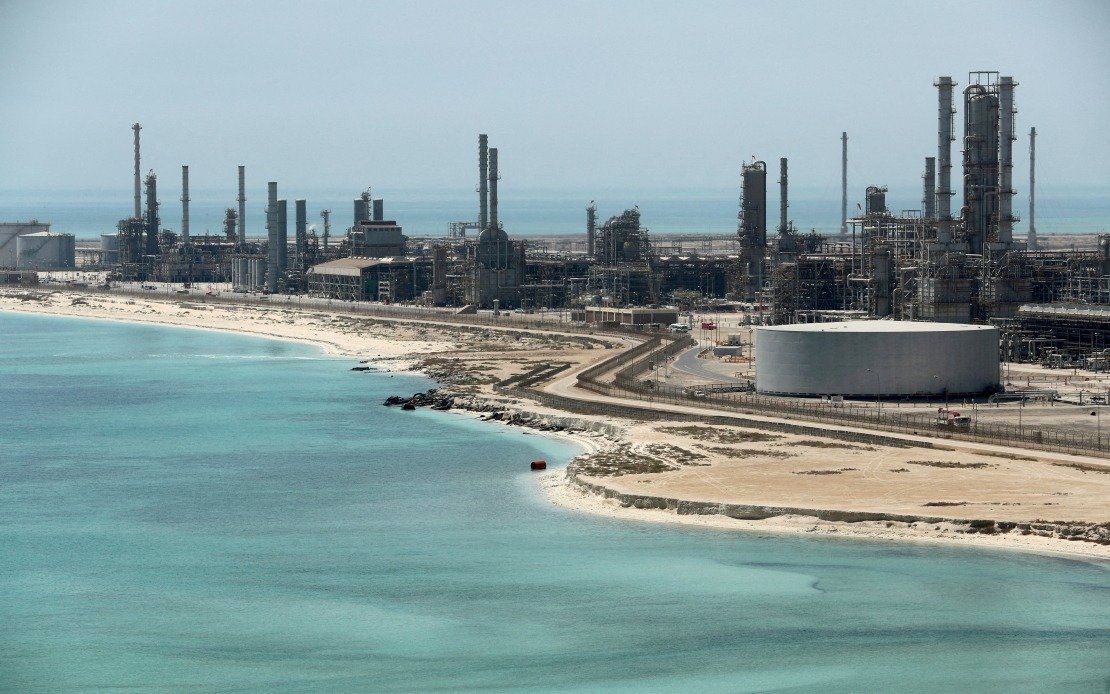
A helicopter operated by Saudi Aramco crashed in the early hours of Sunday morning near Ras Tanura, one of Saudi Arabia's most critical energy installations, claiming the lives of all 14 people aboard. The Ministry of Energy disclosed that the aircraft went down at approximately 6 am local time, with the incident occurring at the kingdom's strategically important oil refining and export complex on the Persian Gulf coast. All individuals on the helicopter were confirmed to be Saudi nationals, according to reports released through the Saudi Press Agency.
Ras Tanura represents far more than a simple industrial facility in the context of global energy markets. The coastal site functions as one of the kingdom's primary refining hubs and a major export terminal through which crude oil flows to international markets. The location's significance extends beyond Saudi Arabia itself, given the kingdom's position as the world's largest crude oil exporter and a crucial supplier to Asian economies including those in Southeast Asia. Any disruption to operations at such facilities carries implications that ripple across global energy markets and can affect fuel prices and supply chains throughout the region.
The Saudi Ministry of Energy initiated a comprehensive investigation immediately following the accident, committing to establishing the precise circumstances that led to the crash. Such inquiries typically examine multiple factors including weather conditions at the time of the incident, mechanical status of the aircraft, pilot experience, and operational procedures. The breadth of these investigations reflects the complexity of aviation accidents, which rarely stem from a single cause but rather from a combination of contributing factors.
The loss of all 14 individuals represents a significant human tragedy. The Ministry of Energy issued formal condolences to the families of those who perished, reflecting the customary practice in Saudi Arabia of recognizing such losses within both religious and national frameworks. The statement characterised the deceased as martyrs, employing terminology commonly used in Saudi official communications to honor those who have died in service-related circumstances.
The timing of the crash during early morning hours raises questions about operational patterns at the facility. Ras Tanura operates continuously as a critical energy infrastructure, with various shifts and personnel movements throughout the day and night. Helicopters at such installations typically serve transport functions, moving personnel between offshore platforms, the main facility, and other locations, or conducting emergency response operations.
For Malaysian readers and Southeast Asian observers, this incident carries particular relevance given the region's dependence on Middle Eastern oil supplies. Saudi Arabia remains a primary source of crude imports for numerous Asian nations, with Malaysia itself relying significantly on Gulf suppliers. The safety of energy infrastructure in producing nations directly impacts supply reliability and pricing stability in consuming countries.
The investigation's findings will likely inform safety protocols not only within Saudi Aramco but potentially across the broader petroleum industry. International aviation and industrial safety standards often evolve following major incidents, with lessons learned disseminated through regulatory bodies and industry associations. Any systemic issues identified could lead to enhanced safety measures at similar facilities worldwide.
Helicopter operations at energy facilities present distinct operational challenges. These aircraft transport critical personnel, conduct surveillance and maintenance activities, and provide emergency response capabilities. The demands placed on such operations, combined with the high-consequence nature of energy infrastructure, necessitate rigorous safety protocols and continuous oversight.
The loss of 14 employees simultaneously represents an unusual scale of casualty in helicopter operations, suggesting either a catastrophic structural or mechanical failure, severe weather conditions, or other extraordinary circumstances. The investigation process will likely take weeks or months to complete, particularly if international aviation experts become involved in analyzing wreckage and operational data.
For Saudi Arabia's energy sector, the incident underscores the ongoing operational risks inherent in managing complex industrial facilities in challenging environments. Ras Tanura's coastal location, while strategically advantageous for export operations, presents its own environmental and operational complexities. The facility's continued critical importance to global energy markets means that investigations and any subsequent safety modifications will receive international attention.
The broader implications for regional energy security remain to be assessed. In the immediate term, Saudi Aramco's operational capacity should not be substantially affected given the infrastructure's redundancy and scale. However, the incident serves as a reminder of the fragility of complex industrial systems and the human cost of operating at the frontiers of technical capability and geographical challenge.
Stakeholders across Asia's energy sector will monitor the investigation's progress and conclusions carefully. Safety improvements implemented at Saudi facilities often establish standards that influence practices at other major petroleum installations, making this incident's technical findings potentially consequential for operations throughout the region and globally.

