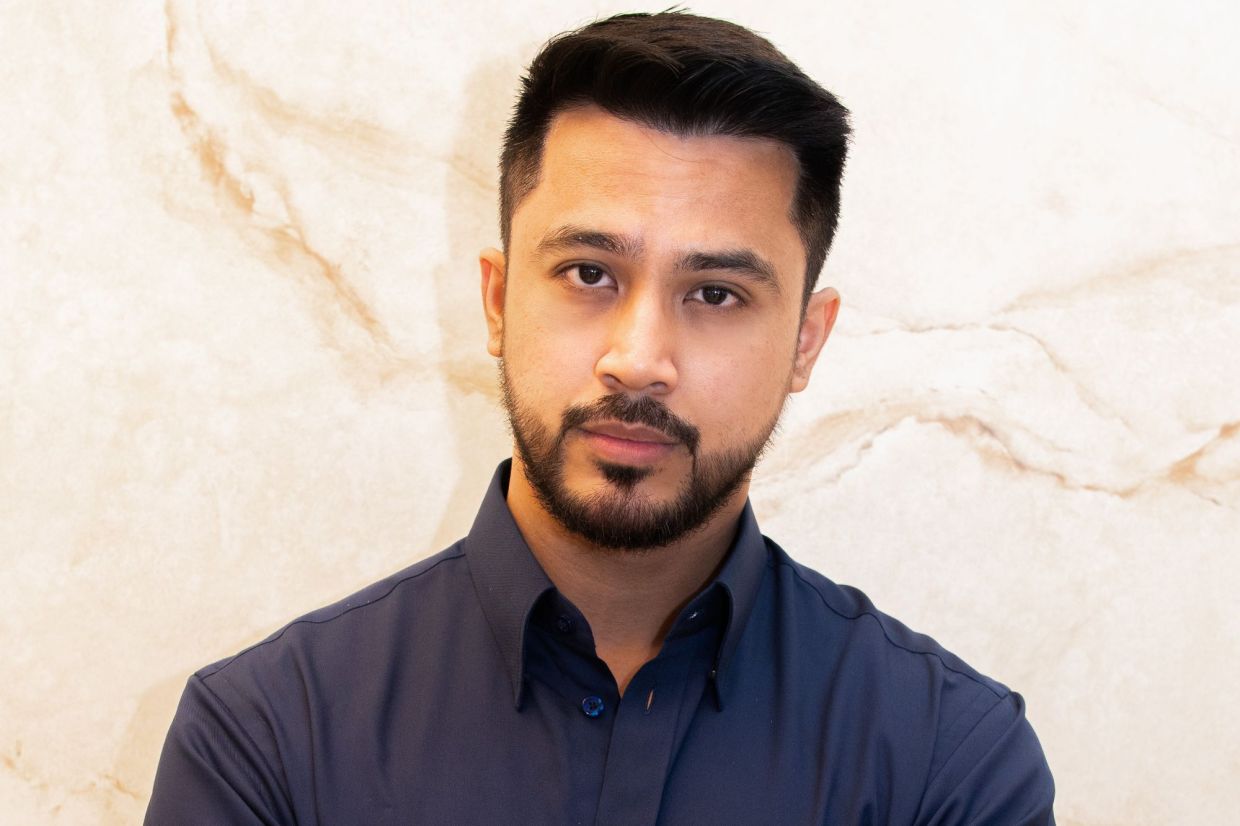
Malaysian actor and singer Aliff Aziz is making his return to television with a challenging new project that carries unmistakable echoes of his personal turmoil. In the iQiyi series, the 35-year-old takes on the role of Adli, a man who removes his wedding ring to pursue another woman after she reveals she does not date married men. The timing and nature of the role have inevitably drawn attention, coming less than a year after Aliff's marriage to Malaysian singer-actress Bella Astillah imploded following a highly publicised khalwat incident in March 2024. The couple, who share two children together, proceeded through a swift and very public divorce that dominated entertainment news cycles and sparked considerable discussion about personal conduct and accountability within the Malaysian celebrity sphere.
Aliff's involvement in the khalwat controversy struck at the heart of his public image, but the entertainer did not entirely vanish from public consciousness following the scandal. He maintained an active social media presence throughout, regularly sharing singing videos and updates that suggested he was processing the fallout while attempting to rebuild his professional standing. Nevertheless, the incident created a significant barrier to his career momentum, making his return to acting for a major streaming platform a considerable gamble for both the actor and the production. The decision to cast him in a role that so directly mirrors the infidelity themes that defined his personal crisis required genuine conviction from everyone involved in the project.
When confronted about his reservations regarding the role during the series launch, Aliff acknowledged the psychological complexity of stepping into character under such circumstances. He articulated his awareness that audiences might struggle to separate his fictional portrayal from his actual behaviour, yet he framed his professional responsibility as one that transcends personal baggage. The actor emphasised that his primary obligation as a performer is to inhabit the character truthfully and deliver a compelling narrative to viewers, regardless of the biographical parallels that observers might draw. He recognised that some people would inevitably filter their viewing experience through the lens of his scandal, yet he expressed determination to focus his energy on the craft itself rather than attempting to control external perceptions.
Acknowledging the internal doubts that arose during production, Aliff revealed that questions naturally surfaced about audience reception and potential criticism. However, he consciously redirected those anxieties toward the technical and emotional demands of the role. The actor stated that he ultimately measured success by whether he had delivered a performance of which he could be proud and whether the director and production team were satisfied with his work. This framing represents an attempt to establish boundaries between his personal accountability and his professional output, suggesting that while he accepts responsibility for his past actions, he also believes those actions should not entirely define or restrict his career trajectory.
The production's director, Eyra, demonstrated considerable faith in casting Aliff despite the surrounding controversy. She explicitly stated that she did not allow the scandal to influence her decision-making process, instead prioritising her assessment of his talent, discipline, and professional approach to the work. Eyra's perspective reflects a philosophy within creative industries about separating artistic capability from personal conduct, though such decisions remain genuinely divisive among audiences. She praised Aliff's natural affinity for acting and highlighted his commitment to fully understanding and embodying his character, suggesting that his work on set justified the risk taken in bringing him aboard the project.
The series itself, titled to reference all three principal characters, explores thematic territory beyond straightforward infidelity narratives. Eyra explained that the drama examines the duality inherent in human nature, proposing that individuals contain both positive and negative dimensions simultaneously. Rather than functioning as a morality play specifically about polygamy, the production positions itself as an examination of consequence and choice, investigating how decisions ripple through relationships and lives. This framing offers viewers and critics potential scaffolding for interpreting the series on its own terms while acknowledging that personal interpretation will inevitably be coloured by awareness of Aliff's circumstances.
For Aliff himself, reading the script revealed possibilities he had not explored previously in his career. He described the narrative as emotionally demanding and noted that his character possessed considerable psychological complexity and layering that required nuanced performance work. The challenge of translating such a multifaceted character from page to screen appealed to him precisely because it represented unfamiliar territory that demanded growth and innovation in his craft. This perspective positions the role as an opportunity for artistic development rather than merely a vehicle for redemption, though audiences may inevitably interpret it through that redemptive lens regardless of his framing.
Aliff's philosophical approach to his personal circumstances and career recovery has crystallised around acceptance of his own responsibility and the imperative to move beyond rumination. He articulated this perspective through a spiritual lens, acknowledging that he prays for strength to navigate the consequences of his own choices without presenting himself as a victim or seeking sympathy from observers. This rhetorical stance attempts to position him as someone taking ownership rather than deflecting or seeking pity, though sceptical audiences may remain unconvinced about the depth of his self-examination. He emphasised that at thirty-five years old, he feels acutely aware of time's passage and believes dwelling excessively on past failures represents a squandering of finite opportunity.
The actor's articulated philosophy about forward momentum and refusing to remain trapped in regret reflects a deliberate choice to frame his narrative around resilience and continued effort rather than victimhood or redemption mythology. He chose language emphasising action, enthusiasm, and hope, suggesting a commitment to continued professional engagement and personal growth. Whether audiences will accept this narrative arc or remain fixated on the khalwat scandal as definitional to Aliff's public identity represents an open question that the reception of this new series will begin to answer. The drama consequently functions simultaneously as a work of fiction and as a real-world test of whether audiences in Malaysia and across Southeast Asia are willing to grant celebrities space for growth and recovery following personal and professional transgression.
The broader implications of this casting choice extend beyond Aliff's individual circumstances to raise questions about accountability, rehabilitation, and the entertainment industry's role in either facilitating or obstructing an individual's movement past scandal. Malaysian audiences have demonstrated considerable investment in celebrity personal lives and moral standards, making decisions about which personalities deserve continued platform access genuinely consequential. The production's willingness to centre Aliff in a leading role suggests confidence that sufficient audience appetite exists for his work moving forward, yet this confidence will face genuine testing through viewership patterns and critical response. This series consequently represents not merely Aliff's first major acting project since his scandal, but a broader cultural moment about forgiveness, boundaries, and the conditions under which redemption becomes possible within Malaysian celebrity culture.

