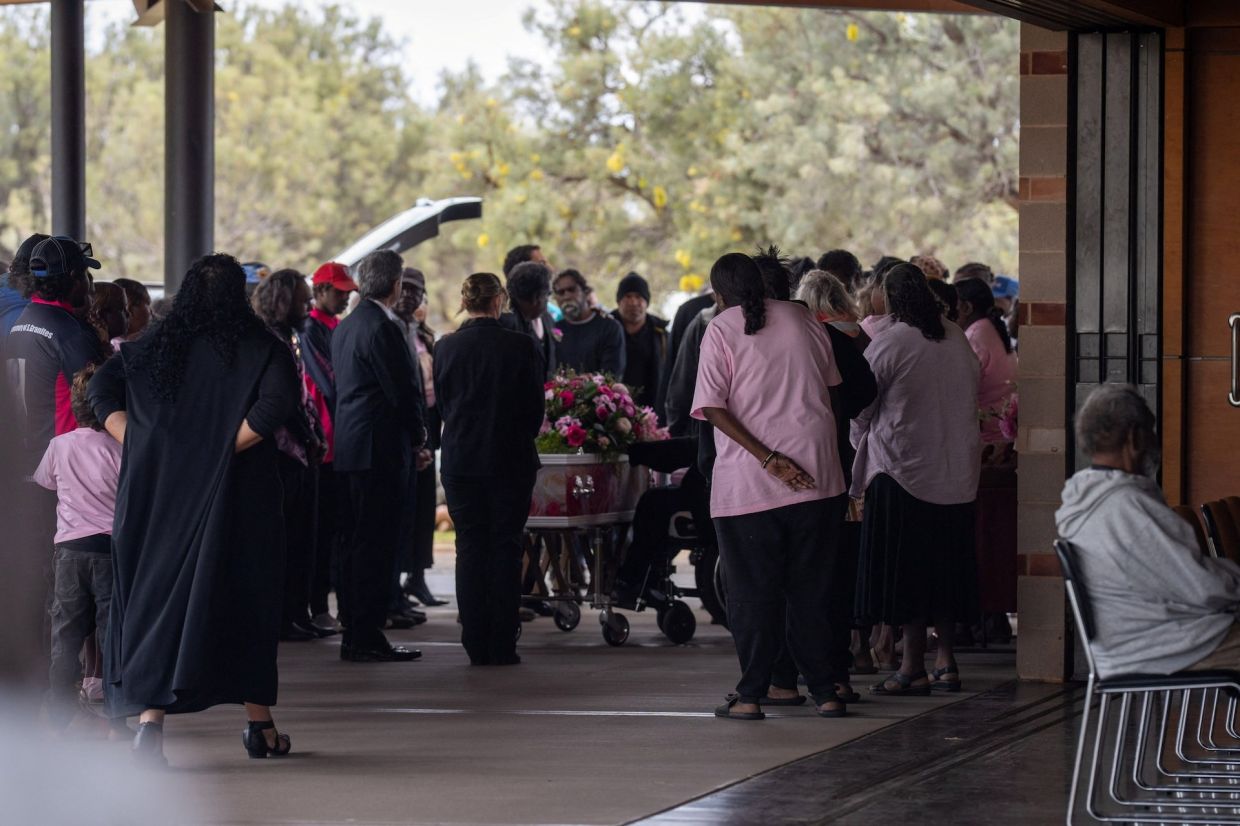
The remote Australian town of Alice Springs came to a standstill on Saturday as hundreds of mourners paid their respects to Kumanjayi Little Baby, a five-year-old Indigenous girl whose tragic death in April reverberated far beyond the Northern Territory. The funeral service, held at the town's Garden Cemetery, represented a solemn moment for a community still grappling with the aftermath of violence and social upheaval that followed the child's killing, bringing national attention to entrenched issues affecting Indigenous Australians in one of the country's most isolated regions.
The circumstances surrounding Kumanjayi Little Baby's death proved particularly volatile. Her killing prompted immediate outrage within Alice Springs, a town of approximately 25,000 residents located roughly 1,250 kilometres south of Darwin. What began as a tragic loss quickly escalated when locals apprehended the suspected perpetrator and inflicted a beating before law enforcement intervened, setting off a chain of events that would see the town experience its most serious civil unrest in recent memory. The arrest and subsequent legal proceedings became secondary to the eruption of communal anger that had been simmering beneath the surface for years.
The funeral itself took on cultural and symbolic significance within Indigenous communities across Australia. Mourners arrived at the cemetery dressed predominantly in pink, honouring the young victim's favourite colour, a touching personal detail that humanised the tragedy. The small white coffin, adorned with flowers, made its final journey in a black hearse as Australian Broadcasting Corporation cameras documented the scene—a poignant reminder of the life cut short and the community fractured by grief.
The attendance of hundreds at the service underscored how deeply the tragedy had affected Alice Springs and surrounding regions. For Indigenous Australians, the funeral represented far more than a farewell to one child. It encapsulated wider anxieties about safety, justice, and systemic neglect that have plagued their communities for generations. The gathering became a manifestation of collective sorrow intertwined with frustration over conditions that many argue contributed to the tragedy.
Culturally, the community entered what Indigenous Australians term "sorry business"—a traditional mourning period encompassing ceremonial practices and grief protocols that extend beyond the funeral service itself. This period represents a profound commitment to honouring the deceased and maintaining spiritual and communal bonds. For Kumanjayi Little Baby's family and the broader Indigenous population in Alice Springs, this grieving process would occupy months and involve rituals deeply rooted in Aboriginal customs that predate European colonisation.
The demographic composition of Alice Springs provides crucial context for understanding the tragedy's impact. Approximately one-fifth of the town's population identifies as Indigenous, yet they experience vastly disproportionate levels of poverty, inadequate housing, and limited access to essential services. Many Indigenous residents live in informal camp communities scattered on the town's periphery, where crowded conditions, insufficient infrastructure, and limited economic opportunities create environments of chronic instability. These structural inequalities have long been documented by researchers and advocacy organisations but have received insufficient government attention and resource allocation.
The immediate aftermath of Kumanjayi Little Baby's death prompted high-level political intervention. Prime Minister Anthony Albanese publicly stated that territory authorities must accelerate efforts to improve living standards in these camp communities. His remarks acknowledged that the tragedy was not simply an isolated incident but rather a symptom of deeper systemic failures. However, such political statements, while significant, often precede limited concrete policy changes, leaving communities questioning whether genuine investment in infrastructure and services would materialise.
The suspect in the case, Jefferson Lewis, a 47-year-old man, faces multiple serious charges including murder alongside two additional offences whose nature cannot be disclosed due to legal restrictions protecting the integrity of ongoing proceedings. His apprehension, capture by community members, and subsequent arrest created a complex narrative around justice, vigilantism, and institutional response—issues that themselves sparked the violent confrontations that made Alice Springs briefly synonymous with civil unrest across Australian media outlets.
The riots that followed the killing represented an unusual eruption of frustration in a region typically characterised by entrenched disadvantage rather than visible social upheaval. The violence, while controversial in its methods, drew national media attention to conditions that might otherwise have remained invisible to the broader Australian public. Indigenous advocacy groups seized this moment to articulate long-standing grievances about housing shortages, inadequate healthcare, educational disparities, and limited employment opportunities affecting their communities.
For Southeast Asian observers, Alice Springs's struggles offer cautionary insights into how historical injustices and contemporary structural inequalities can generate instability in isolated or marginalised communities. The situation reflects broader patterns affecting Indigenous populations across the Asia-Pacific region, where remote settlements often lack resources and political voice proportionate to their populations' needs.
The funeral service represented both an ending and a beginning—marking the culmination of initial grief rituals while simultaneously launching an extended period of mourning within Indigenous cultural frameworks. As Australia confronts questions about how such tragedies occur and what preventative measures might prove effective, the focus inevitably returns to whether political attention will translate into sustained investment in the living conditions of Alice Springs's Indigenous residents. The community's response to Kumanjayi Little Baby's death suggests that patience with incremental change may be wearing thin, potentially foreshadowing future tensions if comprehensive reforms remain elusive.

