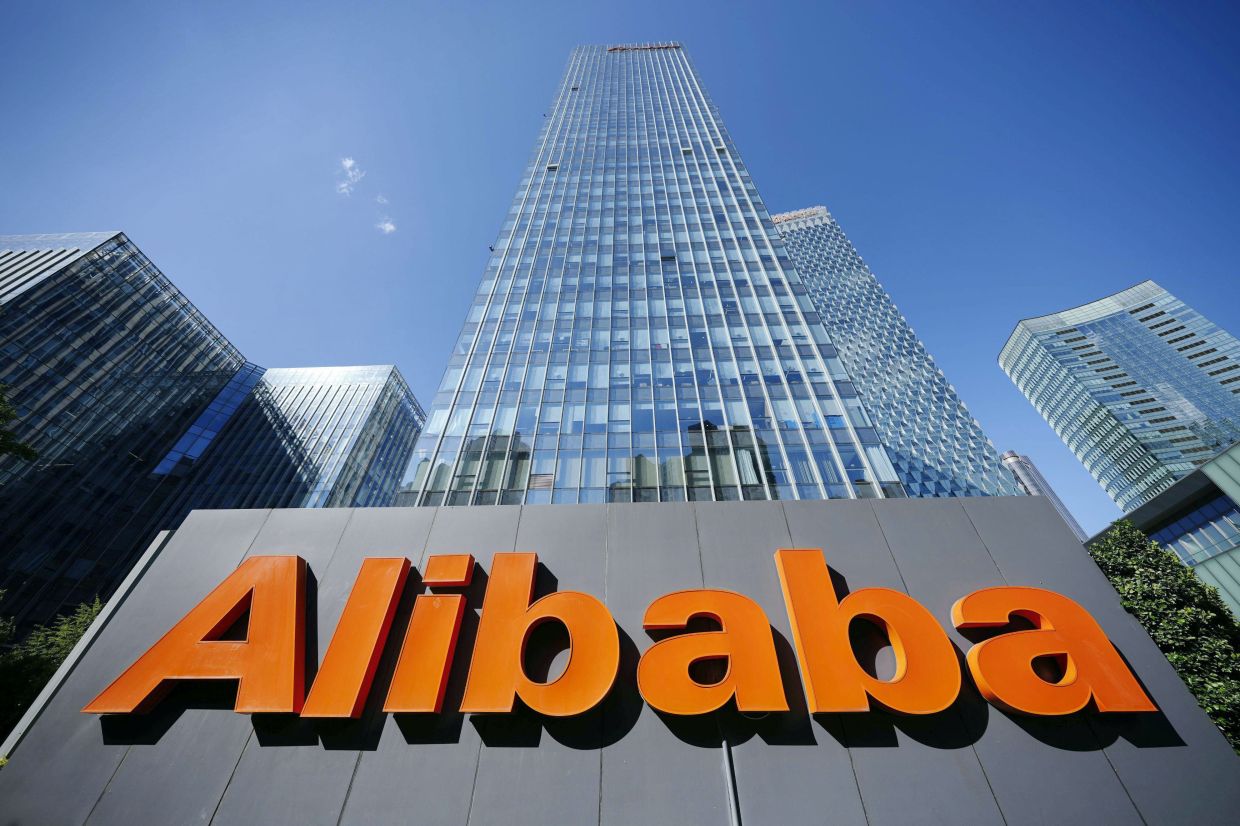
Alibaba Group Holding, the Chinese e-commerce and technology conglomerate, has initiated legal proceedings against the US Department of Defence in California federal court, demanding its removal from a government blacklist that classifies it as a company with ties to China's military. The lawsuit, filed in San Jose district court this week, represents an escalation in tensions between Washington and Beijing over technology sector restrictions, with the Hangzhou-based company contending that its inclusion on the Pentagon's list breaches constitutional guarantees of due process and free speech protections.
The Pentagon added Alibaba to its "Chinese military companies" roster on June 9, joining a cohort of prominent Chinese technology firms including electric vehicle makers BYD and Nio, search engine operator Baidu, robotics company Unitree Robotics, and networking equipment manufacturer TP-Link. The designation drew from Section 1260H of the National Defence Authorisation Act, a provision enabling the American defence establishment to identify foreign companies it views as supporting China's military capabilities. Notably, these companies concentrate in sectors that have become flashpoints in the broader technological competition between Washington and Beijing, spanning artificial intelligence, biotechnology, renewable energy, and advanced manufacturing.
While the Pentagon designation does not automatically impose direct sanctions, its consequences can prove substantial in practice. The listing complicates Chinese companies' efforts to tap American capital markets and restricts their eligibility for US government contracts, effectively creating a financial and commercial barrier. For multinational enterprises like Alibaba, which has significant international operations and seeks investment through US-traded securities, such restrictions carry considerable business implications beyond the domestic Chinese market.
In its legal challenge, Alibaba disputes the Pentagon's core findings that prompted the blacklist designation. The company categorically rejects suggestions that it maintains indirect affiliation with China's State-owned Assets Supervision and Administration Commission or that it qualifies as a participant in China's military-civil fusion strategy through alleged connections to the Ministry of Industry and Information Technology. Alibaba's position rests on assertions that its relationship with SASAC is non-existent and that its interactions with MIIT constitute routine regulatory compliance matters expected of technology companies operating within China's regulatory framework.
The company's defence highlights a procedural objection to the Pentagon's methodology. Alibaba indicated that it engaged with Defence Department officials in January regarding the potential listing, subsequently submitting a formal written response in March addressing the military affiliation concerns. Despite this engagement and rebuttal, the Pentagon proceeded with the June designation, which Alibaba characterises as arbitrary decision-making unsupported by substantive evidence or adequate opportunity for meaningful response.
An Alibaba spokesperson stated that "the company is not a Chinese military company nor part of any military-civil fusion strategy", emphasising the company's view that the Pentagon's determination represents overreach divorced from demonstrable facts. The firm framed its lawsuit as a mechanism to combat what it considers discriminatory treatment and to secure reversal of a decision reached through flawed administrative processes. The Defence Department has declined to elaborate on the matter beyond noting that it does not comment on active litigation.
This development arrives amidst an intensifying cycle of bilateral trade actions. China's Ministry of Commerce announced countermeasures on Monday, expanding export controls to restrict ten American companies including defence contractors, aerospace firms, and advanced materials suppliers. The list encompasses Lockheed Martin, Raytheon Missiles & Defense, General Atomics Aeronautical Systems, Boeing's defence division, and General Dynamics Land Systems, alongside smaller technology and robotics operators. A ministry spokesperson characterised these steps as responses to American "malicious actions" against Chinese enterprises.
Simultaneously, China's Ministry of Finance released additional restrictions targeting 46 American companies through government procurement limitations, effective immediately. The restrictions exclude firms engaged in US-China joint ventures established within China. This multi-pronged Chinese response suggests Beijing views Washington's military company designations not as isolated regulatory determinations but as components of a comprehensive strategy to constrain Chinese technological advancement and military capability development.
Other Chinese firms on the Pentagon's blacklist have similarly mobilised against the designation. Both Baidu and BYD have issued strong public opposition to their inclusion, indicating that Alibaba's legal challenge reflects broader dissatisfaction among China's technology sector regarding what these companies perceive as politically motivated rather than evidence-based determinations. The Chinese embassy in the US has characterised Washington's approach as an illegitimate expansion of national security concepts, arguing that the blacklist system represents discriminatory treatment incompatible with international commercial norms.
For Malaysian and Southeast Asian observers, Alibaba's lawsuit carries significance beyond bilateral US-China relations. The case illustrates how technological competition between superpowers increasingly weaponises regulatory mechanisms and legal frameworks traditionally designed for legitimate security purposes. Companies operating across both Western and Chinese markets face mounting pressures as governments employ designation systems, export controls, and procurement restrictions as strategic tools. The outcome of Alibaba's legal challenge could establish precedent affecting how American courts review Pentagon determinations regarding foreign military company status, potentially reshaping the regulatory landscape for regional technology firms with cross-Pacific operations.
Moreover, Southeast Asian governments and businesses must grapple with consequences emerging from this great power technological decoupling. Supply chains, investment flows, and technology partnerships increasingly require companies to navigate conflicting restrictions and standards imposed by competing power centres. Malaysia's own technology sector and state-owned enterprises must evaluate how their relationships with both American and Chinese firms position them amid these escalating restrictions, particularly given the region's historical role as a hub for both Western and Chinese technological investment and operations.

