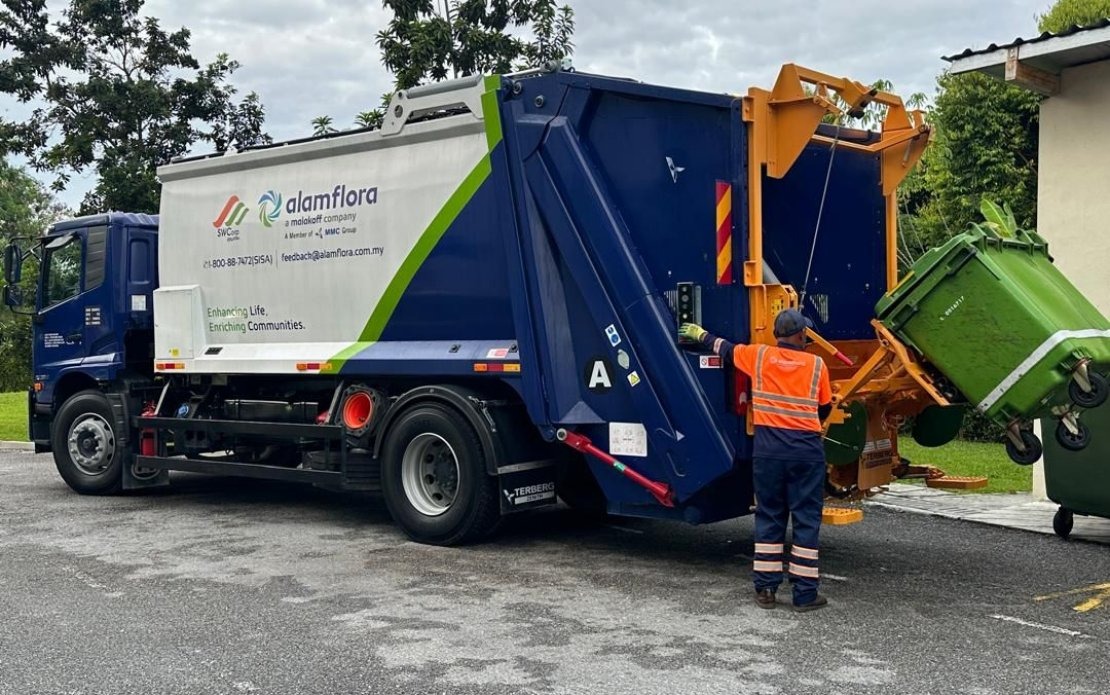
Waste management operator Alam Flora has committed to providing unreserved assistance to authorities investigating a serious incident involving one of its garbage collection vehicles in the upscale Pantai Hillpark residential area of Kuala Lumpur. The compactor lorry crashed into the perimeter wall of a condominium development along Jalan Pantai Murni 1 during the early morning hours, prompting swift action from both the company and law enforcement agencies to determine the root cause and prevent similar occurrences.
In an official statement released the day after the incident, Alam Flora emphasized that the vehicle would undergo comprehensive mechanical inspection to establish the precise factors that led to the collision. The company indicated that this testing would be conducted in compliance with directives from the lead investigating officer, signaling a structured and methodical approach to uncovering what transpired. The inspection represents a critical step in determining whether mechanical failure, operator error, inadequate maintenance, or other factors contributed to the crash.
The garbage lorry driver involved in the incident promptly reported the matter to the Kuala Lumpur Traffic Police Station, demonstrating immediate compliance with legal obligations. Police administration of a breathalyser test returned a negative result, effectively ruling out alcohol impairment as a contributing factor. This early finding helps narrow the investigative scope and suggests that factors beyond substance influence played a decisive role in the vehicle's loss of control.
Initial assessments point toward a potential brake failure as the primary culprit in the crash. The lorry allegedly lost control after experiencing problems with its braking system, leading to the collision with the residential condominium's perimeter barrier. For Malaysian waste collection workers and residents living near collection routes, such incidents underscore the critical importance of rigorous vehicle maintenance protocols within the waste management sector, where heavy compactor vehicles operate daily across densely populated urban areas.
The damaged compactor lorry will be forwarded to the Computerised Vehicle Inspection Centre, commonly known as Puspakom, for detailed forensic examination. This facility conducts sophisticated technical analysis that can identify mechanical defects, maintenance oversights, and design-related issues that may have contributed to the vehicle's malfunction. The findings from Puspakom's evaluation will form the evidentiary foundation for the ongoing investigation and may carry implications for how waste collection vehicles are maintained and monitored across Malaysia.
Authorities are pursuing the matter as a potential violation of Section 43(1) of the Road Transport Act 1987, which addresses vehicle-related incidents on public roads. This legislative framework provides the legal mechanism through which accountability can be established and remedial measures mandated. The specific charging provisions suggest that investigators are examining not only what happened, but also whether proper maintenance standards and operational procedures were followed prior to the incident.
Alam Flora's public statement stressed that the safety and wellbeing of its own workforce, external contractors, and the broader public constitute its paramount concern. For a company operating critical infrastructure services like waste collection, such assurances carry particular weight given the hazardous nature of the work and the public health dimensions of garbage management. The company's commitment extends to ensuring that all operational activities meet elevated safety benchmarks going forward.
The incident has had demonstrable consequences for the affected condominium community, with residents experiencing both property damage and disruption to their immediate environment. Alam Flora's expressed regret regarding this impact reflects acknowledgment of the real consequences that such accidents generate beyond abstract liability considerations. The company indicated that follow-up measures would be determined based on investigation outcomes, suggesting a conditional but responsive posture toward remediation.
For Malaysian urban residents and property managers, the Pantai Hillpark incident highlights vulnerabilities within waste collection operations and the necessity for continuous oversight of vehicle maintenance standards. Waste management services operate largely invisible to most consumers, yet serve as essential backbone infrastructure for city cleanliness and public health. When mechanical failures occur, they expose gaps in maintenance regimes and safety protocols that deserve public scrutiny and regulatory attention.
The investigation will likely yield operational lessons relevant to waste management providers across Southeast Asia, where rapid urbanization has placed increasing pressure on collection systems. Malaysia's growing urban populations generate expanding volumes of municipal waste, and the vehicles and personnel responsible for managing this material face mounting operational demands. Incidents such as this one catalyze industry-wide reflection on whether existing safety standards and maintenance practices adequately protect both workers and surrounding communities.
The coming weeks will prove telling as Puspakom's technical findings emerge and investigators reach conclusions about causal factors. Whether the incident stems from Alam Flora's maintenance practices, design flaws in the vehicle itself, inadequate regulatory oversight, or some combination thereof, the outcome will carry implications for how similar vehicles are monitored and serviced throughout Malaysia's waste management sector. Regulatory bodies may subsequently implement enhanced inspection protocols, maintenance requirements, or operational guidelines affecting how companies like Alam Flora conduct their essential services.

