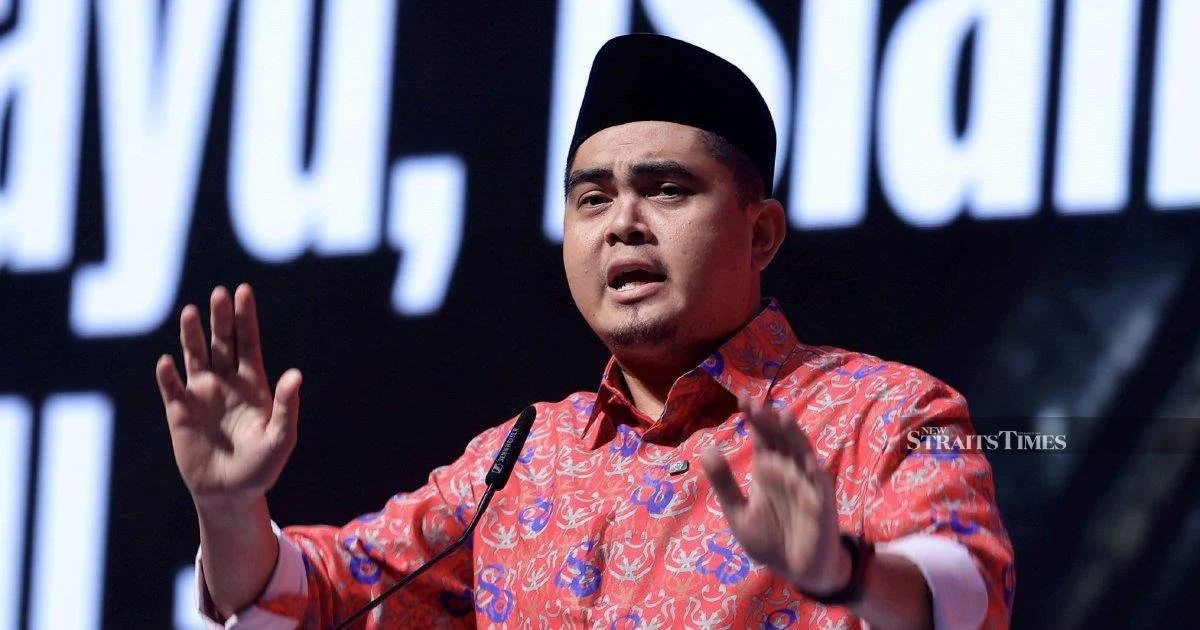
The political temperature in Malaysia has risen after Umno Youth chief Datuk Dr Akmal Saleh directly challenged DAP deputy chairman Nga Kor Ming to honour a resignation pledge made ahead of Johor's recent state election. Speaking in Johor Baru, Akmal pressed Nga to uphold his commitment in the wake of Barisan Nasional's commanding performance at the ballot box, adding a touch of political theatre by offering to assist in drafting the resignation letter if needed.
The challenge represents the latest salvo in a broader pattern of post-election posturing between Malaysia's ruling coalition and opposition blocs. Barisan Nasional's decisive victory in the Johor contest has emboldened its component parties to consolidate messaging and apply pressure on opposition figures who made electoral guarantees. For Umno, traditionally the dominant force in Johor politics, the strong showing reinforces its grip on Malaysia's most populous southern state and signals renewed organisational strength following years of internal turbulence.
Nga Kor Ming's earlier pledge to step aside should the opposition fail to deliver electoral results in Johor was intended as a demonstration of accountability to party members and supporters. Such commitments have become increasingly common in Malaysian politics, where opposition figures seek to differentiate themselves through promises of personal responsibility. However, the gap between campaign rhetoric and post-election follow-through frequently creates awkward moments for party leaders navigating internal expectations against broader strategic considerations.
For the DAP, which has experienced variable fortunes across different state contests, the Johor outcome adds complexity to its broader positioning within Pakatan Harapan. The coalition has struggled to present unified messaging, particularly as component parties pursue state-level interests that occasionally diverge from collective strategy. Failure to perform in Johor, a state with significant Chinese and Indian voter concentrations traditionally receptive to DAP's appeals, signals deeper challenges in the party's ability to expand beyond its core demographic base and urban strongholds.
Akmal's gambit serves multiple purposes within Umno Youth's political ecosystem. The movement, which has historically functioned as a training ground for younger party figures and a bellwether of grassroots sentiment, uses public challenges like these to maintain relevance and demonstrate combativeness to its membership. By offering to draft Nga's resignation letter, Akmal employed a rhetorical technique combining mockery with direct pressure, a strategy that plays well to party supporters seeking aggressive opposition pushback while generating media attention.
The broader context involves Barisan Nasional's recent revival after years of decline and internal fracturing. The coalition, which includes Umno, MCA, MIC, and various allied parties, suffered a historic defeat in 2018 under Najib Razak's leadership but has gradually rebuilt electoral momentum under Anwar Ibrahim's government. Johor's strong showing, therefore, carries significance beyond regional politics, suggesting that the coalition can still mobilise voter support even as Pakatan Harapan maintains federal authority.
For Malaysian political observers and voters, the Akmal-Nga exchange illustrates how modern Malaysian politics increasingly operates through public challenges and media spectacle. Rather than resolving internal dynamics through backdoor negotiations, political figures increasingly choose confrontations that generate headlines and social media discussion. This trend reflects broader changes in Malaysian media consumption, particularly the rise of online platforms where partisan narratives gain rapid amplification.
The episode also highlights the delicate position faced by opposition parties in Malaysia's competitive political environment. When opposition leaders make commitments regarding personal accountability tied to electoral outcomes, they risk credibility damage if those outcomes disappoint. Yet failure to make such pledges can leave leaders vulnerable to charges of evading responsibility. This dilemma has proven particularly acute for DAP as it attempts to maintain both internal party discipline and broader coalition coherence.
Looking forward, Nga Kor Ming's response to Akmal's challenge will likely set the tone for subsequent interactions between DAP and Umno during the current political cycle. Should he decline to resign, Barisan Nasional will likely weaponise the decision as evidence of opposition insincerity and lack of internal discipline. Conversely, a resignation would remove a prominent DAP figure from frontline politics and create speculation about his potential successor and any shifts in the party's strategic direction.
The underlying dynamic reflects a broader pattern in Malaysian politics where electoral mandates translated into claims of legitimacy extend well beyond the election period itself. Barisan Nasional's Johor victory represents just one state contest, yet its component parties are using it to contest narratives around governance competence and opposition reliability. For voters and political observers across Southeast Asia watching Malaysian developments, such exchanges offer insights into how regional democracies navigate the space between electoral competition and institutional stability, particularly as Malaysia continues experimenting with power-sharing arrangements that have fundamentally altered traditional coalition politics.

