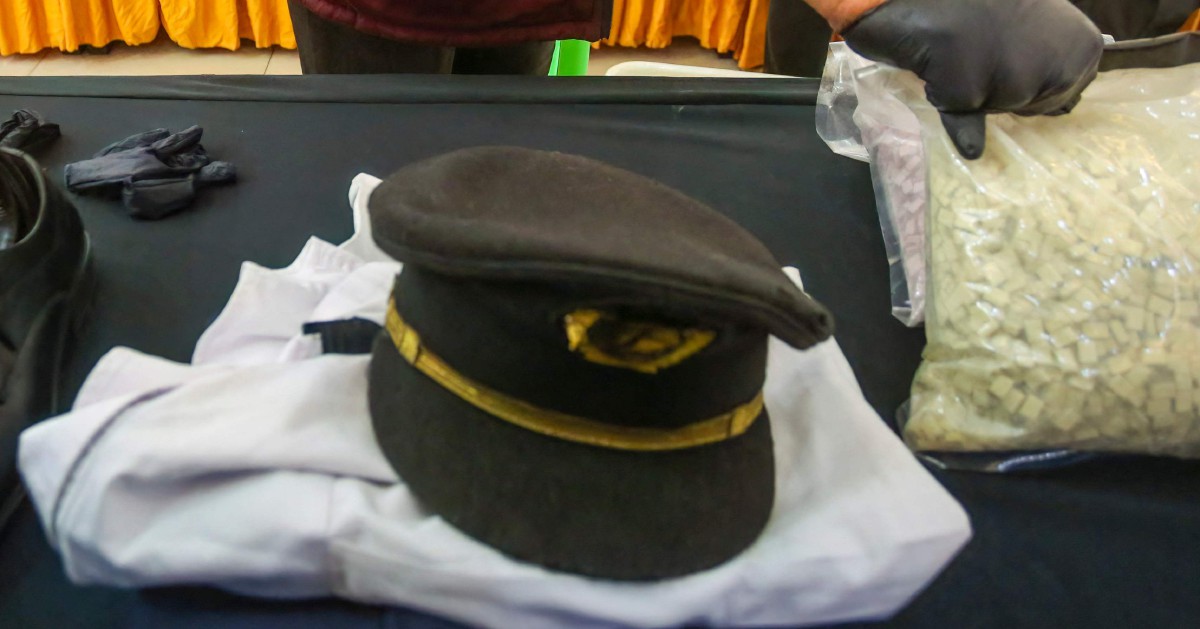
Police investigating allegations that a Malaysia Airlines pilot transported narcotics through Kuala Lumpur International Airport have identified an airport employee in his 30s as a key person of interest in the case, signalling a potential security breach at one of Southeast Asia's busiest aviation hubs.
The development suggests investigators are pursuing the possibility that insider involvement may have facilitated the alleged movement of illicit substances past checkpoint controls at KLIA. The identification of airport personnel as part of the enquiry adds a significant dimension to what was initially viewed as a singular incident involving a crew member, expanding the scope of the investigation to examine potential lapses in airport security protocols and staff conduct.
The involvement of an airport employee raises questions about the internal security measures at KLIA, which handles millions of passengers annually and serves as a critical gateway for Malaysia's national carrier and numerous international airlines. The airport's reputation for security and operational integrity could face scrutiny as authorities drill deeper into how prohibited items may have circumvented established screening procedures.
For Malaysia Airlines, the situation compounds existing challenges the carrier faces in maintaining public confidence and regulatory standing. Pilot conduct and drug-related incidents carry particular sensitivity within the aviation sector, where safety standards and crew integrity are paramount considerations for both passengers and regulatory authorities. The airline's handling of the matter and cooperation with law enforcement will likely influence how stakeholders assess its operational and disciplinary frameworks.
The investigation underscores broader concerns about airport security across the region, where staff vetting, surveillance systems, and checkpoint procedures face constant pressure from sophisticated smuggling operations. If airport personnel were indeed involved in facilitating illegal passage of controlled substances, it would represent a serious breach of trust and standard operating procedures that could trigger reviews of security hiring practices and monitoring systems.
Persons of interest in criminal investigations occupy a grey area between suspicion and formal charges. The police designation suggests investigators have gathered sufficient circumstantial evidence or witness information to warrant closer examination of the airport worker's activities and potential connections to the pilot or the drugs in question. This status typically precedes formal charges pending further evidence collection.
The alleged incident has likely triggered broader security audits at KLIA. Airport operators and aviation authorities typically respond to such breaches by reviewing surveillance footage, examining staff access logs, and questioning other personnel who may have interacted with the pilot or relevant luggage during the crucial departure or arrival period.
For Malaysian passengers and regional travellers, such incidents raise concerns about luggage security and checkpoint effectiveness. KLIA's reputation rests partly on efficient screening processes that balance passenger convenience with security requirements. Public confidence in these systems affects traveller behaviour and international perception of Malaysia as a safe aviation destination.
The investigation also intersects with Malaysia's broader efforts to combat drug trafficking. While the focus here is on a specific incident at an airport, it reflects the country's ongoing battle with narcotics smuggling, which remains a serious policy concern given Malaysia's geographical position and trafficking routes through Southeast Asia. Any case involving potential institutional complicity carries implications beyond the immediate circumstances.
Authorities have not publicly disclosed whether the airport employee is suspected of actively assisting the pilot, accepting bribes for facilitated passage, or simply failing to perform checkpoint duties adequately. These distinctions carry different legal and operational implications. Active conspiracy would be treated more seriously than negligence, though both scenarios point to systemic vulnerabilities requiring attention.
The case demonstrates how seemingly straightforward security incidents can rapidly expand in scope and complexity once investigations commence. What appeared to be an individual's misconduct has transformed into an enquiry potentially spanning multiple personnel, institutional procedures, and operational gaps. This pattern is common in airport security investigations, where human factors and procedural compliance determine overall system integrity.
As the investigation continues, aviation industry observers in Malaysia and across Southeast Asia will monitor outcomes closely. The findings could influence how other major airports in the region assess their own security frameworks, staff conduct standards, and vulnerability to internal compromise. For KLIA specifically, the case represents an opportunity to identify and rectify systemic weaknesses that could affect operational safety and passenger security in the years ahead.

