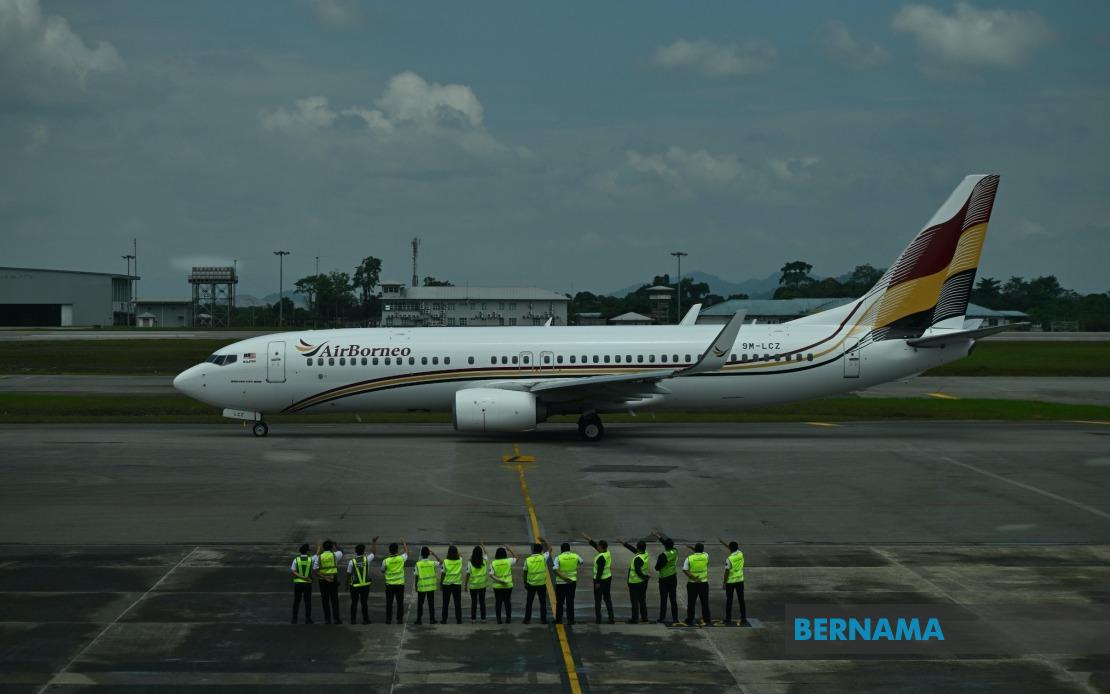
AirBorneo has entered a new chapter in its operational history with the launch of jet-powered services, beginning with a flight from Kuching to Kuala Lumpur that departed on July 20. The milestone represents a significant step forward for the Sarawak government-owned carrier, which has transitioned from regional turboprop operations to managing longer-distance routes across Malaysia using modern jet aircraft. The inaugural service, designated MY5005, carried Sarawak Premier Tan Sri Abang Johari Tun Openg as a passenger, underscoring the political and economic importance attached to this development within the state administration.
The flight departed Kuching International Airport at 1.20 pm, arriving at Kuala Lumpur International Airport's main terminal. This route represents AirBorneo's first commercial jet operation, utilising a Boeing 737-800 aircraft equipped to handle the increased capacity and performance demands of inter-peninsular service. The expansion follows the airline's operational restructuring earlier in the year when it assumed responsibility for managing the routes and assets previously operated by MASwings Sdn Bhd from January 1 onwards.
AirBorneo's entry into the Kuching–Kuala Lumpur market represents more than a simple route expansion; it reflects a deliberate strategy to position Sarawak within Malaysia's broader aviation ecosystem. State leadership views reliable air connectivity as foundational to economic development, particularly for enabling trade flows and attracting investment. The timing of this service aligns with Malaysia's broader recovery in aviation demand following previous travel disruptions, suggesting confidence in sustained passenger volumes between these two major commercial centres.
Premier Abang Johari articulated this strategic vision during the launch ceremony, drawing parallels with Japan's post-war development trajectory. He emphasised that Japan's establishment of Japan Airlines represented a critical decision to ensure island connectivity, which subsequently facilitated industrialisation and regional economic prominence. Applying this historical lesson to Sarawak's context, the Premier argued that owning and controlling domestic air services provides essential infrastructure for exporting goods and services while strengthening economic ties with trading partners. This framing positions aviation not merely as a transportation utility but as a strategic economic multiplier.
The connectivity argument holds particular relevance for Sarawak's geography and economic profile. As Malaysia's largest state by area, Sarawak encompasses significant natural resources, agricultural production, and manufacturing capacity that require efficient logistics pathways to reach national and international markets. Air transport can substantially reduce the time and cost associated with moving high-value or time-sensitive goods to peninsular distribution centres and onward export. Enhanced frequency and reliability of service between Kuching and Kuala Lumpur therefore represent tangible investments in Sarawak's competitiveness.
From a commercial standpoint, AirBorneo has priced its offerings competitively within the regional market. One-way fares of RM375 for Economy Class and RM736 for Business Class—both inclusive of airport taxes and fuel surcharges—position the service as accessible to both leisure and business travellers. These price points reflect standard industry pricing for this route distance and aircraft type, suggesting the airline has calibrated its revenue model to capture market share while maintaining operational sustainability. The airline announced the opening of ticket sales on July 7, indicating advance marketing and capacity planning ahead of the service commencement.
The frequency strategy also merits examination. AirBorneo has committed to twice-daily services between Kuching International Airport and KLIA Terminal 1, suggesting confidence in sufficient demand to sustain multiple departures. This frequency level accommodates both business travel patterns—where morning and afternoon departures serve different professional schedules—and leisure demand. Maintaining reliability on this schedule will prove crucial for establishing the airline's reputation and building customer loyalty among the business traveller segment, which typically generates higher-margin bookings.
The operational transition from MASwings to AirBorneo carries implications for employment, network continuity, and service standards. While the original reporting focuses on the Kuching–Kuala Lumpur route, AirBorneo's broader responsibilities now encompass maintaining existing regional services that previously operated under the MASwings banner. This dual responsibility—sustaining traditional routes while launching new jet operations—requires careful management of fleet deployment, crew scheduling, and maintenance logistics. Any disruptions to regional services could undermine confidence in the new jet operation.
AirBorneo's emergence as the primary air service carrier for Sarawak reflects broader trends within Malaysia's aviation sector, where state governments increasingly view airline ownership as essential to regional development strategies. This approach differs from relying entirely on federal carriers or private operators, as it enables more direct alignment between aviation policy and state economic priorities. However, success ultimately depends on consistent operational performance, customer service excellence, and financial sustainability—challenges that have historically proved demanding for regional carriers.
The route between Kuching and Kuala Lumpur represents one of Malaysia's significant city-pair markets, with substantial business and leisure traffic. This high-profile route selection for AirBorneo's maiden jet service suggests strategic importance and visibility. Competitor airlines already serving this route include larger, established carriers with network advantages and brand recognition. AirBorneo's differentiation will likely depend on service quality, schedule convenience, and potentially competitive pricing or frequent flyer incentives.
Looking forward, AirBorneo's jet operations create possibilities for future expansion into other peninsular destinations and potentially regional international routes. Success on the Kuching–Kuala Lumpur service could justify investment in additional aircraft and expansion to other markets. However, the airline must first demonstrate consistent operational excellence, on-time performance, and passenger satisfaction metrics that establish credibility within Malaysia's increasingly competitive aviation market.
The broader context includes Malaysia's aviation sector recovery and the government's infrastructure development initiatives. Enhanced inter-regional connectivity supports Malaysia's economic integration and regional competitiveness. For Sarawak specifically, reliable air transport to the peninsular economic core strengthens the state's position within the national economy and facilitates the state's transformation goals in sectors ranging from manufacturing to digital economy development.
Ultimately, AirBorneo's inaugural jet flight represents both a symbolic milestone for Sarawak's aviation ambitions and a practical test of whether state-owned airline operations can deliver sustained competitive advantage. The coming months will prove instructive regarding passenger load factors, operational reliability, and financial performance—metrics that will determine whether this venture successfully bridges Sarawak's economy with broader Malaysian and international markets.

