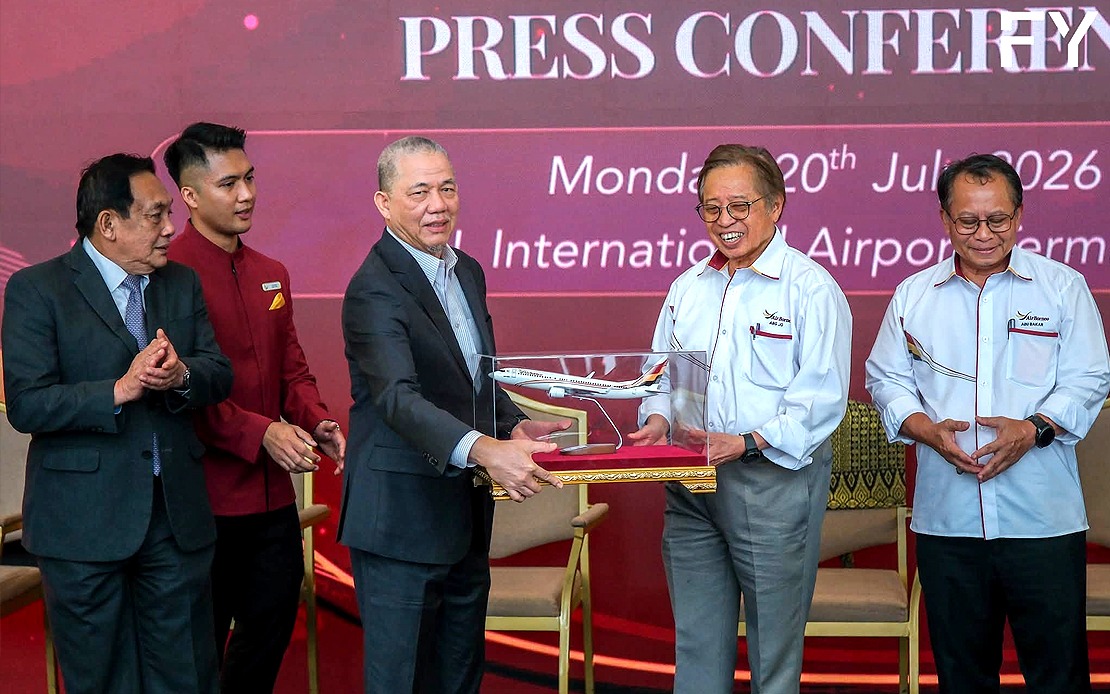
Sarawak took a significant step towards addressing one of the state's most persistent economic grievances on July 20 when AirBorneo Airways, a state government-owned carrier, launched its maiden commercial flight from Kuching to Kuala Lumpur International Airport Terminal 1. The symbolic timing—just two days before Sarawak Day on July 22—underscores the political and developmental importance Sarawak's leadership places on this venture. Deputy Prime Minister Datuk Seri Fadillah Yusof acknowledged the occasion as marking another milestone in the state's long-term economic trajectory, representing far more than the simple inauguration of a new airline service.
For decades, residents and businesses across Sarawak have voiced frustration over the high cost of air travel within the state and to major hubs like Kuala Lumpur. These elevated fares have constrained labour mobility, hindered tourism development, and made regional trade more expensive than comparable routes served by established carriers elsewhere in Malaysia. The absence of sustained competitive pressure on pricing in Sarawak's aviation market has allowed incumbent operators to maintain premium ticket costs, creating a structural disadvantage for the state's economy. Fadillah articulated the government's intention to introduce greater competition and transparency into the sector, with a specific commitment to maintaining service affordability without compromising operational or safety standards—a delicate balance that many regional carriers have struggled to achieve.
AirBorneo represents more than a commercial enterprise; it embodies Sarawak's broader assertion of economic autonomy and self-determination. Sarawak Premier Tan Sri Abang Johari Tun Openg has framed the airline as a strategic investment positioned to strengthen the state's fiscal independence and long-term prosperity. This framing reflects a deeper pattern in Sarawak's governance philosophy, where the state government has increasingly opted to develop its own infrastructure and service providers rather than depend exclusively on private or federal solutions. The airline project signals that the state views air connectivity as sufficiently central to economic development that direct state involvement is justified, a position increasingly common among resource-rich regional governments seeking to capture greater value from their own markets.
The implications for Sarawak's tourism sector are substantial. International and domestic visitors have historically avoided certain routes within Sarawak due to prohibitive airfare costs, limiting the geographic spread of tourism spending and concentrating visitor activity in major centres like Kuching. More competitive pricing on regional routes could disperse tourism activity to secondary and tertiary destinations, encouraging the development of hospitality infrastructure, guiding services, and ancillary businesses across a wider geographic footprint. Similarly, reduced airfares may make Sarawak a more attractive destination for conferences, business meetings, and investment site visits, thereby supporting the state's aspirations to diversify beyond traditional extractive industries.
Rural connectivity represents another critical dimension of AirBorneo's mandate. Sarawak's vast inland geography, with significant populations scattered across remote areas lacking adequate road infrastructure, makes air transport essential for medical evacuation, government service delivery, and economic participation. Fadillah explicitly noted that the airline will prioritise maintaining access to air services in rural regions, suggesting a commitment to pursuing routes that may not be commercially attractive to profit-maximising operators but serve important social and administrative functions. This approach reflects a recognition that true economic development in a state like Sarawak requires treating aviation as partially a public good rather than purely a commercial service.
The launch also carries symbolic weight for Sarawak's relationship with federal structures and resource allocation. By establishing its own airline, Sarawak demonstrates capacity for autonomous economic decision-making and reduces dependency on federal entities for critical services. This assertion of state agency resonates with Sarawak's historical negotiations over revenue-sharing and political autonomy, signalling that the state intends to shape its own development agenda rather than accept solutions determined by federal authorities or private operators based elsewhere. The timing relative to Sarawak Day celebrations reinforces this nationalist and developmental dimension.
From a broader Southeast Asian perspective, AirBorneo's establishment reflects a regional trend of state and provincial governments investing directly in aviation infrastructure to support economic development. Comparable initiatives in Indonesia, Thailand, and the Philippines have demonstrated both the potential and the risks of government-owned airlines. Success depends critically on professional management, sustainable route planning, and realistic financial projections. Fadillah's emphasis on transparency and service quality suggests awareness of these pitfalls, though the actual performance of AirBorneo over coming years will ultimately determine whether the venture achieves its stated objectives.
The commercial reality facing AirBorneo remains challenging. The airline must compete with established carriers, manage operational costs in a volatile fuel environment, and potentially balance commercial sustainability against political mandates to serve unprofitable routes. Establishing a competitive advantage based solely on lower fares invites aggressive competitive responses from larger carriers and may prove unsustainable if it relies on government subsidies. However, if AirBorneo can leverage its state backing to invest in modern aircraft, efficient operations, and strategic route planning, it may succeed in reshaping market dynamics across Sarawak's aviation sector more broadly—forcing competitors to adjust pricing and service standards.
The inaugural flight carrying Premier Abang Johari and Sarawak state ministers to Kuala Lumpur symbolised not merely a commercial launch but a political commitment to aviation-led economic development. For Malaysian and Southeast Asian observers, AirBorneo's trajectory will provide valuable insights into whether state-sponsored airlines can effectively address affordability and connectivity challenges in underserved regional markets. Success could encourage similar initiatives elsewhere in the region; failure would reinforce the case for private sector leadership in aviation. Either way, Sarawak's experiment with state ownership reflects deep confidence in the airline sector's capacity to drive broader economic transformation, positioning air connectivity as central to the state's 21st-century development strategy.

