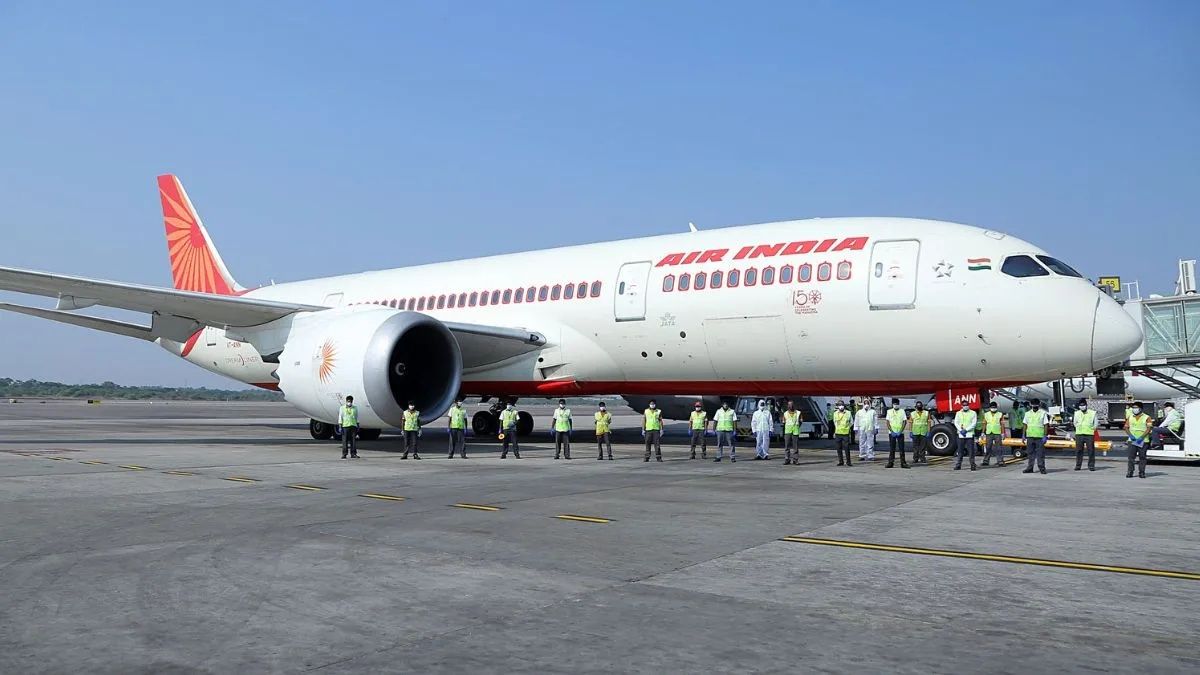
An Air India passenger aircraft briefly penetrated Pakistani airspace on the evening of June 22, triggering a swift international aviation coordination response that ultimately prevented any security escalation. The Airbus A321, operating as Flight AI-463 from Delhi to Amritsar, encountered a technical malfunction in its navigation infrastructure shortly after takeoff from Indira Gandhi International Airport at 9:18pm, leading to a westward drift across the International Border that should have been carefully monitored by dual navigation systems.
The navigation system failure proved sufficient to disrupt the aircraft's route guidance, causing the flight path to gradually veer toward and then across the demarcation line separating Indian and Pakistani airspace. This type of incident, while rare in modern commercial aviation where multiple redundant navigation systems exist, underscores the technical complexities of operating in congested South Asian airspace where precision flight management is critical. The deviation went undetected by Indian air traffic control for a sufficient period that Pakistani Air Traffic Control picked up the intruding aircraft on radar and issued the initial alert.
Pakistani air traffic authorities responded professionally to the situation, identifying the aircraft and immediately communicating with the flight crew to advise them of the airspace breach. Rather than treating the incursion as a hostile act—a sensitivity that exists on this particular border—the Pakistani controllers coordinated directly with the pilots to facilitate a swift correction. The crew acknowledged the guidance, made the necessary course adjustments, and guided the Airbus back across the International Border into Indian territory without further incident. This coordinated response reflected established protocols between the two countries' aviation authorities for managing technical anomalies and unintended deviations.
While the primary crisis resolved quickly, the flight then encountered secondary operational challenges that extended the total journey duration considerably. As the aircraft approached Sri Guru Ram Dass Jee International Airport in Amritsar around 10:30pm, the airport was experiencing significant air traffic congestion, a not uncommon situation at Indian regional airports during evening hours when multiple services converge. Air traffic controllers in Amritsar, lacking an available landing slot and facing operational constraints that prevented immediate acceptance of the aircraft, directed the pilots to return to Delhi rather than hold over the airport or divert elsewhere.
The decision to return to the national capital added approximately two hours to the overall flight duration and required the aircraft to climb back to cruise altitude for the journey eastward. This was not an unusual instruction given typical Indian airport operations, yet it compounded the disruption caused by the initial technical malfunction. Upon landing back at Indira Gandhi International Airport, the aircraft underwent a technical inspection focused on the navigation system anomaly and any other potential defects that might have contributed to or resulted from the initial failure.
After engineers completed the necessary inspections and maintenance personnel received operational clearances from the relevant authorities, the flight departed Delhi again for Amritsar in the early morning hours of June 23. This second attempt proved successful, with the aircraft touching down safely in Amritsar at approximately 2:20am, nearly four hours behind its originally scheduled arrival time. The passengers, having endured an extended journey marked by unexpected diversions and delays, finally reached their destination, though with significantly disrupted travel plans and potential downstream impacts on their connections and onward travel arrangements.
Neither Air India nor the Directorate General of Civil Aviation (DGCA) has yet released detailed public statements explaining the specific nature of the navigation system failure or the underlying technical cause. Such details are typically released after preliminary investigations are completed and factual findings are documented. The DGCA has initiated a routine investigation into the incident to establish exactly what triggered the route deviation and what preventive measures might be warranted to reduce the likelihood of similar occurrences. These investigations often examine maintenance records, flight data, crew actions, and any relevant air traffic control communications.
The incident carries particular significance in the context of South Asian aviation, where border sensitivities and the geopolitical complexity of the region mean that even routine technical diversions can quickly escalate if not handled with professional coordination. The fact that both air traffic control systems functioned properly to detect and communicate about the deviation, and that crews responded appropriately to guidance, demonstrates that the aviation safety architecture between India and Pakistan, while operating in a tense political context, functions effectively when technical incidents occur. This represents a positive example of professional aviation coordination transcending broader international tensions.
Remarkably, this incident echoes a similar occurrence just four weeks prior, when a Pakistan International Airlines flight briefly entered Indian airspace due to adverse weather conditions. That aircraft was similarly guided back to its designated route by Indian air traffic controllers without incident. The pattern of occasional technical and weather-related deviations in this airspace suggests that while modern navigation technology is sophisticated, the reality of operating in the Indian subcontinent's challenging atmospheric and geographical environment requires constant vigilance and robust coordination mechanisms between air traffic services on both sides of the border.