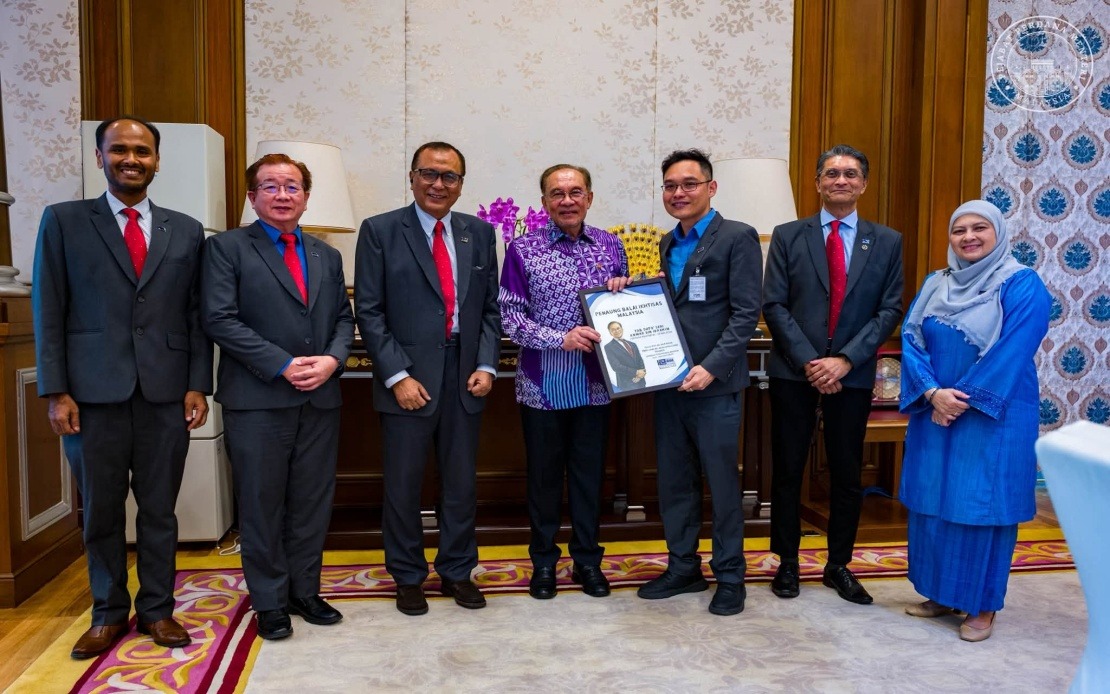
Prime Minister Datuk Seri Anwar Ibrahim has placed artificial intelligence readiness and professional talent development at the forefront of his government's agenda, according to a meeting held with Balai Ikhtisas Malaysia (BIM), the Malaysian Professional Centre, in Kuala Lumpur. The discussion underscores the administration's recognition that digital transformation and human capital development remain central to Malaysia's competitive positioning in the region and globally.
During the courtesy visit led by BIM president Prof ChM Dr Juan Joon Ching, the Prime Minister outlined how these initiatives form part of a broader strategy to establish Malaysia as a credible hub for professional excellence across Southeast Asia. The emphasis reflects growing awareness within Malaysian policymaking circles that the professional workforce must adapt rapidly to technological change, particularly as artificial intelligence becomes embedded across virtually every sector of the economy.
Anwar framed professionals as strategic partners essential to advancing national competitiveness rather than merely as workers executing policy directives. This positioning suggests a shift toward greater collaboration between government and professional bodies in shaping Malaysia's economic trajectory. By treating professionals as stakeholders in the development process, the administration appears to be signalling openness to input from those with deep sectoral knowledge and technical expertise.
The MADANI agenda, the government's signature development framework, features prominently in these discussions. The acronym stands for the government's commitment to achieving prosperity for all, advancing wellbeing, protecting the environment, nurturing integrity and harmony, and fostering independence. Integrating professional excellence and AI readiness into this broader agenda demonstrates an attempt to ensure that technological advancement serves the wellbeing agenda rather than existing as a separate economic objective.
Innovation remains a critical element of Malaysia's medium-term growth strategy, particularly given regional competition from Singapore and increasingly from Vietnam and Indonesia. A workforce equipped with AI literacy and contemporary professional skills represents a tangible advantage in attracting high-value foreign investment and retaining domestic talent that might otherwise migrate to neighbouring jurisdictions offering similar opportunities.
The government's acceptance of an invitation to Hari Ikhtisas Malaysia, the annual commemoration of the professional community's contributions to national development, carries symbolic weight beyond ceremonial protocol. Formal government participation in professional sector celebrations indicates institutional commitment to recognising and supporting non-governmental expertise networks that drive sectoral progress.
The reference to nurturing talent with integrity and competitiveness suggests the government is conscious of quality concerns within professional standards. Malaysia's competitiveness globally depends not merely on the quantity of skilled workers but on their ethical grounding and technical capability. The explicit mention of these qualities indicates deliberate effort to shape professional development frameworks that emphasise both technical excellence and ethical responsibility.
This meeting arrives amid broader regional shifts in how governments approach artificial intelligence integration. Countries across Southeast Asia are grappling with workforce transitions as automation accelerates, and early investment in professional AI literacy offers psychological and practical advantages. Malaysia's emphasis on this area positions it to potentially lead regional conversations around responsible and equitable AI adoption.
The dialogue also reflects practical recognition that professional associations represent organised constituencies capable of influencing sectoral development and policy implementation. By engaging BIM leadership directly, the Prime Minister signals that the government views professional bodies as essential partners in translating policy ambitions into concrete workplace outcomes. This collaborative approach contrasts with more top-down governance models that have historically characterised Malaysian policy development.
Strengthening ties between government and professionals has direct implications for policy implementation effectiveness. Professionals who feel heard and valued in policy conversations are more likely to champion government initiatives within their respective sectors. Conversely, perceived government dismissal of professional input generates resistance and reduces policy uptake, ultimately undermining development objectives.
For Malaysia's position within the regional professional services landscape, these discussions carry significance for talent retention and attraction. Professionals considering relocation or career advancement evaluate not merely salary and institutional support but also whether their home country's government prioritises their sector's development and innovation. Public commitment to professional excellence serves as a signal to both domestic and diaspora professionals that Malaysia remains invested in quality professional services.
The emphasis on regional hub positioning warrants consideration of Malaysia's comparative advantages and challenges. Singapore maintains established primacy in professional services across Southeast Asia, while the region faces emerging competition from digital hubs in Bangkok and Ho Chi Minh City. Malaysia's distinctive opportunity lies in combining relative proximity to Singapore, English-language proficiency, lower operational costs, and increasingly sophisticated talent pools. Government backing for professional development helps activate these advantages.
Moving forward, the substantive follow-through on these discussion points will determine whether this meeting represents genuine policy redirection or principally symbolic engagement. Concrete measures might include funding for professional upskilling programmes, regulatory reforms facilitating professional mobility and recognition across the region, or dedicated government investment in AI education for practitioners. The government's track record in translating such high-level commitments into measurable institutional change will shape professional sector confidence and engagement.

