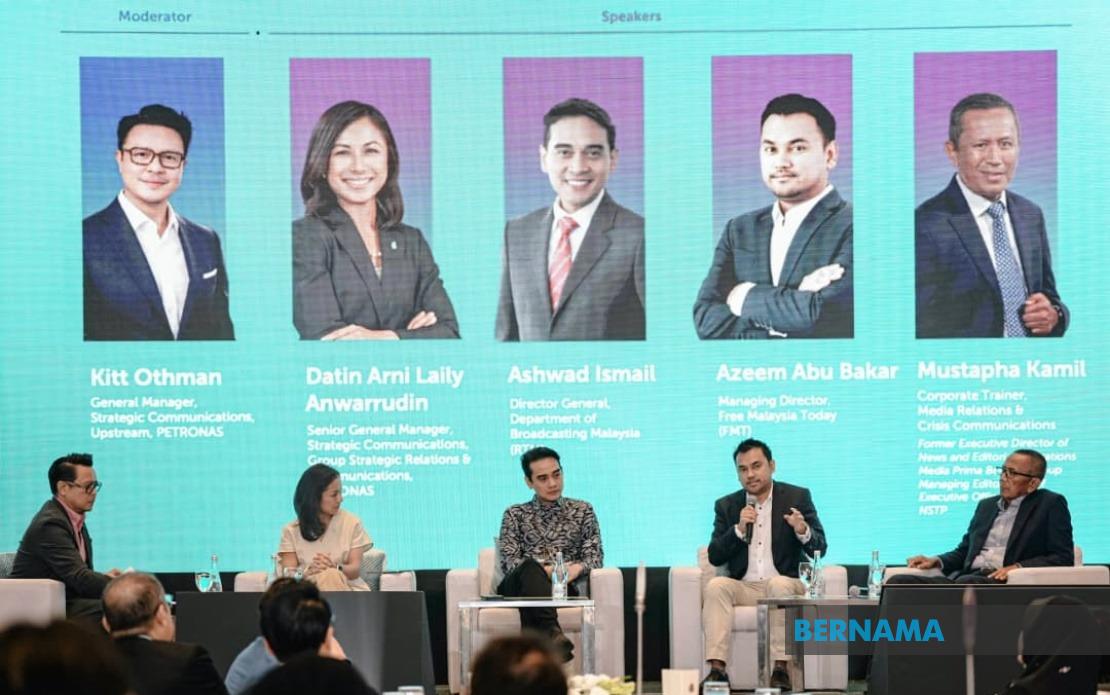
The acceleration of artificial intelligence technology and the instantaneous nature of digital communication channels are compelling Malaysian corporations and newsrooms to fundamentally reconsider how they safeguard their credibility and respond to reputational threats. Speaking at a roundtable discussion in Kuala Lumpur, senior executives from PETRONAS and prominent media organisations outlined the profound implications of this technological shift, emphasising that conventional communication playbooks are rapidly becoming obsolete in an environment where information—accurate or otherwise—spreads within minutes rather than hours.
Datin Arni Laily Anwarrudin, Senior General Manager of Strategic Communications at PETRONAS, identified the uncontrolled dissemination of unverified information as perhaps the most pressing challenge facing corporations today. The speed at which AI-powered algorithms can amplify narratives across digital platforms means that brand reputation has become exponentially more fragile. She argued that passive communication strategies, where organisations simply wait to respond to external pressures, no longer suffice. Instead, companies must seize the initiative by controlling their own narrative before competitors, critics, or misinformation actors can shape public perception first. This shift represents a fundamental reversal of traditional corporate communications doctrine, which often counselled measured, deliberate responses rather than proactive engagement.
The concept of organisational transparency has taken on urgent new meaning in this context. Arni Laily emphasised that opacity now carries greater risks than transparency, as silence creates a vacuum that external parties will inevitably fill. When corporations fail to communicate their own story directly and authentically, they forfeit control over how their actions and decisions are interpreted. This dynamic has particular implications for Malaysian multinational corporations with regional and global operations, where misinformation can cross borders and accumulate in different cultural and regulatory contexts before official responses materialise.
A cornerstone insight emerged from the discussion regarding the obsolescence of traditional crisis communication timelines. The once-standard 16-hour response window—the period between when news breaks and when print newspapers publish the next morning—has been completely eradicated by digital immediacy. This temporal compression fundamentally alters how organisations must structure their communications operations. Mustapha Kamil Mohd Janor, former managing editor at NSTP Group, stressed that corporations lacking dedicated media crisis communication teams face mounting vulnerability. The window for deliberation, fact-checking, and leadership coordination has narrowed dramatically, yet the pressure to respond instantly remains intense. Organisations must therefore redesign their crisis protocols to balance the need for speed with the critical imperative to verify information before committing to public statements.
However, this urgency cannot become an excuse for recklessness. Arni Laily posed a crucial question about the tension between rapid response and truthfulness: how can organisations react quickly to breaking situations while still conducting due diligence to confirm facts? This dilemma sits at the heart of modern crisis management. Moving too hastily risks amplifying misinformation or making commitments that become untenable upon fuller investigation. Yet hesitating too long allows the narrative to solidify in public consciousness. The solution likely involves establishing tiered response protocols that distinguish between immediate holding statements and comprehensive positions, combined with internal processes that can accelerate fact-gathering and decision-making without sacrificing accuracy.
Media practitioners themselves emphasise that despite technological transformation, fundamental journalistic purpose remains constant. The role of journalism as a societal searchlight—identifying issues worthy of public attention and helping citizens make informed decisions—transcends the technological era. This perspective offers important reassurance to organisations and citizens alike that core values of accountability and truth-seeking can persist alongside technological disruption. However, the pathway to fulfilling this mission has become considerably more complex, as journalists must now compete with instantaneous digital narratives, synthetic content, and algorithmically-amplified falsehoods.
Azeem Abu Bakar, Managing Director of Free Malaysia Today, articulated a vision for how media organisations can remain relevant and valuable in an AI-augmented landscape. Rather than attempting to outcompete automated systems at processing speed or volume, news outlets should invest in cultivating what he termed "SUPER journalists"—professionals who excel at developing authoritative sources, demonstrating deep contextual understanding, identifying significant patterns, operating with efficiency, and building enduring reputation. These capabilities represent precisely the human faculties that artificial intelligence cannot easily replicate. A SUPER journalist brings investigative tenacity, nuanced judgment, and relationship-building skills that machines cannot substitute. For Malaysian media organisations facing pressures from international news competitors and misinformation actors, this specialisation offers a competitive advantage and a pathway to sustainability.
The implications of this discussion extend significantly beyond the immediate corporate and media sectors represented in the roundtable. Malaysian regulators, technology companies, educational institutions, and civil society organisations must all grapple with questions about how to maintain information credibility in an age of AI amplification. Universities may need to reconsider curricula for journalism, communications, and management programmes. Technology platforms operating in Malaysia have responsibility to moderate how their algorithms spread unverified information. Regulators must balance innovation imperatives against protection for the integrity of public discourse. Citizens themselves require enhanced media literacy to distinguish authoritative sources from synthetic or manipulated content.
The challenge becomes particularly acute in Malaysia's context as a diverse, multilingual society where misinformation can exploit cultural, religious, or political sensitivities. Information that spreads rapidly in one language community may not undergo the same scrutiny when translated or adapted for another. Corporations and media organisations with regional or national reach must develop communication strategies that account for this linguistic and cultural complexity, ensuring that messages conveying important truths can compete effectively against sensationalised or malicious falsehoods across all communities they serve.
Looking forward, Malaysian organisations—whether in energy, finance, technology, or any other sector—must recognise that credibility has become a core strategic asset requiring constant investment and active management. The PETRONAS roundtable highlighted that this transition is not primarily a technological problem requiring technological solutions. Instead, it fundamentally concerns how humans deploy technology, how organisations relate to their stakeholders, and how society collectively determines what constitutes reliable information. Building resilience against misinformation requires structural changes to corporate communications divisions, media organisations, and public institutions, combined with a renewed commitment to transparency, accuracy, and authentic engagement with the public.
The convergence of AI capability and digital immediacy creates both acute risks and genuine opportunities for Malaysian organisations willing to adapt thoughtfully. Companies that move decisively to strengthen their communications infrastructure, invest in skilled professionals, and embrace proactive transparency will distinguish themselves favourably from competitors and gain stakeholder trust. Media organisations that resist the temptation to chase viral headlines in favour of developing deep expertise and cultivating authentic connections with audiences will sustain their influence and economic viability. Policymakers and societal leaders who engage seriously with these challenges now can help shape a media and communications ecosystem that harnesses technological power while preserving truth-seeking and public understanding at its core.

