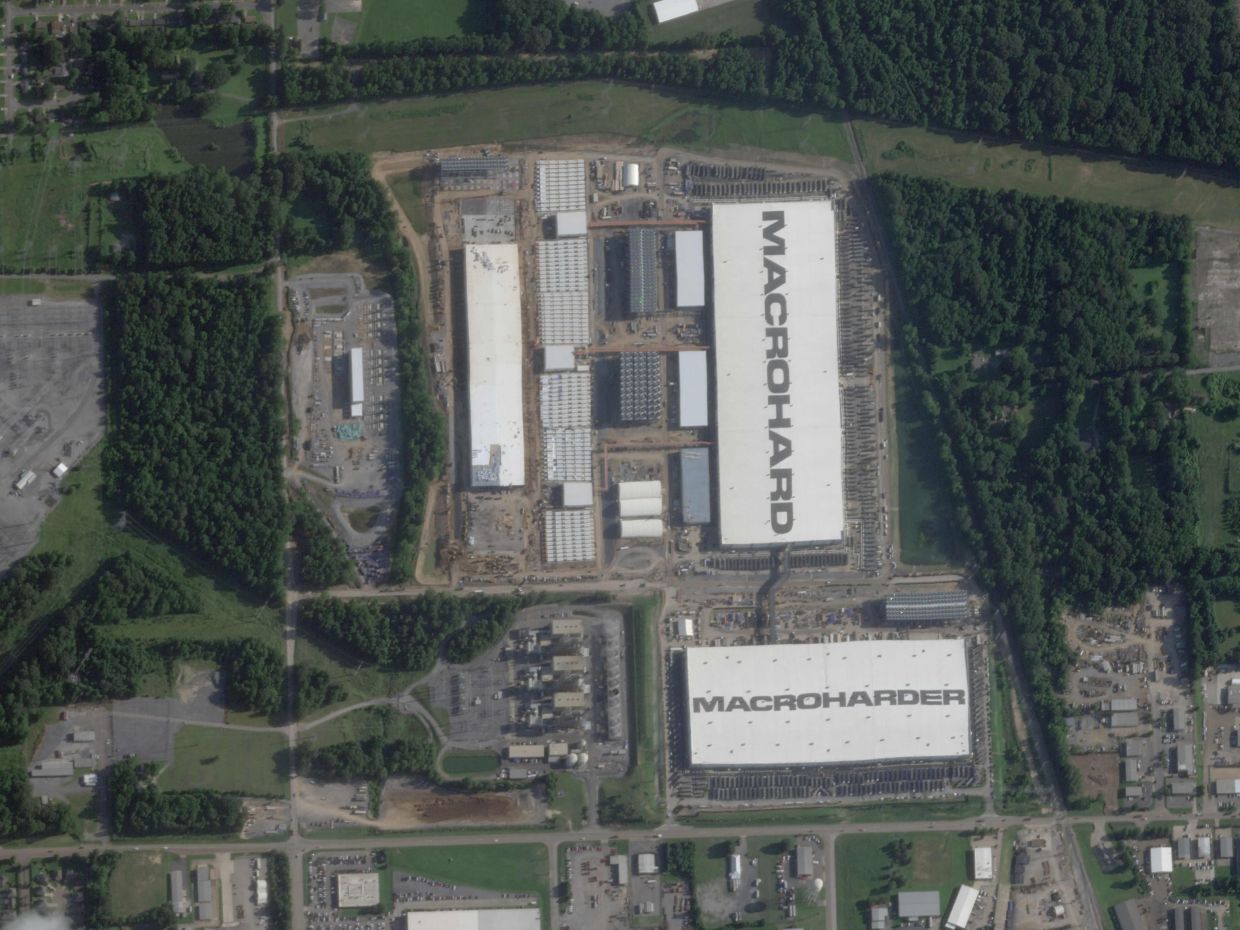
The frantic global race to build artificial intelligence infrastructure has landed squarely on the shoulders of Memphis residents, who now find themselves grappling with the hidden costs of technological advancement. The Colossus I data centre, constructed in just four months to feed Elon Musk's SpaceXAI supercomputing ambitions, has become a focal point for environmental justice battles across the American South, raising critical questions about how communities—particularly Black neighbourhoods—bear the burden of technological progress.
Memphis's Boxtown neighbourhood carries deep historical significance and deep scars. Founded by formerly enslaved people following the Emancipation Proclamation of 1863, this community has endured more than 160 years of environmental neglect and industrial hazard. Factories have operated here continuously, creating a legacy of contamination that has resulted in cancer risk rates four times higher than the national average. When SpaceXAI selected this location for its mega data centre, it chose a community already pushed to environmental breaking point, amplifying existing vulnerabilities rather than distributing technological burdens equitably.
At the heart of community frustrations is the sheer speed and opacity of the project's development. SpaceXAI erected gas turbines to power Colossus I without obtaining necessary environmental permits and, crucially, without meaningful engagement with residents who would directly experience the consequences. The company justified this approach by labelling the turbines as temporary installations, a designation that conveniently sidestepped Clean Air Act requirements that ordinarily demand permits before construction begins. This regulatory circumvention appears calculated: by deploying turbines first and pursuing permits simultaneously, SpaceXAI avoided any potential power gap while local officials processed paperwork, effectively presenting communities with a fait accompli rather than a choice.
Young activists like 17-year-old Jasmine Bernard have emerged as voices articulating the intersection of race, history, and environmental harm. Bernard's two-year campaign against the turbines reflects a generation acutely aware that Boxtown's suffering is not incidental to technological development but rather structurally embedded within it. Her observations about historical neglect and centuries of Black community presence underscore how environmental racism operates not through explicit exclusion but through institutional indifference and the strategic location of unwanted infrastructure in politically marginalised areas.
The air quality concerns, while serious, represent only part of a multifaceted environmental crisis. Colossus I consumes 1.2 million gallons of groundwater daily to cool its supercomputers, drawing from the aquifer that supplies drinking water to the broader Memphis region. SpaceXAI had promised to construct a water reuse facility to mitigate this depletion, but that commitment has been indefinitely suspended. For a region already vulnerable to water security challenges, this development threatens resources that cannot be replaced and reflects a pattern of environmental extraction wherein profits flow elsewhere while depletion remains local.
Across the border in Mississippi, the problem intensifies and multiplies. Colossus II, built to train SpaceXAI's Grok AI assistant, operates 69 continuously running turbines in Southaven. Residents describe relentless noise pollution—a perpetual jet-engine drone that penetrates homes, causes physical vibrations, and produces nausea in those exposed for extended periods. For Krystal Polk and neighbours whose families have stewarded the same land for generations, the data centre represents not progress but invasion, a technology that operates on a temporal scale (24/7 operation) fundamentally incompatible with human wellbeing. The pine trees that once provided natural buffers now seem archaic against an infrastructure designed without their protective capacity in mind.
The legal frameworks meant to protect communities have proven inadequate against corporate speed and political coordination. Laura Thoms of Earthjustice, representing the NAACP's lawsuit against SpaceXAI, explains that the Clean Air Act explicitly requires permits ensuring community health and safety before construction. SpaceXAI's decision to install turbines first and seek permits later reveals how corporate actors exploit the gap between regulatory timelines and construction speeds. However, even where legal violations are apparent, enforcement remains contested: in June, the Justice Department requested dismissal of the NAACP complaint on national security grounds, a move suggesting that AI infrastructure development has been elevated to strategic importance that potentially overrides civil rights protections.
KeShaun Pearson, co-founder of Memphis Community Against Pollution, articulates the broader governance failure. He describes Colossus I as a textbook example of elected officials making economic development promises while actively excluding affected communities from decision-making processes. This pattern—treating residents as beneficiaries of technological development without granting them agency in shaping how that development unfolds—reflects a colonial logic transplanted into contemporary tech infrastructure. Communities are expected to absorb costs while control and profits concentrate among distant shareholders and executives.
The concessions offered thus far have proven largely symbolic. Memphis Mayor Paul Young announced that US$3.35 million from US$12 million in tax revenue generated by Colossus I would be redirected to affected communities. While welcome, this represents roughly 28 per cent of annual tax generation—a modest redistribution that acknowledges harm without fundamentally restructuring how development decisions get made. More problematically, SpaceXAI secured until July 2027 to replace its illegal turbines with a compliant power plant, a timeline that extends community exposure to violations for years while the company continues operations profitably.
What unfolds in Memphis and Mississippi carries implications far beyond these two American states. As AI data centre construction accelerates globally, investors and corporations are replicating this model wherever regulatory environments are permissive and communities politically vulnerable. Southeast Asian nations, including Malaysia, face pressure to attract AI infrastructure investment. Boxtown's experience offers a cautionary narrative: rapid deployment, community exclusion, environmental extraction, and regulatory capture represent a package deal frequently accompanying such projects. The challenge for policymakers is insisting that technological advancement not simply replicate existing patterns of environmental injustice but actively dismantle them.
Community resistance continues despite structural disadvantages. Boxtown residents successfully blocked a pipeline project in 2021, demonstrating that organised, sustained pressure can influence outcomes. Current campaigns against further data centre construction suggest determination to prevent additional facilities from being imposed without consent and environmental safeguards. For Malaysia and other developing economies evaluating AI infrastructure proposals, the Memphis case studies underscore that genuine economic mobility requires meaningful community participation, full environmental cost accounting, and regulatory enforcement that applies equally to foreign corporations and domestic actors. Technology that advances some while harming others remains fundamentally unjust, regardless of its computational sophistication.

