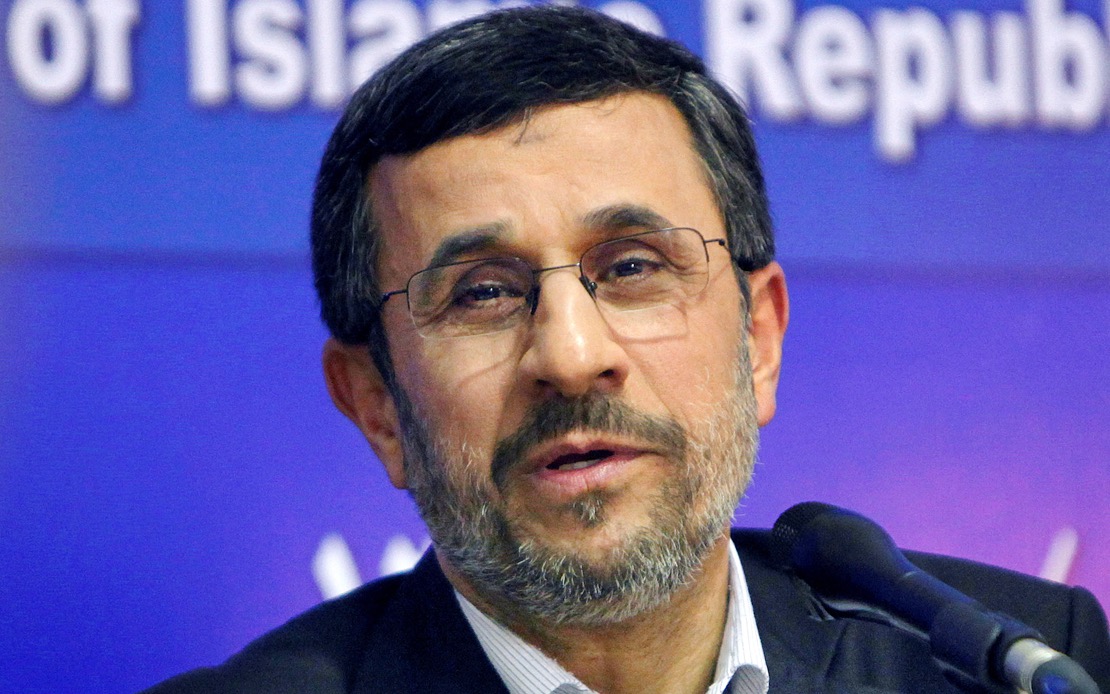
Former Iranian President Mahmoud Ahmadinejad has launched a sharp rebuttal against allegations published by The New York Times, which claimed that Israel's Mossad intelligence service attempted to cultivate him as a potential collaborator and candidate to lead Iran. Speaking through his office on Tuesday, Ahmadinejad dismissed the entire narrative as fabricated misinformation designed to manipulate public opinion and exacerbate internal rifts within Iranian society.
The sweeping denials address a multi-layered investigation published by the American newspaper that presents a dramatic account of alleged Israeli covert operations targeting the former president. According to the Times report, Mossad operatives conducted a sustained recruitment effort over recent years, purportedly providing financial support for housing and travel expenses while holding clandestine meetings at locations including Budapest. The narrative further suggests that this initiative formed part of a larger Israeli strategy aimed at facilitating regime change in Iran, particularly following escalated military confrontations between the two nations.
At the heart of the disputed claims lies an incident allegedly occurring in late February, during the initial stages of US-Israeli military operations against Iran. The Times reported that Israeli intelligence attempted what amounted to an extraction operation, seeking to remove Ahmadinejad from Tehran as a precursor to installing him as a replacement leadership figure. The newspaper cited an airstrike on February 28 targeting Ahmadinejad's residential compound, which reportedly struck a structure housing his security detail and damaged his armoured vehicle. Eyewitness accounts provided to the Times by four senior Iranian officials allegedly described the arrival of a black Peugeot immediately following the strike, from which the former president was said to have been transported to a concealed safe location within Iran by individuals identified as Mossad operatives.
Ahmadinejad's office vehemently challenged these assertions, stating in its formal response that the New York Times had engaged in publishing false narratives deliberately intended to mislead. The statement made particular emphasis on denying the claim regarding house arrest, characterizing the allegation itself as a deceptive fabrication constructed to lend credibility to what the office termed "absurd" broader accusations. The categorical rejection employed language designed to convey not merely disagreement but fundamental incompatibility between the published accounts and factual reality.
The controversy arrives at a particularly sensitive moment in Iran's political and military landscape. Ahmadinejad's public visibility remains relatively limited since the commencement of heightened tensions with Israel and the United States. His attendance at the funeral of Iran's Supreme Leader Ali Khamenei last week marked his first significant public appearance in connection with the broader regional conflict, effectively countering any narrative suggesting he remains confined or unable to move freely within Iranian territory. This appearance itself functions as a response to the house arrest allegations, demonstrating his continued presence in Iranian civic life.
The substance of the allegations carries profound implications for understanding potential Israeli strategies regarding Iranian leadership succession and regime transformation. If accurate, the allegations would represent an extraordinarily bold intelligence operation involving direct attempts to compromise a former high-ranking Iranian official and position him as an alternative figurehead. The targeting of Ahmadinejad's compound with military force, if confirmed, would suggest coordination between Israeli military and intelligence services in a unified operational framework. However, the complete denial from Ahmadinejad's camp introduces substantial uncertainty regarding the verifiability and accuracy of these claims.
From a regional perspective, these allegations touch upon longstanding concerns regarding foreign interference in Iranian internal affairs and the potential for external powers to exploit factional divisions within the Islamic Republic. Iran has historically viewed regime change scenarios with acute sensitivity, particularly given historical episodes including the 1953 coup. The timing of the Times publication and its detailed claims about Israeli operational activity contribute to an already heightened atmosphere of tension and mutual accusation between Tehran and Tel Aviv, with potential ramifications extending throughout the Middle East and affecting regional stability considerations relevant to Southeast Asian geopolitical interests.
Ahmadinejad's 2005-2013 presidency represented a distinctive period in contemporary Iranian governance, characterized by confrontational foreign policy stances and domestic political polarization. His controversial statements regarding Israel and Western powers, combined with his nuclear program advocacy, established him as a figure of international significance beyond Iran's borders. The alleged Mossad interest in recruiting or positioning him suggests recognition of his enduring influence and potential utility in any hypothetical power transition scenario, though whether such calculations reflect genuine intelligence assessment or speculative interpretation remains contested.
The New York Times presented its reporting as drawing upon briefings from American officials possessing operational knowledge alongside Iranian officials characterized as familiar with circumstances surrounding the alleged February incident. The newspaper did not indicate that Ahmadinejad himself had been approached for comment prior to publication, though standard journalistic practice typically involves such outreach. The former president's office has now provided a categorical response, establishing a stark evidentiary dispute regarding core factual claims.
Moving forward, the credibility of these allegations will likely depend upon the emergence of corroborating evidence, whether through official Iranian government statements, independent verification of the February 28 airstrike's targeting, or additional accounts from international observers. Ahmadinejad's denial, while emphatic, operates within an information environment where competing narratives about Iranian security situations and Israeli intelligence operations remain difficult for external observers to independently verify. The controversy illustrates broader challenges in assessing covert operations and the manipulation of public perception during periods of heightened international tension.
The implications extend beyond the immediate dispute between the former Iranian president and the American newspaper. The allegations, if circulated extensively within Iran, could influence public discourse regarding national security vulnerabilities and foreign threats. Conversely, their rejection and characterization as disinformation may reinforce narratives within Iranian political circles regarding Western media bias and intelligence operations. For Malaysia and other Southeast Asian nations, the episode underscores the complex information environment surrounding Middle Eastern conflicts and the necessity for careful evaluation of claims requiring verification through multiple independent sources before forming definitive assessments.

