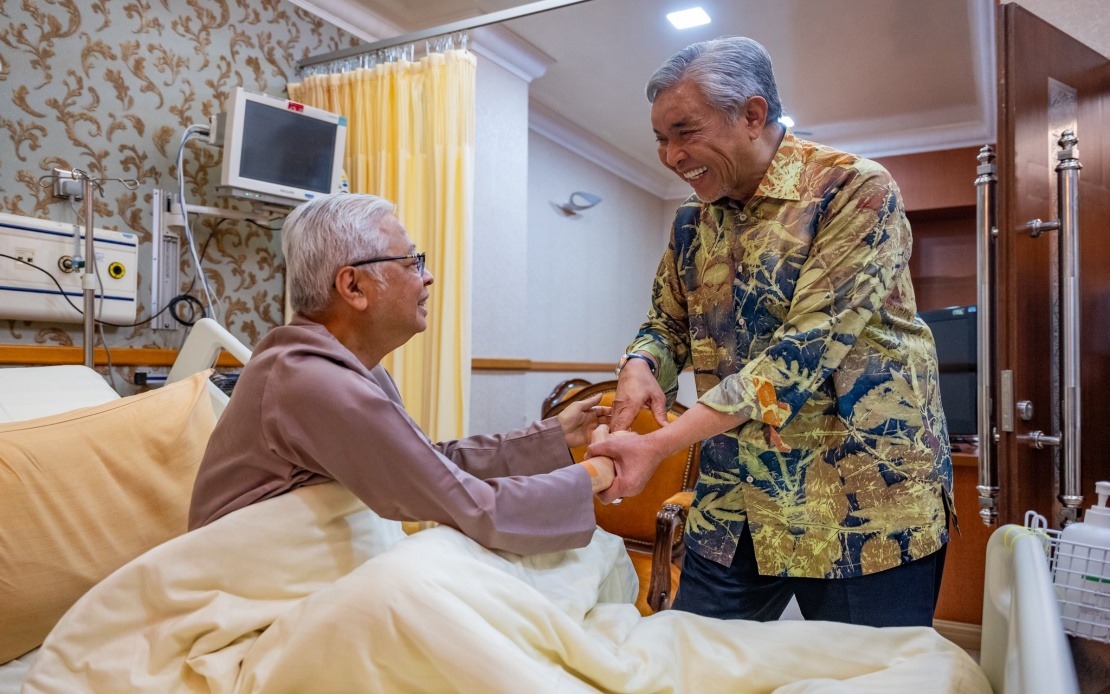
Deputy Prime Minister Datuk Seri Dr Ahmad Zahid Hamidi visited former Prime Minister Datuk Seri Ismail Sabri Yaakob at the National Heart Institute (IJN) in Kuala Lumpur on August 10, paying respects to the Bera MP as he undergoes medical treatment. The visit underscores the close political bonds that persist among Malaysia's senior leadership across different administrations, with Ahmad Zahid publicly expressing well-wishes for his predecessor's swift return to health.
Through a statement posted on social media, Ahmad Zahid conveyed his prayers for Ismail Sabri's complete recovery and return to normal activities. He wished that the former premier would regain his strength, have his affairs eased, and ultimately achieve full restoration of his health. The gesture reflects the conventions of cross-party solidarity in Malaysian politics, where senior figures acknowledge personal health challenges regardless of political differences or timing within the electoral cycle.
Ismail Sabri's hospitalization follows a medical emergency that occurred on August 6 while he was at the Malaysian Anti-Corruption Commission (MACC) premises for the recording of a statement. The sudden health incident necessitated his urgent transfer to IJN, where medical specialists determined that intervention was required to address an irregular heart rhythm condition. The circumstances of his collapse at the MACC office drew immediate public attention, given both his prominence as a former head of government and the sensitive context of his presence there.
The procedure performed at IJN involved implanting a wireless pacemaker, a modern cardiac device designed to regulate abnormal heart rhythms and prevent dangerous complications. This type of intervention typically indicates a significant cardiac condition requiring ongoing management, though such procedures are now considered routine in advanced medical facilities like IJN. The successful completion of the implantation marked an important milestone in his treatment pathway, with the focus now shifting toward recovery and rehabilitation.
The National Heart Institute, as Malaysia's leading specialized cardiac facility, has established itself as the primary destination for complex heart procedures. Located in the capital, IJN attracts both Malaysian patients and international cases, reflecting the reputation of its cardiology expertise and infrastructure. Ismail Sabri's choice of this institution underscores the confidence in its clinical capabilities, as well as the accessibility available to prominent figures within the Malaysian healthcare system.
The visit by Ahmad Zahid carries broader significance within the context of Malaysian political dynamics. As Deputy Prime Minister, Ahmad Zahid represents the current administration, while Ismail Sabri served as PM from August 2021 to August 2022 under the Umno-led Barisan Nasional coalition. Despite their respective roles in different governments, the personal courtesy extended through hospital visits demonstrates the pragmatic relationships that characterize Malaysia's political establishment. Such gestures contribute to maintaining institutional continuity and mutual respect among national leaders.
Ismail Sabri's health episode also highlights the intense pressures and demands placed on senior political figures in Malaysia. The convergence of his MACC appearance and subsequent cardiac event raises questions about the stress and scrutiny faced by former premiers during anti-corruption investigations. The public nature of his hospitalization and the need for significant cardiac intervention have naturally drawn media attention and expressions of concern from across the political spectrum.
The former prime minister's recovery process will likely extend over several weeks as he adjusts to his implanted pacemaker and undergoes cardiac rehabilitation. Medical guidance for pacemaker patients typically involves activity restrictions during the initial healing phase, followed by gradual return to normal functions under close monitoring. The trajectory of his recuperation will determine when Ismail Sabri can resume his parliamentary duties as Bera MP and other professional commitments.
From a broader public health perspective, Ismail Sabri's experience serves as a reminder of the prevalence of cardiac conditions requiring intervention, even among individuals in apparent good health. The relative frequency of pacemaker implantations in Malaysia reflects both aging demographics and the improved diagnostic capabilities of healthcare providers who can identify rhythm abnormalities before they become life-threatening. IJN's role in managing such cases positions it centrally within the nation's health security infrastructure.
The incident also underscores the importance of immediate medical response systems and the accessibility of emergency cardiac care in Kuala Lumpur. The rapid transfer from the MACC office to IJN and the timely diagnosis and intervention likely prevented more severe complications. Such healthcare responsiveness is particularly crucial for individuals experiencing sudden cardiac events, where minutes can significantly impact outcomes.
Looking forward, Ismail Sabri's recovery will be monitored by IJN's cardiac specialists, with Ahmad Zahid's visit representing the beginning of what will likely be a longer period of rehabilitation and medical follow-up. The former PM's health status may have implications for his continued involvement in parliamentary affairs and public duties, depending on medical clearance and his own assessment of fitness to resume full responsibilities. His experience also enriches the public discourse around cardiac health in Malaysia and the importance of preventive care and prompt medical intervention.

