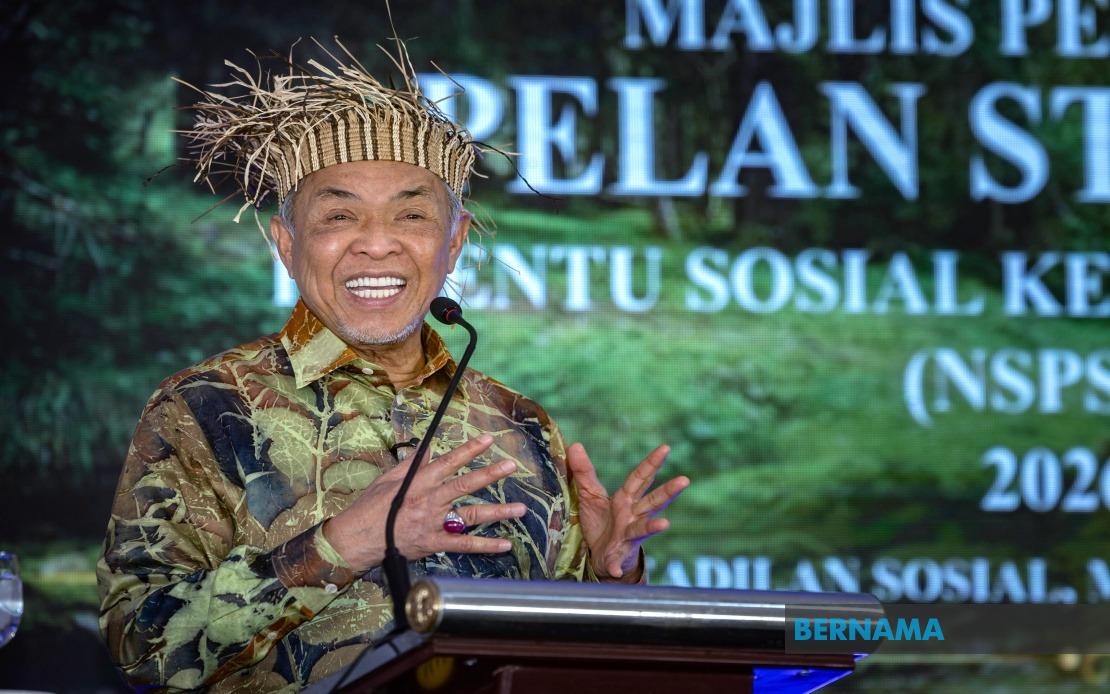
Deputy Prime Minister Datuk Seri Dr Ahmad Zahid Hamidi has appealed to the nation to unite in prayer for Prime Minister Datuk Seri Anwar Ibrahim's rapid recovery, following the head of government's elective surgical intervention to address an abdominal condition. Speaking in Gerik after launching a health initiative, Ahmad Zahid conveyed both his confidence in the Prime Minister's ability to resume full responsibilities and the importance of collective support during the recovery period.
Anwar underwent a laparoscopic surgical procedure to treat a para-umbilical hernia, a minimally invasive operation conducted by a team of medical specialists. The Deputy Prime Minister revealed that he had been informed of the planned medical intervention on Tuesday, August 4, demonstrating the coordination between senior government figures during periods when the Prime Minister requires temporary absence from active duties. According to the medical team, the operation proceeded without complications, positioning the Prime Minister favourably for a smooth recuperation.
While Ahmad Zahid characterised the surgery as minor in nature, he acknowledged the practical reality that any surgical procedure necessitates a meaningful recovery period. He observed that even procedures of limited complexity demand at minimum two days of rest and restricted activity, reflecting both medical best practice and the physical demands placed on an individual holding the highest political office. This perspective underscores the difference between the technical simplicity of a modern laparoscopic intervention and the genuine bodily recovery required afterward.
The Deputy Prime Minister's remarks, delivered while officiating the launch of the 2026-2035 National Social Determinants of Health Strategic Plan for Orang Asli, emphasised the spiritual and emotional dimensions of the nation's support for its leader. His call for prayer transcended mere protocol, framing the Prime Minister's recovery as a collective national concern rather than a matter of purely medical or political significance. This rhetorical approach aligns with Malaysia's multicultural ethos, wherein prayer and spiritual well-being constitute recognised aspects of civic engagement.
In administrative terms, Ahmad Zahid disclosed that Anwar had delegated the chairmanship of Cabinet meetings to him during the recovery phase, ensuring governmental continuity and decision-making capacity. This succession arrangement reflects established protocols for managing executive functions when the Prime Minister is temporarily unavailable, preventing any potential vacuum in ministerial coordination or policy implementation. The disclosure itself serves to reassure stakeholders—both domestic and international—that Malaysia's governmental apparatus remains fully functional during this interregnum.
The head of the Prime Minister's Medical Team, Datuk Dr Asri Ranga Abdullah Ramaiah, provided detailed clinical confirmation that the laparoscopic procedure for the para-umbilical hernia treatment succeeded without incident. Laparoscopic techniques represent the modern standard for hernia repair, involving minimal incisions and reduced tissue trauma compared to open surgical approaches. This methodology typically translates into faster physical recovery and reduced post-operative complications, though individual variation in healing remains an important clinical consideration.
Dr Asri's statement indicated that Anwar was already engaged in physiotherapy sessions, a crucial component of post-operative care designed to restore strength, mobility, and functional capacity. The initiation of physiotherapy shortly after surgery demonstrates proactive rehabilitation management and reflects confidence in the procedure's success. The Prime Minister's participation in structured therapeutic exercise programs suggests that his physical condition permits such engagement, further supporting expectations of uncomplicated recovery.
Continual medical oversight by specialist teams provides additional reassurance regarding the monitoring of the Prime Minister's recuperation trajectory. The maintenance of close supervision ensures that any unexpected complications are identified and addressed promptly, while also providing data about the effectiveness of the recovery protocol. For a figure of Anwar's national importance, such intensive monitoring represents both a medical necessity and a measure of institutional responsibility.
The timing and disclosure of Anwar's medical procedure reflects Malaysia's approach to governmental transparency regarding leaders' health matters. Unlike some jurisdictions where official health information remains closely guarded, the Malaysian government has provided relatively candid information through its medical team, allowing the public, legislature, and international observers to understand the situation clearly. This openness serves to prevent speculation and rumour while demonstrating confidence in the procedure's routine nature and expected outcome.
From a broader governance perspective, the incident illustrates the institutional mechanisms through which Malaysian government continues functioning when the Prime Minister requires temporary absence. The delegation of Cabinet leadership to Ahmad Zahid, combined with the availability of medical information and reassurances about recovery prospects, exemplifies how modern nation-states maintain administrative stability during leadership transitions, however temporary. Such institutional robustness is particularly important in a region where political transitions can sometimes generate uncertainty or instability.
The public's response to Ahmad Zahid's call for prayer likely reflects the Malaysian polity's general acceptance of political leadership as a shared national endeavour worthy of collective spiritual and emotional investment. Whether understood in religious, secular, or cultural terms, the notion of national unity in support of a leader's wellbeing resonates across Malaysia's diverse communities, transcending factional political divisions. This inclusive framing contrasts with adversarial political narratives, emphasising human vulnerability and common citizenship.
Anwar's expected swift return to full operational capacity following completion of his recovery period suggests minimal disruption to Malaysia's governance continuity and international commitments. The Prime Minister's attention to delegating authority and maintaining transparent communication about his medical status demonstrates mature institutional practice. As Malaysia navigates complex regional and global challenges, such stability in executive leadership provides important reassurance to both domestic stakeholders and international partners regarding the country's predictability and resilience.

