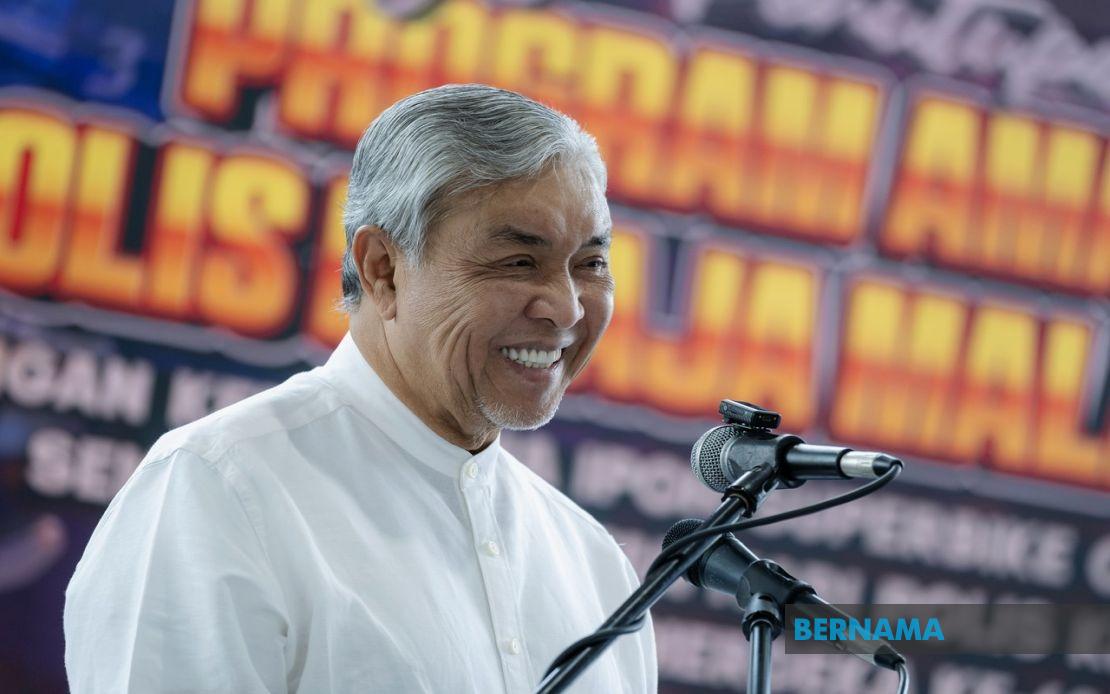
Deputy Prime Minister Datuk Seri Dr Ahmad Zahid Hamidi has reinforced the importance of Malaysian motorcyclists adhering to the laws and regulations of countries they visit, framing compliance as essential to maintaining harmonious relations across Southeast Asia. His remarks come in the wake of a traffic enforcement action in Hat Yai, Thailand, where Thai authorities stopped a group of Malaysian high-powered motorcycle enthusiasts and issued them summonses for various violations. The incident gained widespread attention after a viral video circulated on social media platforms, with some observers characterising the enforcement as heavy-handed. However, Thai police subsequently clarified that the fines were justified based on legitimate traffic breaches, including the operation of unauthorised warning lights and the use of aftermarket exhaust systems that exceeded permissible noise thresholds.
Ahmad Zahid stressed that mutual respect and cultural tolerance must underpin the behaviour of Malaysian travellers across ASEAN nations. In his view, compliance with local ordinances is not merely a legal obligation but a demonstration of goodwill and understanding toward neighbouring countries. He emphasised that Southeast Asian member states share a collective responsibility to maintain diplomatic goodwill through the conduct of their citizens. This perspective reflects a broader diplomatic principle that individual actions, particularly those that attract media attention, can have implications for bilateral relations and regional stability.
The Deputy Prime Minister's comments reveal a nuanced understanding of how high-profile incidents involving Malaysian nationals abroad can inadvertently damage regional relationships. The viral nature of the Thailand motorcycle incident underscores how social media has transformed minor enforcement actions into matters of public discourse and diplomatic sensitivity. Ahmad Zahid's measured response appears designed to prevent the escalation of such incidents into formal complaints while simultaneously addressing legitimate concerns about motorcyclist behaviour in Malaysia and across the region.
Beyond the Thai situation, Ahmad Zahid acknowledged a reciprocal issue affecting ASEAN relations: the problem of foreign-registered vehicles entering Malaysia and breaching local traffic laws. This acknowledgment signals that Malaysia is not seeking to position itself as a victim in cross-border regulatory disputes but rather recognises mutual challenges in enforcing traffic safety standards. The identification of this issue suggests ongoing work to address enforcement disparities across the region. Rather than pursuing unilateral measures, Ahmad Zahid indicated that such matters would be resolved through established diplomatic channels, specifically the Annual Consultation Meeting between Prime Minister Datuk Seri Anwar Ibrahim and other ASEAN leaders. This institutional approach prioritises dialogue over confrontation.
The timing of Ahmad Zahid's intervention is significant, as it demonstrates Malaysia's commitment to ASEAN cohesion during a period when small incidents can quickly become sources of friction. The region's importance as a major hub for motorcycle enthusiasts, particularly high-performance riders, means that enforcement actions will inevitably occur. By articulating clear expectations for Malaysian riders abroad, Ahmad Zahid has essentially signalled to the motorcycling community that authorities take compliance seriously and that social media pressure will not reverse legitimate enforcement decisions by foreign governments.
Parallel to addressing the Thailand incident, Ahmad Zahid praised the Negeri Sembilan Contingent Charity Ride programme, which was conducted in conjunction with Police Day and Merdeka Eve celebrations. The initiative successfully generated RM102,000 in funds through the participation of 53 companies and the generous donations of motorcycle enthusiasts. These resources will directly benefit 120 Royal Malaysia Police families and 12 welfare homes positioned along the convoy route. This charitable dimension of motorcycle culture illustrates that the community extends beyond recreational riding and encompasses significant philanthropic contributions to society.
The charity ride programme represents a positive counternarrative to incidents that attract negative media coverage. By showcasing motorcyclists engaged in community service and fundraising activities, the programme demonstrates the responsible and civic-minded aspects of the riding community. Ahmad Zahid's commendation of this initiative suggests that authorities recognise and value the contributions that organised motorcycle groups make to Malaysian society, even as they insist on strict adherence to traffic regulations.
Looking forward, Ahmad Zahid has expressed enthusiasm for expanding motorcycle convoy activities, proposing a large-scale programme in conjunction with the 70th National Day and 220th Police Day celebrations in 2025. He has suggested that participation could reach at least 220 riders, indicating a desire to institutionalise and formalise major motorcycle riding events. This approach potentially addresses underlying tensions by channelling riding enthusiasm into authorised, high-profile events that generate positive publicity while maintaining strict adherence to road safety protocols. The participation of government figures in such events also serves to build bridges between authorities and the enthusiast community.
The broader context of Ahmad Zahid's statements reflects Malaysia's navigation of a delicate balance in ASEAN relations. As a region comprising diverse legal systems, enforcement philosophies, and cultural attitudes toward motorcycling, ASEAN must develop mechanisms to prevent minor traffic incidents from becoming diplomatic irritants. Malaysia's approach appears to be one of emphasising shared responsibility, mutual respect for regulations, and the use of established diplomatic platforms to address systemic issues rather than allowing individual incidents to generate bilateral tensions.
For Malaysian motorcyclists, the message is clear: compliance with host country regulations is non-negotiable, and social media campaigns alleging unfair treatment will not serve as justifications for breaching traffic laws. Conversely, the emphasis on ASEAN cooperation suggests that Malaysia is also working to ensure that Thai and other Southeast Asian authorities apply traffic enforcement consistently and fairly. The incident in Hat Yai, while initially contentious, may ultimately serve as a catalyst for more coordinated approaches to cross-border traffic regulation within ASEAN.
The Deputy Prime Minister's intervention carries weight beyond merely addressing the Thailand incident. His remarks affirm that Malaysia takes its responsibilities as an ASEAN member state seriously and that the conduct of Malaysian citizens abroad reflects on national standing and regional relationships. This emphasis on good citizenship abroad, coupled with concrete initiatives like expanded charity rides and formal motorcycle convoy programmes, suggests a sophisticated strategy to manage the intersection of enthusiasm culture, traffic safety, and diplomatic relations. Moving forward, the success of this approach will depend on sustained cooperation between Malaysian authorities, the motorcycling community, and counterparts across Southeast Asia in maintaining both road safety and regional harmony.

